


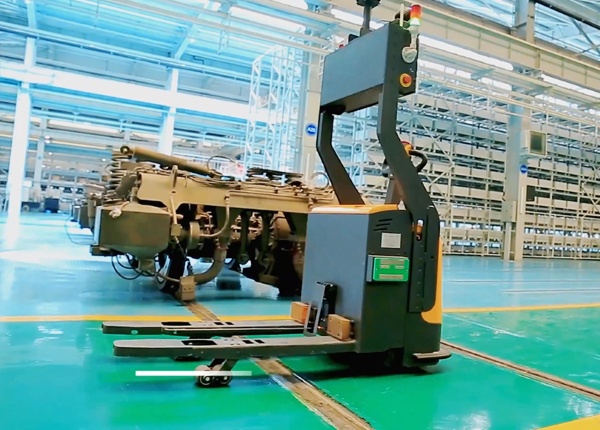
For procurement teams and maintenance managers, the real concern is not whether the system works on day one—but how it behaves after thousands of lift cycles in real warehouse conditions.
How fast do hydraulic seals degrade? Will high-frequency lifting cause leaks? Can seals be sourced locally? And how difficult is cylinder rebuild in Chinese AGV systems?
Hydraulic seals in Chinese AGV forklifts typically include rod seals, piston seals, O-rings, and wiper seals. Their lifespan depends heavily on operating intensity and environmental conditions.
Under normal industrial warehouse usage, expected degradation rates are:
Light duty operation: 18–30 months before noticeable wear
Standard logistics use: 12–24 months
High-frequency 24/7 operation: 6–18 months
Seal wear is gradual and usually appears as minor hydraulic pressure loss before visible leakage occurs.
Yes—high-frequency lifting is one of the primary accelerators of hydraulic seal wear.
In AGV pallet stackers operating continuously in automated warehouses, seals are exposed to:
Repeated pressure cycling
Heat buildup in hydraulic fluid
Continuous rod movement friction
Micro-vibration from floor conditions
Over time, this can lead to:
Rod seal hardening
O-ring compression fatigue
Minor oil seepage at cylinder joints
Early-stage leakage is usually not catastrophic but indicates that preventive maintenance or seal replacement should be scheduled.
In most Chinese AGV forklifts, hydraulic seals and O-rings follow international standard metric sizing systems.
This is intentional, as manufacturers design systems to allow global serviceability.
Common standards include:
ISO metric O-ring sizes
DIN hydraulic seal profiles
JIS-compatible components (in some models)
However, important caution applies:
Even if the size is standard, the exact material hardness, groove design, and pressure rating must match OEM specifications.
Local hardware stores may carry compatible sizes, but industrial-grade hydraulic performance typically requires OEM or certified equivalents.
Rebuilding a hydraulic cylinder on a Chinese AGV forklift is moderately complex and depends on technician experience and available tooling.
Typical rebuild steps include:
Depressurizing and isolating hydraulic system
Removing cylinder assembly
Disassembling piston rod and end caps
Replacing seals, O-rings, and wipers
Inspecting rod surface for scoring or wear
Reassembly and pressure testing
For trained maintenance teams, a standard cylinder rebuild can take:
2–4 hours: experienced technician
4–8 hours: general maintenance staff
The most critical factor is cleanliness—hydraulic contamination during reassembly is the leading cause of repeat failure.
Yes. Many Chinese AGV manufacturers offer upgraded sealing materials for aggressive environments.
One of the most common upgrade options is Viton (FKM) seals, which provide:
High chemical resistance
Improved heat tolerance
Longer lifespan under harsh conditions
Better performance in oil-rich environments
These upgrades are typically recommended for:
Chemical plants
Oil and gas logistics
High-temperature manufacturing zones
Heavy-duty continuous operation facilities
Other available materials may include NBR (standard) and PTFE composite seals depending on application requirements.
Proper maintenance can significantly extend hydraulic seal life in AGV systems.
Recommended practices include:
Regular hydraulic oil inspection and replacement
Maintaining clean operating environment
Avoiding overloading beyond rated capacity
Monitoring cylinder rod surface condition
Scheduled preventive seal replacement
Most AGV fleets benefit from a preventive maintenance cycle of 12–18 months for hydraulic systems.
What is the expected hydraulic seal lifespan under 24/7 operation?
Are seals standard metric sizes or OEM-specific?
Can local replacement parts be sourced safely?
Does the system support Viton or upgraded sealing materials?
What causes early hydraulic leakage in this model?
Is cylinder rebuild documentation provided?
What is the recommended maintenance cycle?
Does warranty cover hydraulic leakage failures?
Hydraulic seal performance is a critical but often overlooked factor in AGV forklift lifecycle management. While Chinese AGV systems are generally designed with standard industrial sealing components, real-world lifespan depends heavily on operating frequency, environmental conditions, and maintenance discipline.
With proper preventive maintenance and correct material selection—such as Viton upgrades for harsh environments—hydraulic systems can deliver stable and predictable performance over long-term industrial use.
Before importing AGV forklifts from China, evaluate not only navigation and automation capabilities but also hydraulic design quality, seal material options, and maintenance accessibility. These factors directly determine long-term system reliability.
FREE ENGINEERING SUPPORT Stop Gambling on Generic Platforms. Get an AGV/AMR Tailored to Your Warehouse.Buying automated guided vehicles involves complex safety standards (CE/ANSI), navigation setups (Laser SLAM), and ERP system integration. Don't risk your factory safety with middle-men. ✓ 100% Direct Factory: Customized payload up to 5 Tons. ✓ Free CAD Simulation: Send us your layout, and our engineers will simulate the optimal AGV routes. ✓ Global Support: Overseas installation guidance & local maintenance partners. |





 Chinese
 English