


Introducing AGV forklifts into a warehouse is not simply a technology upgrade—it is a workplace transformation. While autonomous forklifts can significantly improve efficiency, safety, and labor utilization, their success depends heavily on how well human workers adapt to operating alongside robots.
For many companies importing AGV forklifts from China, the biggest challenge is not installation or software integration. It is ensuring that warehouse staff understand how to safely interact with autonomous vehicles from day one.
How should forklift drivers share aisles with AGVs? What floor markings are required? Can robots detect people in unusual positions? And how should employees respond during emergencies?
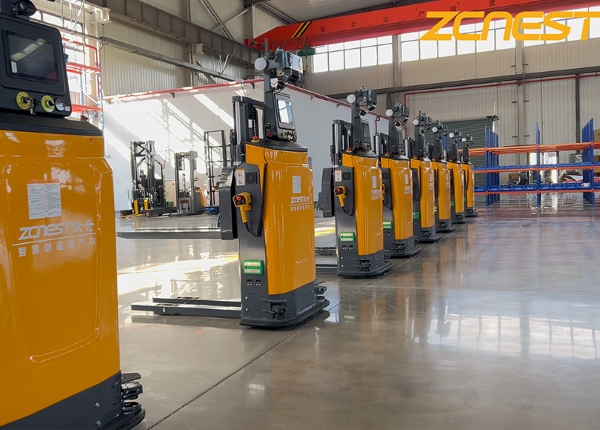
Many warehouse incidents occur not because AGVs malfunction, but because workers misunderstand how autonomous vehicles behave.
Unlike manual forklifts, AGVs operate according to predefined safety rules and navigation logic. Employees must understand:
How AGVs detect obstacles
How AGVs react to pedestrians
Where AGVs have right-of-way
How emergency procedures work
What actions should be avoided near autonomous vehicles
A structured onboarding program should begin before the first AGV enters production operation.
In mixed-operation facilities, manual forklifts and AGVs often share the same travel routes.
Driver training should focus on:
Understanding AGV travel paths
Recognizing AGV warning lights and signals
Avoiding intentional obstruction of robot routes
Maintaining safe overtaking distances
Following designated crossing points
Unlike human-operated forklifts, AGVs do not make assumptions based on eye contact or hand gestures.
Employees should never assume an AGV "sees" them in the same way a human driver would.
Every driver should complete practical coexistence training before AGV go-live.
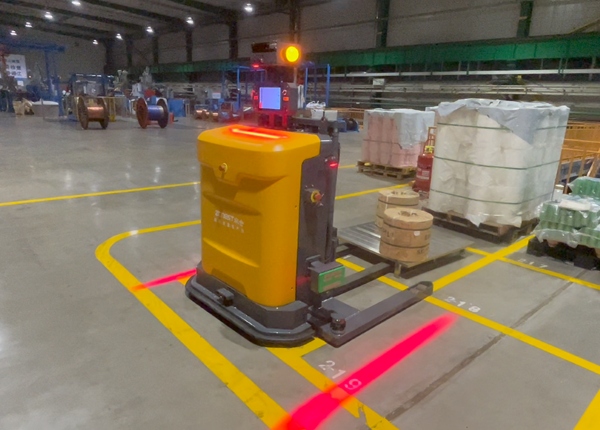
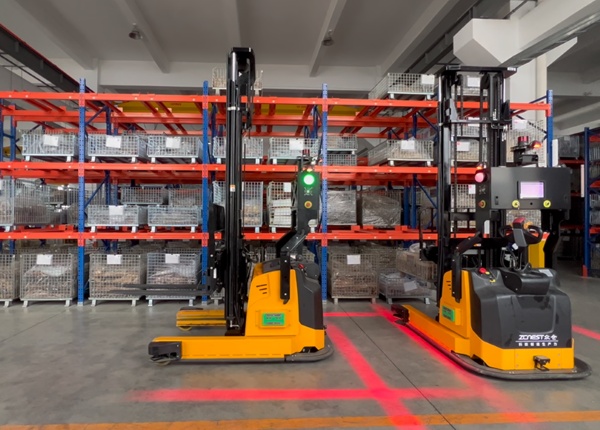
Visual management is one of the most effective methods for reducing human-robot interaction risks.
Typical floor markings include:
Dedicated AGV travel lanes
Pedestrian crossing zones
Loading and unloading areas
AGV charging station boundaries
Restricted robot operating zones
Common color practices include:
Yellow lines for AGV routes
Green pedestrian walkways
Red restricted or danger zones
Diagonal striping near intersections
Clear markings help workers instantly recognize robot traffic patterns.
Well-designed floor markings can significantly reduce near-miss incidents in mixed traffic environments.
Modern Chinese AGVs typically use a combination of:
Safety LiDAR scanners
Obstacle detection sensors
3D cameras
Safety-rated control systems
Many advanced systems can detect:
Standing pedestrians
Walking personnel
Crouching workers
Objects placed on the floor
However, detection capability depends on:
Sensor configuration
Vehicle speed
Environmental conditions
Warehouse layout
Safety validation testing should always be performed during commissioning to verify real-world detection performance.
No safety system should replace worker awareness. Personnel should never intentionally enter AGV travel paths expecting the robot to stop automatically.
Every warehouse deploying AGVs should establish a documented emergency recovery procedure.
Training should cover:
Emergency stop button locations
Vehicle shutdown procedures
Manual brake release methods
Safe towing procedures
Recovery authorization process
Most AGVs include electronic parking brakes that require specific release procedures defined by the manufacturer.
Employees should never attempt to move an immobilized AGV without following approved instructions.
Only trained personnel should perform brake release or vehicle recovery operations.
Successful AGV deployments rely on more than technology.
Companies should implement:
Initial safety orientation sessions
Regular refresher training
AGV safety signage throughout the facility
Emergency response drills
Incident reporting procedures
When employees understand how AGVs operate, confidence and productivity both increase.
Allowing workers to walk freely through AGV routes
Insufficient driver retraining
Poor floor signage and markings
No emergency response documentation
Assuming employees automatically understand robot behavior
Failing to test pedestrian detection scenarios
Most avoidable incidents occur during the first few months after deployment.
What safety training materials are included?
Are operator training videos available in English?
How are pedestrian detection systems validated?
What floor markings are recommended?
What emergency brake release procedures exist?
Can the supplier assist with safety risk assessments?
What warning lights and alarms are installed?
Are emergency drills included during commissioning?
Deploying AGV forklifts successfully requires more than installing autonomous vehicles. It requires preparing people, processes, and safety procedures to operate within a mixed human-robot environment.
By training forklift drivers, implementing clear floor markings, establishing emergency procedures, and validating pedestrian detection performance, companies can create a safer and more productive warehouse operation.
Before importing AGV forklifts from China, invest in workforce onboarding and safety training. The most successful automation projects are those where people and robots work together safely from the very first day.
FREE ENGINEERING SUPPORT Stop Gambling on Generic Platforms. Get an AGV/AMR Tailored to Your Warehouse.Buying automated guided vehicles involves complex safety standards (CE/ANSI), navigation setups (Laser SLAM), and ERP system integration. Don't risk your factory safety with middle-men. ✓ 100% Direct Factory: Customized payload up to 5 Tons. ✓ Free CAD Simulation: Send us your layout, and our engineers will simulate the optimal AGV routes. ✓ Global Support: Overseas installation guidance & local maintenance partners. |





 Chinese
 English