


For most warehouse automation projects, the lithium battery system is both the most valuable consumable component and the most scrutinized safety-critical subsystem. While buyers often focus on payload capacity, navigation technology, and software integration, battery quality directly affects uptime, operating cost, regulatory compliance, and workplace safety.
As AGV deployments continue expanding across manufacturing plants, distribution centers, and logistics hubs, procurement teams are increasingly asking a critical question:
How can we verify that the battery system inside a Chinese AGV forklift is truly safe, compliant, and built for long-term industrial use?
How do you audit cell quality? Are charging stations equipped with fire protection? What thermal runaway safeguards exist inside the battery pack? Have battery fires occurred in AGV fleets? And can lithium-powered AGVs be legally shipped overseas with batteries installed?
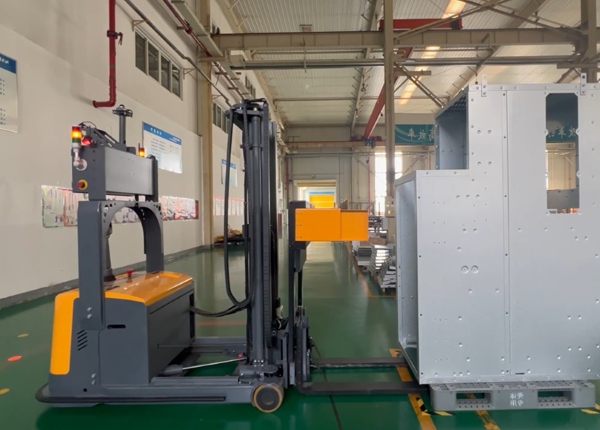
The battery system affects nearly every aspect of AGV ownership:
Operational uptime
Charging efficiency
Fleet availability
Maintenance costs
Insurance requirements
Workplace safety compliance
Equipment lifespan
Two AGVs with identical lifting specifications can have dramatically different long-term performance depending on the quality of the battery system installed.
A comprehensive supplier audit should therefore evaluate battery technology with the same rigor applied to navigation software and vehicle engineering.
The battery pack is not simply a power source—it is one of the most critical safety systems in the entire AGV platform.
One of the first questions buyers should ask is not the battery capacity, but the origin and traceability of the cells themselves.
A professional supplier should be able to provide:
Cell manufacturer information
Battery specification sheets
Production batch traceability
Quality control procedures
Testing documentation
Cycle-life performance data
Important evaluation factors include:
Cell consistency
Manufacturing quality controls
Battery management system integration
Thermal design architecture
Industrial operating temperature range
Buyers should request detailed technical documentation rather than relying solely on marketing brochures.
Thermal runaway prevention is one of the most important safety considerations in any industrial lithium battery system.
Modern AGV battery packs typically incorporate multiple protection layers, including:
Battery Management Systems (BMS)
Temperature monitoring sensors
Current monitoring circuits
Voltage balancing systems
Overcharge protection logic
Short-circuit protection systems
Emergency shutdown functions
Rather than relying on a single safeguard, industrial battery systems are designed with multiple redundant protection mechanisms.
During supplier evaluation, buyers should request a clear explanation of the battery protection architecture and fault response strategy.
A robust battery design focuses on preventing abnormal conditions long before thermal events can occur.
Charging stations are another area that deserves careful review during project planning.
Depending on the supplier and project requirements, charging infrastructure may include:
Temperature monitoring systems
Charging fault detection
Emergency shutdown functions
Battery communication monitoring
Abnormal charging alarms
Remote monitoring capabilities
Some facilities may also choose to integrate charging areas with:
Building fire protection systems
Fire detection networks
Warehouse safety monitoring platforms
The exact protection strategy should be reviewed alongside local fire regulations and facility safety requirements.
Any industrial lithium battery system carries inherent risks if improperly designed, maintained, damaged, or operated outside recommended conditions.
Risk factors can include:
Physical battery damage
Improper charging procedures
Unauthorized modifications
Electrical faults
Extreme operating environments
Inadequate maintenance practices
Rather than focusing solely on isolated industry incidents, buyers should evaluate:
Supplier quality processes
Battery certification documentation
Operational safety procedures
Preventive maintenance requirements
Battery monitoring capabilities
A systematic risk-management approach provides far greater protection than relying on anecdotal safety claims.
The most important safety indicator is not whether a supplier claims zero incidents, but how comprehensively risks are engineered, monitored, and controlled.
Many buyers are surprised to learn that lithium battery transportation is governed by specialized international regulations.
Whether an AGV can be shipped with the battery installed depends on:
Battery type
Battery capacity
Transportation mode
Destination country regulations
Carrier requirements
Packaging methods
Ocean freight shipments often follow specific dangerous goods transportation procedures and documentation requirements.
Before shipment, buyers should confirm:
Battery transportation classification
Required shipping documents
Packaging compliance procedures
Carrier acceptance requirements
Destination customs regulations
Professional suppliers typically coordinate these requirements through experienced freight forwarding partners.
Who manufactures the battery cells?
Can you provide battery traceability documentation?
What protection mechanisms exist inside the battery pack?
How does the BMS detect abnormal conditions?
What safety monitoring exists during charging?
What battery certifications are available?
How is thermal management handled?
Can the battery system be remotely monitored?
How are batteries shipped internationally?
What is the recommended emergency response procedure?
Unclear cell sourcing information
Missing technical documentation
No traceability records
Limited BMS functionality descriptions
No defined battery testing procedures
Unable to explain thermal protection design
Unclear transportation compliance process
No documented maintenance requirements
These warning signs should prompt further investigation before purchase approval.
Battery safety should be treated as a strategic procurement consideration rather than a simple technical specification. By auditing cell quality, thermal protection systems, charging infrastructure, and transportation compliance, buyers can significantly reduce operational risk and improve long-term fleet reliability.
The most successful AGV projects are built on a combination of high-quality hardware, robust software, and professionally engineered battery systems.
When evaluating Chinese AGV forklifts, don't stop at battery capacity. Understanding how the battery is designed, protected, monitored, and transported may be one of the most important investment decisions you make.
FREE ENGINEERING SUPPORT Stop Gambling on Generic Platforms. Get an AGV/AMR Tailored to Your Warehouse.Buying automated guided vehicles involves complex safety standards (CE/ANSI), navigation setups (Laser SLAM), and ERP system integration. Don't risk your factory safety with middle-men. ✓ 100% Direct Factory: Customized payload up to 5 Tons. ✓ Free CAD Simulation: Send us your layout, and our engineers will simulate the optimal AGV routes. ✓ Global Support: Overseas installation guidance & local maintenance partners. |





 Chinese
 English