

For overseas buyers, the moment before an AGV forklift leaves the factory is often the last opportunity to identify quality issues before international shipping begins.
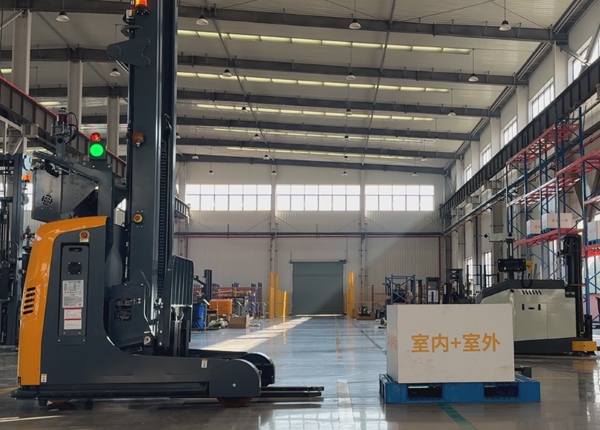
Once the equipment is loaded into a container and shipped overseas, resolving defects becomes significantly more expensive, time-consuming, and disruptive to project schedules. This is why experienced procurement teams treat Pre-Shipment Inspection (PSI) as a critical risk-control step rather than a simple administrative procedure.
Whether you are purchasing a single AGV forklift or deploying a multi-vehicle warehouse automation project, a structured PSI process can help verify equipment quality, software functionality, safety performance, and contractual compliance before final payment is released.
How should a professional AGV PSI be conducted? What tests should be performed? Can buyers request live demonstrations? How do you verify serial numbers? And how should payment milestones be linked to inspection approval?
AGV forklifts are complex systems that combine:
Mechanical assemblies
Navigation software
Safety systems
Battery technology
Industrial networking
Fleet management integration
Unlike standard warehouse equipment, many critical functions cannot be verified simply through visual inspection.
A professional PSI helps confirm:
Contract compliance
Hardware functionality
Software performance
Safety operation
Documentation completeness
Shipping readiness
The cost of a PSI is usually insignificant compared to the cost of correcting a major defect after the equipment arrives overseas.
One of the most common mistakes buyers make is arranging an inspection without a detailed testing protocol.
A professional PSI checklist should include multiple verification categories:
Chassis condition
Mast alignment
Fork dimensions
Hydraulic operation
Wheel condition
Fastener integrity
Battery installation
Charging functionality
Cable routing
Emergency stop operation
Electrical cabinet inspection
Navigation functionality
Route execution
Task scheduling
Fleet communication
Error reporting
Obstacle detection
Emergency stop response
Warning lights
Audible alarms
Safety sensor functionality
The checklist should be agreed upon before inspection begins.
Static inspections alone are insufficient for AGV validation.
Buyers should request dynamic testing under realistic operating conditions.
Typical demonstrations may include:
Loaded pallet transport
Full-height lifting
Obstacle avoidance
Docking operations
Automatic charging procedures
Route recovery after interruption
For remote buyers unable to attend in person, a live high-definition video demonstration can provide valuable verification.
Video demonstrations should ideally show:
Vehicle identification numbers
Load weight verification
Complete task execution
Safety responses
Operator interaction
A properly documented live test often reveals issues that would never appear during a visual inspection alone.
One frequently overlooked PSI task is equipment identification verification.
Inspection personnel should confirm that:
Vehicle serial numbers match production records
Nameplate information is accurate
Battery identification numbers are recorded
Controller serial numbers are documented
Software versions are verified
These records should be cross-checked against:
Purchase contracts
Proforma invoices
Production schedules
Packing lists
Maintaining traceability simplifies future warranty claims, spare parts management, and technical support.
A professional PSI should verify not only the equipment but also the supporting documentation.
Important documents may include:
User manuals
Maintenance manuals
Electrical schematics
Software documentation
Inspection records
Test reports
Warranty certificates
Packing lists
Missing documentation can create significant operational challenges after installation.
The most expensive manual is the one you discover is missing after the equipment arrives.
Many buyers use payment milestones to encourage successful project completion.
Rather than focusing solely on shipment dates, procurement teams often tie payment release to:
Inspection completion
Documentation review
Test result approval
Defect correction verification
The specific payment structure depends on:
Contract terms
Commercial negotiations
Local regulations
Project complexity
Because international trade regulations and contractual practices vary significantly, buyers should seek qualified legal and commercial advice when determining payment retention arrangements.
The key principle is ensuring that inspection requirements and payment milestones are clearly defined before production begins.
Independent inspection agencies can provide an additional layer of confidence.
When evaluating inspection providers, consider:
Industrial equipment experience
Automation project expertise
Technical inspection capabilities
Reporting quality
Global service coverage
Response times
AGV systems require more specialized evaluation than standard consumer products or basic industrial equipment.
Inspectors should understand:
Autonomous navigation systems
Industrial safety standards
Battery technologies
Warehouse automation workflows
Failed safety tests
Navigation instability
Software crashes
Missing documentation
Incorrect serial numbers
Incomplete equipment configuration
Visible structural defects
Unresolved factory punch-list items
Any significant deviation from contractual requirements should be documented and resolved before shipment authorization is granted.
Verify equipment quantity and specifications
Inspect mechanical components
Verify electrical systems
Conduct software functionality tests
Validate safety system performance
Perform live operational demonstrations
Confirm serial number traceability
Review technical documentation
Record defects and corrective actions
Approve shipment only after all critical issues are resolved
A professional Pre-Shipment Inspection is one of the most effective tools available to reduce project risk when importing AGV forklifts from China. By combining technical testing, documentation review, traceability verification, and live operational demonstrations, buyers can significantly improve confidence before shipment.
The most successful AGV procurement teams view PSI not as an additional expense, but as an essential investment in project quality assurance.
Before releasing final payment, make sure you have verified not only what the AGV looks like—but how it performs, how it is documented, and whether it fully complies with your contract requirements.
FREE ENGINEERING SUPPORT Stop Gambling on Generic Platforms. Get an AGV/AMR Tailored to Your Warehouse.Buying automated guided vehicles involves complex safety standards (CE/ANSI), navigation setups (Laser SLAM), and ERP system integration. Don't risk your factory safety with middle-men. ✓ 100% Direct Factory: Customized payload up to 5 Tons. ✓ Free CAD Simulation: Send us your layout, and our engineers will simulate the optimal AGV routes. ✓ Global Support: Overseas installation guidance & local maintenance partners. |





 Chinese
 English