


Modern AGV forklifts are no longer simple transport vehicles. Their onboard load sensing systems can help improve operational safety, verify pallet weights, prevent rack overloading, and provide valuable inventory data to Warehouse Management Systems (WMS). For overseas buyers, understanding how these systems work is essential when evaluating Chinese AGV suppliers.
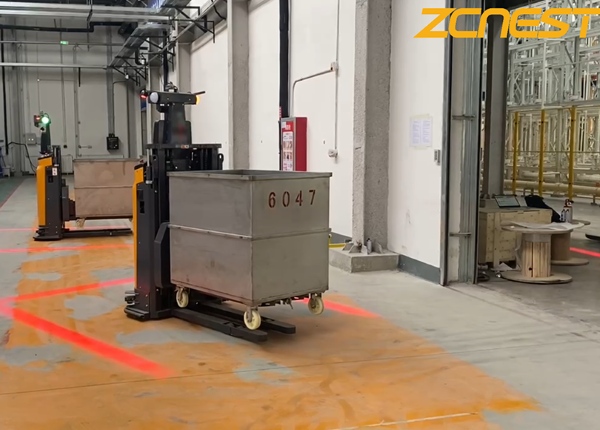
Many procurement teams focus on payload capacity, navigation technology, and battery performance while overlooking one critical capability—the AGV's ability to determine whether it is carrying the correct load.
Accurate load measurement directly influences warehouse safety, pallet traceability, rack protection, and automated inventory management. A properly designed load sensing system can reduce handling errors, prevent overloaded storage locations, and improve the reliability of automated logistics operations.
✓ How does the AGV measure pallet weight?
✓ What sensing technology is used?
✓ How accurate is the weight calculation?
✓ Can unsafe loads be detected automatically?
✓ Can weight data be shared with the WMS?
✓ How difficult is future calibration?
AGV forklifts estimate or measure pallet weight using dedicated sensing technologies integrated into the lifting system. The objective is not simply to know how heavy a pallet is, but to ensure that every lifting operation remains within safe operating limits while providing reliable operational data.
Depending on the vehicle architecture and application requirements, manufacturers may utilize different sensing approaches. Buyers should ask suppliers to explain how the chosen solution fits the intended warehouse environment rather than assuming every AGV uses the same technology.
Some systems estimate load weight by monitoring hydraulic pressure generated during lifting. This method can provide continuous feedback while requiring minimal changes to the fork structure.
Other solutions integrate electronic load sensing devices into the lifting mechanism or fork assembly to provide highly repeatable weight measurements for automated warehouse operations.
Procurement teams often ask suppliers to specify the percentage accuracy of the weighing system. While calibration accuracy is important, long-term repeatability is often the more meaningful performance indicator.
A system should continue providing stable measurements despite vibration, repeated lifting cycles, temperature changes, and normal mechanical wear.
During supplier evaluation, request documented validation procedures rather than relying solely on brochure specifications.
Total pallet weight is only one part of safe material handling.
Unevenly distributed loads may reduce vehicle stability and increase the risk of product damage, particularly during lifting, turning, or high-level pallet placement.
Advanced AGV software can evaluate load conditions together with vehicle operating parameters and apply predefined safety logic whenever abnormal conditions are detected.
Movement restrictions
Reduced travel speed
Lift height limitations
Operator alarms
Task interruption
Diagnostic reporting
For many warehouses, the greatest value of onboard load sensing is not the measurement itself—it is the ability to exchange data with higher-level warehouse software.
When properly integrated, weight information can support inventory validation, storage rule enforcement, shipment verification, and operational analytics.
✔ Rack loading verification
✔ Inventory confirmation
✔ Shipping validation
✔ Warehouse analytics
✔ Exception reporting
✔ Digital traceability
| Evaluation Item | Questions to Ask |
|---|---|
| Load Sensing Technology | How is pallet weight measured? |
| Calibration | How is long-term accuracy maintained? |
| Safety Logic | How are abnormal loads detected? |
| Maintenance | Can local technicians recalibrate the system? |
| Data Integration | Can weight information be exchanged with WMS or ERP platforms? |
| Diagnostics | What reporting tools are available? |
An AGV load sensing system is far more than a weighing device. It is an intelligent decision-making component that supports operational safety, warehouse efficiency, inventory accuracy, and data-driven automation.
Rather than evaluating suppliers solely on payload capacity, overseas buyers should understand how the AGV measures loads, maintains calibration, responds to abnormal weight distribution, and integrates with warehouse software platforms.
A well-designed load sensing solution can help reduce operational risks, improve warehouse visibility, and provide measurable long-term value throughout the lifecycle of an automated logistics system.
FREE ENGINEERING SUPPORT Stop Gambling on Generic Platforms. Get an AGV/AMR Tailored to Your Warehouse.Buying automated guided vehicles involves complex safety standards (CE/ANSI), navigation setups (Laser SLAM), and ERP system integration. Don't risk your factory safety with middle-men. ✓ 100% Direct Factory: Customized payload up to 5 Tons. ✓ Free CAD Simulation: Send us your layout, and our engineers will simulate the optimal AGV routes. ✓ Global Support: Overseas installation guidance & local maintenance partners. |





 Chinese
 English