


An automated forklift may meet the required payload and lift height on its product specification sheet, but that does not guarantee it can operate safely and consistently with an existing warehouse rack system.
Rack compatibility depends on the relationship between the vehicle, pallet, load, aisle, beam arrangement, and actual installation tolerances.
For overseas buyers planning to automate an existing high-bay warehouse, rack compatibility should be checked before the AGV model is finalized.
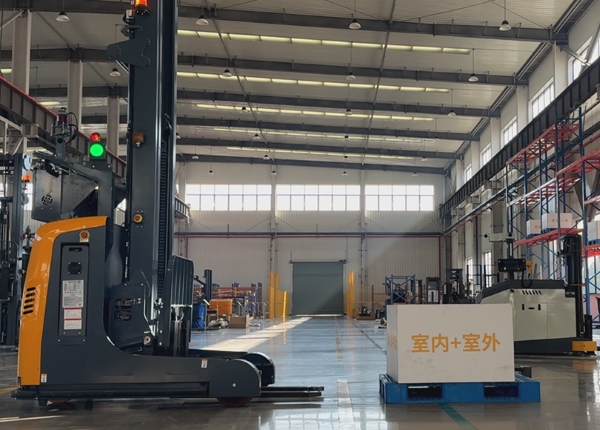
Start by requesting the latest rack layout and engineering drawings.
Useful information includes:
Rack height
Beam elevations
Beam dimensions
Bay width
Storage depth
Upright locations
Aisle width
Rack protection and end guards
Load capacity information
Drawings are a starting point. Existing warehouses should also be checked against actual installed conditions because construction and later modifications may create differences.
Nominal rack dimensions do not always represent the available operating clearance.
Measure the usable space between rack components, including beam projections, upright protectors, bracing, and any other objects that could interfere with the vehicle or load.
For narrow-aisle applications, even small differences may affect vehicle access and maneuvering. The supplier should review the complete vehicle envelope, not only the body width.
The rack is designed to store a defined load configuration. The AGV must handle the actual pallet and load, not just the nominal pallet size.
Check pallet width, length, entry direction, runner arrangement, load overhang, and load center.
Also consider whether different pallet types are stored in the same rack system. A configuration that works for one pallet may not work for another.
At the storage position, the forks and load must enter and leave without interfering with rack beams or other structural components.
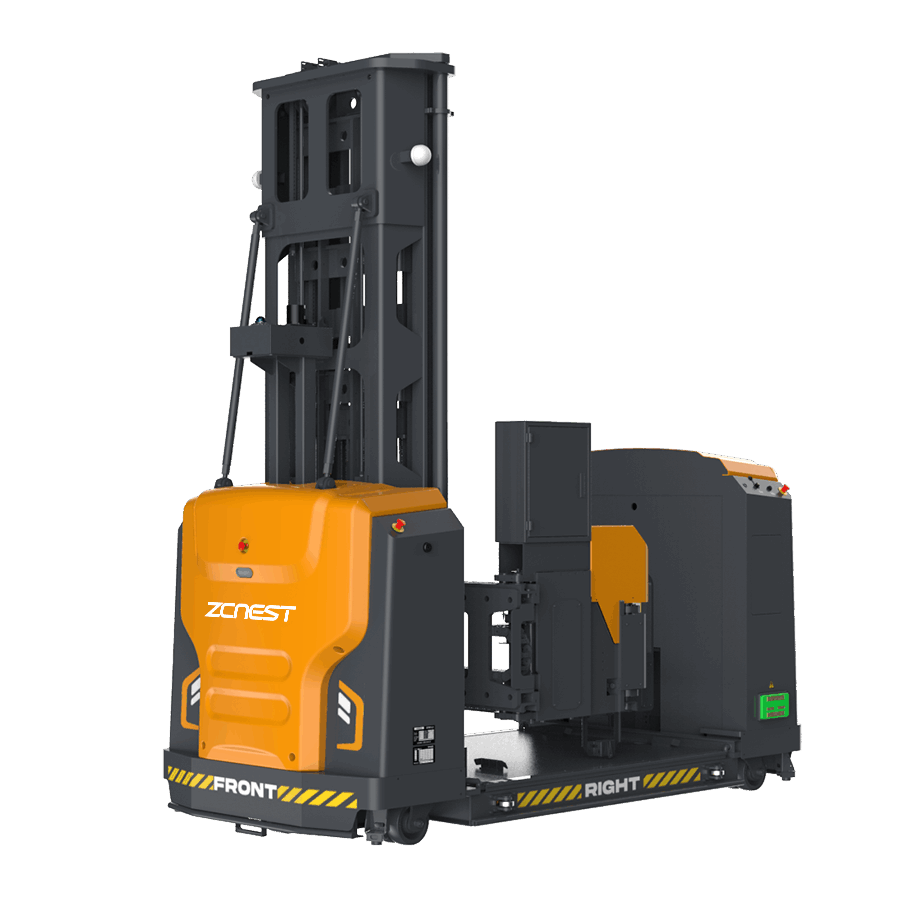
Review fork length, fork spacing, fork thickness, lifting height, mast dimensions, and the vehicle's approach geometry.
For high-level storage, include the effects of load deflection, mast behavior, and actual rack installation tolerances in the engineering review.
Rack compatibility cannot be evaluated independently from the floor.
Floor variation, rack alignment, and vehicle positioning interact. A vehicle may approach the correct location but still face difficulty if the rack geometry or floor conditions differ from the approved design assumptions.
Ask the supplier which floor and rack measurements are required for the proposed AGV model and lift height.
As lift height increases, the engineering review should become more detailed.
Consider the rated load at the required lift height, load center, mast configuration, fork positioning, rack beam clearance, and placement performance.
Do not assume that a vehicle's maximum rated payload applies at every lift height. Request the load chart or project-specific capacity confirmation for the intended configuration.
Existing racks may have visible damage, modified components, or deflection under load.
Have the rack condition assessed by qualified personnel. The AGV supplier should not be expected to determine structural rack safety from a general layout drawing alone.
Any rack repair or modification should be reviewed by the responsible rack engineer or qualified specialist.
Before full deployment, test representative storage positions using the intended AGV, pallet, and load.
Include low and high storage levels, different rack bays, and locations with the tightest clearances.
Record successful entry, placement, withdrawal, positioning repeatability, and any observed interference. Define the acceptance criteria before testing begins.
Current rack layout drawings
Rack elevation drawings
Actual aisle measurements
Beam and upright dimensions
Pallet specifications
Maximum load dimensions and weight
Required storage heights
Floor survey information
Photos of representative rack locations
Providing this information early allows the supplier to evaluate vehicle geometry and storage compatibility before the equipment configuration is frozen.
The most reliable rack compatibility decision is based on measured warehouse conditions and physical testing—not on payload and lift height alone.





 Chinese
 English