


Damaged pallets are a common exception in warehouse operations. A broken board, missing runner, protruding nail, or distorted pallet may prevent an automated forklift from completing a normal pickup.
For an AGV project, the key issue is not whether the vehicle can recognize every possible pallet defect. It is how the system identifies an abnormal pickup, avoids unsafe handling, and directs the pallet to a controlled exception process.
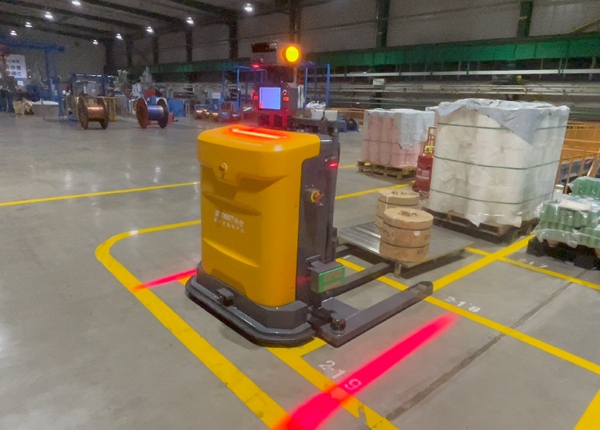
Before selecting an AGV, document the pallet types used in the warehouse and the conditions that occur in daily operations.
Consider:
Broken or missing pallet boards
Missing or damaged runners
Loose nails or fasteners
Warped pallet structures
Cracked plastic pallets
Protruding load edges
Uneven pallet openings
Debris blocking fork entry
These conditions should be divided into acceptable, conditionally acceptable, and prohibited categories based on the vehicle design and project risk assessment.
Automated forklifts may use cameras, laser sensors, proximity sensors, or other devices to support pallet detection and positioning.
However, detecting a pallet does not necessarily mean the system can identify every structural defect.
Ask the supplier which pallet abnormalities are detected by the proposed configuration, which require operator inspection, and which conditions are outside the system's operating limits.
A damaged pallet can create a risk of fork collision, unstable lifting, or load displacement.
The vehicle's pickup logic should be tested with representative pallet defects. The test should establish whether the AGV stops, reports an exception, retries under controlled conditions, or requires manual intervention.
Repeatedly attempting to pick a pallet without confirming the cause of a failed pickup can increase the risk of damage.
A damaged pallet should not remain indefinitely in the normal automated task queue.
A practical exception workflow may include:
The AGV detects that the pickup cannot be completed.
The vehicle enters a defined safe state or follows the configured recovery procedure.
The fleet system records the failed mission and its available diagnostic information.
An operator or supervisor inspects the pallet.
The pallet is repaired, repalletized, or moved to an exception area.
The warehouse system is updated before the task is released again.
The exact workflow should be agreed between warehouse operations, the WMS team, and the AGV supplier.
A failed pickup does not automatically mean the AGV is defective.
The cause may be a damaged pallet, incorrect pallet orientation, an unexpected load position, a blocked fork opening, a sensor issue, or a vehicle positioning problem.
Useful diagnostic records include the mission ID, vehicle ID, pickup location, error code, sensor status, and operator action.
Warehouses handling mixed pallet quality should consider a designated exception area.
This area can be used for damaged pallets, loads requiring inspection, or pallets that cannot be handled automatically.
Its location should avoid blocking normal AGV routes, emergency access, and high-traffic staging points.
Do not rely only on new, uniform pallets during a demonstration if the production warehouse uses pallets with varying conditions.
Prepare representative examples and agree on the test categories with the supplier. Record which pallets are accepted, rejected, or sent to manual inspection.
For safety, do not deliberately test pallets with structural defects that could cause a load to fall unless the test is specifically designed and controlled by qualified personnel.
Warehouse staff should know which pallet conditions are permitted in the automated area and how to handle exceptions.
Clear rules reduce repeated mission failures and help prevent operators from manually overriding a system response without understanding the cause.
A reliable AGV operation does not require every pallet to be perfect. It requires a defined boundary between pallets the system can handle and exceptions that need human inspection.





 Chinese
 English