


Steering technology has a direct impact on AGV maneuverability, positioning accuracy, maintenance costs, and long-term reliability. Before selecting a Chinese AGV supplier, buyers should understand how different steering mechanisms perform in real warehouse environments—not just what appears on the specification sheet.
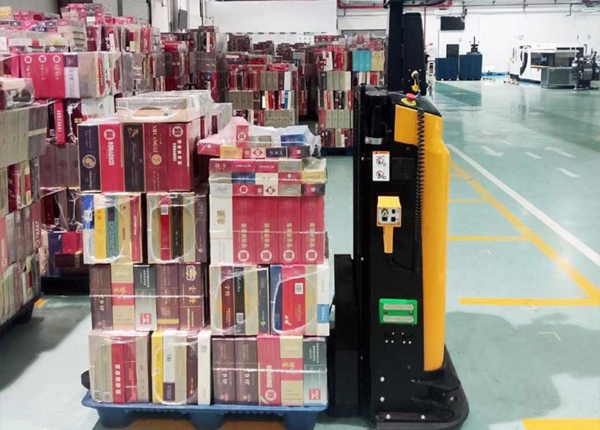
Many procurement teams compare payload capacity, lift height, and navigation technology while paying little attention to the steering drive system hidden underneath the vehicle. However, every pallet movement depends on the steering assembly working accurately under continuous load.
The steering mechanism influences turning precision, aisle efficiency, tire wear, positioning repeatability, and component lifespan. Selecting the right steering architecture is particularly important for facilities operating around the clock or handling high-value goods.
Higher positioning accuracy
Reduced tire wear
Lower maintenance costs
Smoother pallet handling
Better narrow aisle performance
Longer service life
Single Steering Drive Assembly
This configuration combines steering and traction into a single integrated module. It is widely used in autonomous forklifts where high positioning precision and smooth directional changes are priorities.
Typical Advantages
Excellent turning precision
Stable pallet positioning
Simplified motion control
High repeatability
Dual-Wheel Differential Drive
Differential drive systems generate steering by independently controlling wheel speeds. They are commonly found in compact AMRs where maneuverability and simplified mechanical construction are important.
Typical Advantages
Compact vehicle design
Flexible movement
Mechanical simplicity
Suitable for lighter platforms
There is no universally "better" steering architecture. The ideal solution depends on payload capacity, warehouse layout, travel speed, lifting height, and application requirements.
Heavy-duty slewing bearings are among the most important mechanical components within an AGV steering assembly. Their long-term performance directly affects steering accuracy and vehicle stability.
Routine Inspection
Check bearing condition, abnormal vibration, and rotational smoothness.
Lubrication
Follow manufacturer recommendations for grease type and maintenance intervals.
Fastener Verification
Confirm mounting bolts remain properly secured during long-term operation.
Wear Monitoring
Track steering play before positioning accuracy begins to deteriorate.
Dust, plastic wrapping, broken pallets, metal particles, and packaging debris can gradually damage exposed steering components.
Well-designed AGVs typically incorporate protective engineering features to reduce contamination and improve long-term reliability.
Fully enclosed steering housings
Industrial sealing systems
Protective gear covers
Dust-resistant bearing designs
Cable protection channels
Easy inspection access points
Buyers frequently compare steering rotation speeds between different AGV suppliers. While rapid steering response can improve productivity, excessively aggressive steering may negatively affect load stability and increase mechanical stress.
Instead of focusing solely on maximum steering angle speed, procurement teams should evaluate overall steering performance, including:
Smooth Direction Changes
Stopping Precision
High-Speed Stability
Load Protection
Navigation Accuracy
Mechanical Longevity
✓ Which steering architecture is used?
✓ How is long-term steering accuracy maintained?
✓ What bearing maintenance is required?
✓ How are steering gears protected from contamination?
✓ How is steering performance validated before shipment?
✓ Which components are considered wear parts?
✓ Can steering parameters be adjusted through software?
✓ What spare parts are recommended?
✓ What diagnostic tools are available?
✓ What warranty covers the steering assembly?
The steering drive system is one of the most important mechanical subsystems inside an AGV forklift. Its design influences not only maneuverability but also positioning accuracy, component durability, maintenance requirements, and long-term operational efficiency.
Rather than selecting a supplier based solely on payload specifications or purchase price, international buyers should carefully evaluate steering architecture, protective engineering, maintenance accessibility, and overall mechanical reliability.
Smart buyers don't simply ask how an AGV turns—they ask how consistently it will keep turning accurately after years of demanding warehouse operation.
FREE ENGINEERING SUPPORT Stop Gambling on Generic Platforms. Get an AGV/AMR Tailored to Your Warehouse.Buying automated guided vehicles involves complex safety standards (CE/ANSI), navigation setups (Laser SLAM), and ERP system integration. Don't risk your factory safety with middle-men. ✓ 100% Direct Factory: Customized payload up to 5 Tons. ✓ Free CAD Simulation: Send us your layout, and our engineers will simulate the optimal AGV routes. ✓ Global Support: Overseas installation guidance & local maintenance partners. |





 Chinese
 English