


Category
Warehouse Automation
Audience
Warehouse Engineers
Focus
Battery Management System
Reading Time
8 Minutes
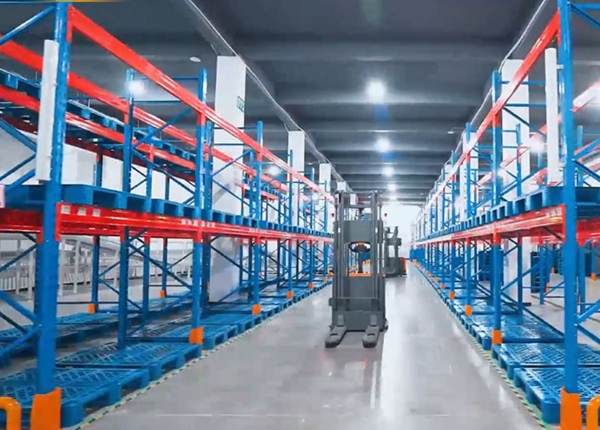
For overseas buyers, battery capacity is only one part of the purchasing decision. The real question is how intelligently that battery is monitored, protected, and managed throughout its entire lifecycle.
A modern Battery Management System (BMS) determines whether an AGV fleet operates safely for years—or experiences unexpected shutdowns, reduced battery life, and expensive maintenance. Understanding the capabilities of the BMS is therefore just as important as evaluating the battery chemistry itself.
"A high-quality lithium battery without an intelligent BMS is like a high-performance engine without an instrument panel."
Many buyers assume that the BMS simply reports remaining battery capacity. In reality, it continuously analyzes dozens of operating parameters that influence safety, performance, and battery longevity.
| Monitoring Function | Business Benefit |
|---|---|
| Cell Voltage Tracking | Early detection of abnormal cells |
| Temperature Monitoring | Prevents thermal damage during charging |
| Charge History | Predictive maintenance planning |
| State of Health (SOH) | Battery replacement forecasting |
Battery packs consist of numerous individual cells that naturally age at different rates. Monitoring each cell individually allows the BMS to detect abnormalities before they affect the entire battery pack.
This approach improves reliability while reducing the likelihood of unexpected operational interruptions.
Individual cell voltage
Cell temperature
Current flow
Charge cycles
Remaining capacity
Historical alarms
Modern Battery Management Systems continuously evaluate battery operating conditions rather than simply reacting to extreme temperatures.
When abnormal conditions are detected, protective actions may include reducing charging current, limiting vehicle performance, notifying operators, recording diagnostic events, or safely shutting down the battery system when necessary.
Many warehouse operators now integrate battery information directly into maintenance planning and fleet management systems.
Historical State of Health (SOH) records help determine battery replacement timing, optimize charging schedules, and reduce unexpected downtime.
When evaluating suppliers, buyers should determine whether battery information can be exported into existing maintenance databases or enterprise software platforms.
During repeated charging cycles, individual battery cells naturally become slightly unbalanced.
An effective balancing strategy maintains consistent performance across the battery pack while helping extend battery lifespan and improve charging efficiency.
Can the BMS monitor every battery cell individually?
Is battery health history export supported?
How are abnormal temperatures handled?
What communication protocols are supported?
How is cell balancing performed?
Can battery diagnostics integrate with WMS or EMS?
An intelligent Battery Management System is one of the most valuable components inside an AGV forklift. Beyond protecting the battery, it provides operational transparency, supports predictive maintenance, and contributes to safer, more efficient warehouse automation.
When comparing Chinese AGV suppliers, international buyers should evaluate the complete battery management architecture—not just battery specifications—to ensure long-term reliability and lower total cost of ownership.
FREE ENGINEERING SUPPORT Stop Gambling on Generic Platforms. Get an AGV/AMR Tailored to Your Warehouse.Buying automated guided vehicles involves complex safety standards (CE/ANSI), navigation setups (Laser SLAM), and ERP system integration. Don't risk your factory safety with middle-men. ✓ 100% Direct Factory: Customized payload up to 5 Tons. ✓ Free CAD Simulation: Send us your layout, and our engineers will simulate the optimal AGV routes. ✓ Global Support: Overseas installation guidance & local maintenance partners. |





 Chinese
 English