


Food manufacturers don't simply purchase AGV forklifts—they introduce automated equipment into highly regulated production environments. Success depends on balancing productivity with hygiene, sanitation, compliance, and long-term operational reliability.
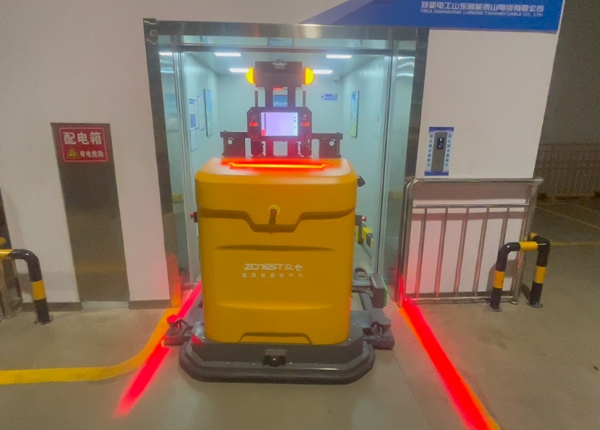
Unlike general manufacturing, food production environments are designed around contamination control. Every new piece of equipment must fit within existing hygiene procedures, cleaning routines, and quality management systems.
For this reason, experienced buyers evaluate far more than lifting capacity or navigation technology.
Will the AGV be easy to clean?
Can it operate reliably in washdown areas?
Will it support food safety audits?
Can maintenance be performed without contamination risks?
A successful food-grade AGV project begins with understanding how the vehicle will interact with daily production activities.
| Facility Consideration | Why It Matters |
|---|---|
| Cleaning procedures | Influences equipment design and maintenance planning |
| Production layout | Determines traffic flow and automation efficiency |
| Environmental conditions | Affects sensors, electronics, and component selection |
| Food safety requirements | Guides material and maintenance decisions |
Food manufacturers generally prefer equipment that can be cleaned efficiently and minimizes areas where dust, residue, or moisture may accumulate.
When discussing customization with suppliers, buyers often focus on features such as hygienic surface finishes, suitable materials, food-compatible lubricants where required, and components that simplify routine sanitation procedures.
The easiest AGV to sanitize is often the safest AGV to operate in a regulated food environment.
Every food factory operates differently. A bakery, dairy processor, beverage plant, frozen food warehouse, and meat processing facility may all require different automation solutions.
Instead of asking for a "food-grade AGV," buyers should explain their production process so suppliers can recommend appropriate configurations, attachments, materials, and cleaning-friendly designs.
How is the vehicle cleaned during routine sanitation?
Which materials are used in areas exposed to food environments?
Can the design reduce dust or residue accumulation?
How are sensors protected in demanding production conditions?
What customization options are available for hygienic applications?
How does the supplier support long-term compliance and maintenance?
Deploying AGV forklifts in a food processing facility involves much more than selecting the right vehicle. Buyers should evaluate how the automation solution integrates with hygiene practices, production workflows, maintenance procedures, and long-term compliance requirements.
The most successful projects begin with a supplier who understands food manufacturing environments and can adapt the solution to your operational needs rather than offering a one-size-fits-all product.
FREE ENGINEERING SUPPORT Stop Gambling on Generic Platforms. Get an AGV/AMR Tailored to Your Warehouse.Buying automated guided vehicles involves complex safety standards (CE/ANSI), navigation setups (Laser SLAM), and ERP system integration. Don't risk your factory safety with middle-men. ✓ 100% Direct Factory: Customized payload up to 5 Tons. ✓ Free CAD Simulation: Send us your layout, and our engineers will simulate the optimal AGV routes. ✓ Global Support: Overseas installation guidance & local maintenance partners. |





 Chinese
 English