


Chemical warehouse automation requires more than transportation efficiency. AGV systems must operate reliably in challenging environments involving corrosive substances, low visibility, and strict safety requirements.
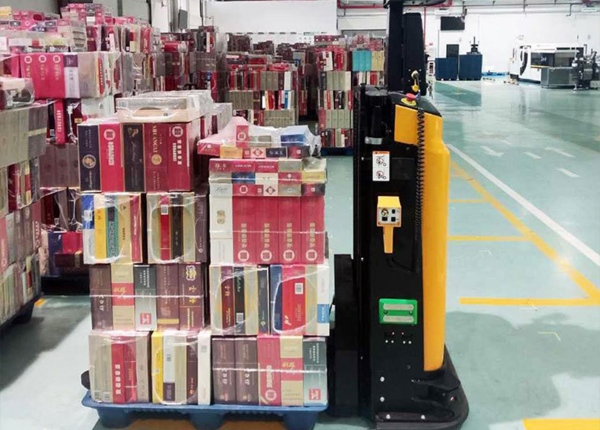
When chemical companies search for AGV forklifts from China, they are not simply looking for an automated vehicle.
They are evaluating whether automation can operate safely inside a demanding industrial environment.
Chemical warehouses require careful consideration of corrosion protection, electrical safety, navigation reliability, and operational procedures.
Chemical vapors and airborne particles may affect mechanical and electrical components over time.
Industrial facilities require strict procedures to reduce ignition and equipment failure risks.
Some storage zones may have low lighting conditions that challenge traditional navigation methods.
Automation equipment must maintain stable operation under continuous industrial usage.
A suitable AGV solution should be evaluated according to the actual warehouse environment instead of only focusing on payload and speed.
| Design Area | Purpose |
|---|---|
| Protected electrical enclosure | Reduces exposure to dust, moisture, and chemical contamination |
| Chemical-resistant coating | Improves chassis durability in aggressive environments |
| Stable navigation system | Maintains positioning accuracy in different lighting conditions |
| Static control design | Helps reduce electrostatic accumulation risks |
Chemical environments can gradually damage equipment if protection measures are not considered during system design.
Sealed electrical cabinets
Corrosion-resistant surface treatment
Protective coatings for chassis components
Appropriate material selection
Regular inspection procedures
Some chemical storage areas have limited lighting due to safety requirements or operating conditions.
The navigation system should maintain stable performance without relying only on visible lighting conditions.
Navigation technology should match the environment and required accuracy.
The robot must detect people and objects safely.
Factory testing should confirm operation in real warehouse conditions.
In certain industrial environments, static control becomes an important part of equipment safety planning.
The AGV solution should consider:
Grounding methods
Electrical protection design
Warehouse safety procedures
Environmental risk assessment
Can the AGV operate in corrosive industrial environments?
What protection is provided for electrical components?
How does the system perform in low-light areas?
What static control solutions are available?
Has the supplier completed similar industrial projects?
What environmental testing is completed before delivery?
Chemical warehouse automation requires a balance between efficiency and safety. The correct AGV solution should be designed around environmental conditions, operational risks, and long-term reliability.
When importing AGV forklifts from China, companies should evaluate not only vehicle performance but also protection design, safety engineering, and supplier experience in demanding industrial applications.
FREE ENGINEERING SUPPORT Stop Gambling on Generic Platforms. Get an AGV/AMR Tailored to Your Warehouse.Buying automated guided vehicles involves complex safety standards (CE/ANSI), navigation setups (Laser SLAM), and ERP system integration. Don't risk your factory safety with middle-men. ✓ 100% Direct Factory: Customized payload up to 5 Tons. ✓ Free CAD Simulation: Send us your layout, and our engineers will simulate the optimal AGV routes. ✓ Global Support: Overseas installation guidance & local maintenance partners. |





 Chinese
 English