


Navigation technology is one of the first technical decisions an overseas buyer needs to make when evaluating an AGV project.
Laser SLAM, 3D SLAM, reflector navigation, QR navigation, and magnetic navigation use different approaches to determine vehicle position and guide movement.
The selection should be based on the warehouse environment and operating requirements rather than simply choosing the technology with the most advanced-sounding name.
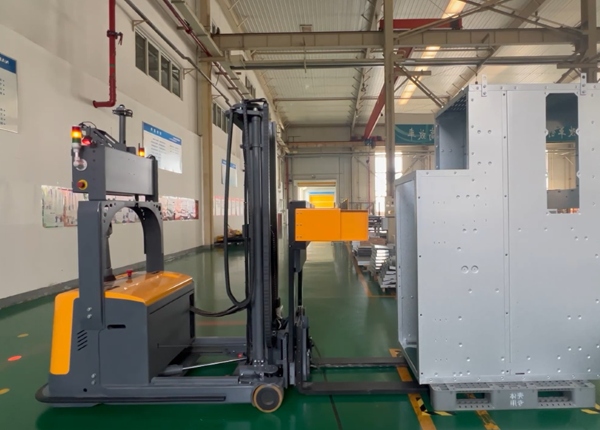
Before comparing navigation technologies, document the physical environment.
Warehouse dimensions
Aisle widths
Rack configuration
Floor conditions
Lighting conditions
Reflective surfaces
Pedestrian traffic
Manual forklift traffic
Required positioning performance
Frequency of layout changes
Required operating hours
These factors can have a greater effect on the suitability of a navigation system than the technology name itself.
Laser SLAM uses laser scanning information and environmental features to estimate vehicle position and support navigation.
For warehouse applications, one potential advantage is reduced dependence on continuous physical guidance infrastructure. Depending on the specific implementation, this can make route and layout changes more flexible.
Performance still depends on the sensor configuration, environmental features, map quality, vehicle dynamics, and navigation software.
3D SLAM uses three-dimensional environmental information for mapping and localization.
When evaluating a 3D SLAM system, buyers should look beyond the label and ask what sensors are installed, how localization works, what environmental conditions are required, and how the system handles physical changes.
The practical performance should be demonstrated in conditions similar to the target warehouse.
Reflector-based navigation uses dedicated reflective targets installed in the warehouse as reference points.
This creates a controlled navigation environment and can provide clearly defined references.
The trade-off is physical infrastructure. Reflectors need to remain correctly positioned and usable by the navigation system.
Changes to racks, walls, doors, or other structures may require the reflector arrangement to be reviewed.
QR-based navigation uses visual markers installed at defined positions.
This provides structured reference points without necessarily requiring a continuous physical guide path.
However, the buyer should consider marker installation, visibility, dirt, damage, lighting, and future layout changes.
Ask the supplier what happens when a marker is damaged or becomes inaccessible.
Magnetic navigation uses physical magnetic guidance elements to define vehicle paths.
The route can be clearly defined, but significant route changes may require changes to the physical magnetic infrastructure.
This should be considered when warehouse routes are expected to remain stable or when the facility accepts the additional infrastructure requirements.
| Factor | Laser SLAM | 3D SLAM | Reflector | QR | Magnetic |
|---|---|---|---|---|---|
| Dedicated path infrastructure | Generally low | Generally low | Required | Required | Required |
| Layout flexibility | Generally high | Generally high | Medium | Medium | Lower |
| Physical infrastructure maintenance | Lower | Lower | Required | Required | Required |
| Frequent layout changes | Often suitable | Often suitable | Requires review | Requires review | More physical work |
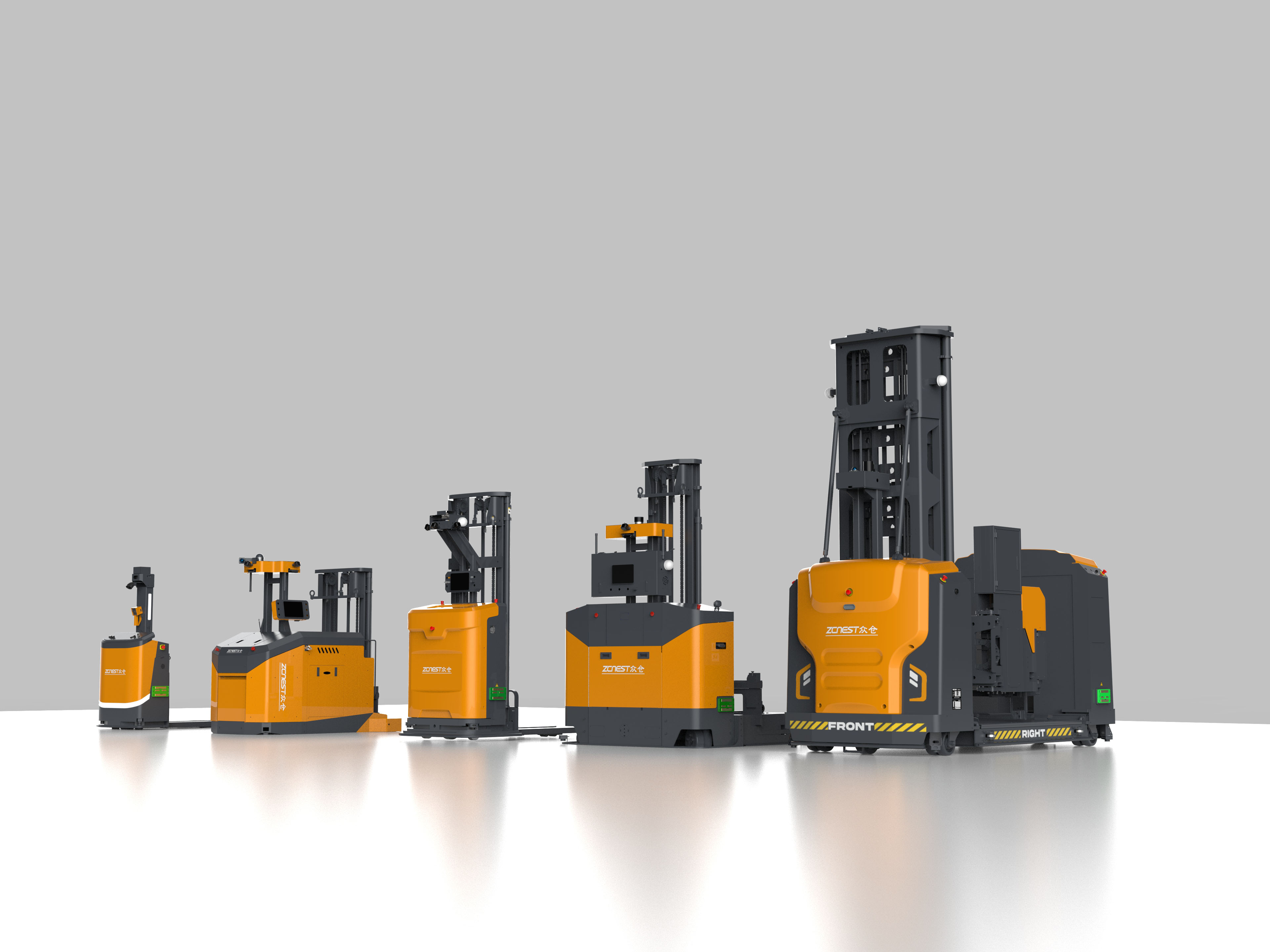
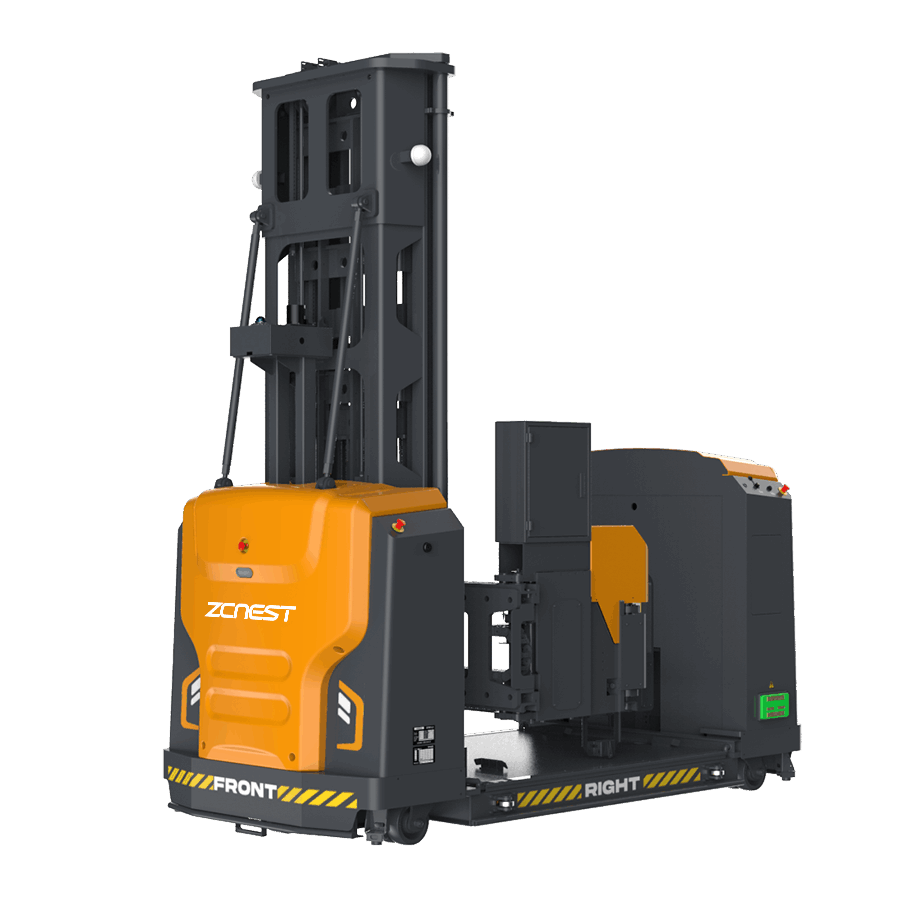
For VNA and high-bay warehouses, navigation cannot be evaluated separately from the AGV itself.
Also consider aisle width, rack geometry, lift height, load center, fork dimensions, sensor mounting, floor conditions, turning behavior, and pallet placement requirements.
A navigation system that performs well in an open warehouse may require a different configuration in a narrow aisle with high-level pallet storage.
The strongest evaluation uses representative warehouse conditions.
Ask the supplier to demonstrate the selected navigation system around actual rack structures, aisles, staging areas, intersections, reflective surfaces, and traffic conditions.
Do not rely only on a showroom demonstration if the production warehouse has substantially different conditions.
Navigation selection should also consider what the warehouse may look like several years after deployment.
New rack rows, changed staging areas, construction zones, relocated equipment, and new pedestrian routes can all affect the navigation environment.
Ask how much work is required to update the system after these changes.
Navigation is only one component of an autonomous forklift system.
Vehicle mechanics, sensors, safety functions, fleet management, traffic control, WMS integration, floor conditions, rack tolerances, and pallet characteristics also affect the final result.
For an overseas buyer, the most useful selection process is to define the warehouse requirements first, compare the navigation technologies against those requirements, and then validate the selected solution under representative operating conditions.





 Chinese
 English