

Instead of presenting product specifications, build your proposal around the questions executives are most likely to ask. The stronger your evidence, the easier it becomes to secure project approval.
Begin with the business challenge rather than the equipment itself.
Increasing warehouse labor costs
Difficulty recruiting qualified forklift operators
Growing order volumes
Pressure to improve delivery speed
Demand for 24/7 warehouse operations
Need for greater inventory accuracy
When the discussion starts with operational problems instead of technology, decision makers can better understand why automation has become a strategic investment rather than an optional upgrade.
Board members often ask why overseas sourcing is being considered instead of purchasing locally.
Prepare a comparison based on measurable factors instead of price alone.
| Evaluation Item | Questions to Compare |
|---|---|
| Investment Cost | Total project cost rather than equipment price only |
| Technology | Navigation, safety systems, fleet management capabilities |
| Support | Remote service, training, spare parts availability |
| Scalability | Ability to expand the fleet in future phases |
A structured comparison demonstrates that supplier selection is based on overall business value rather than simply choosing the lowest quotation.
Executives generally expect a clear explanation of how the investment creates value.
Your proposal should estimate potential improvements in areas such as:
Reduced labor requirements
Lower product damage
Higher warehouse throughput
Improved inventory accuracy
Extended operating hours
Reduced workplace incidents
Supporting these assumptions with your company's operational data makes the financial projection more credible.
Safety is one of the most common concerns during board discussions.
Rather than making general statements, provide documented evidence such as:
International safety certifications
Functional safety features
Obstacle detection systems
Emergency stop functions
Customer deployment references
Operational case studies from similar industries
Decision makers are typically more interested in proven engineering controls than marketing claims.
Every investment proposal should acknowledge potential risks and explain how they can be managed.
International logistics delays
Import regulations
Tariff policy changes
Software integration challenges
Operator training requirements
Long-term maintenance planning
Presenting practical mitigation strategies demonstrates that the project has been evaluated from both operational and financial perspectives.
Many suppliers can provide materials that strengthen your internal presentation.
Project case studies
Reference customer information
Equipment certifications
Factory qualification documents
Simulation videos
Warehouse layout recommendations
Estimated implementation schedule
Return on investment examples
Using supplier-provided technical documentation alongside your own operational analysis creates a more complete proposal for management review.
A well-structured proposal typically includes the following sections:
Current warehouse challenges
Business objectives
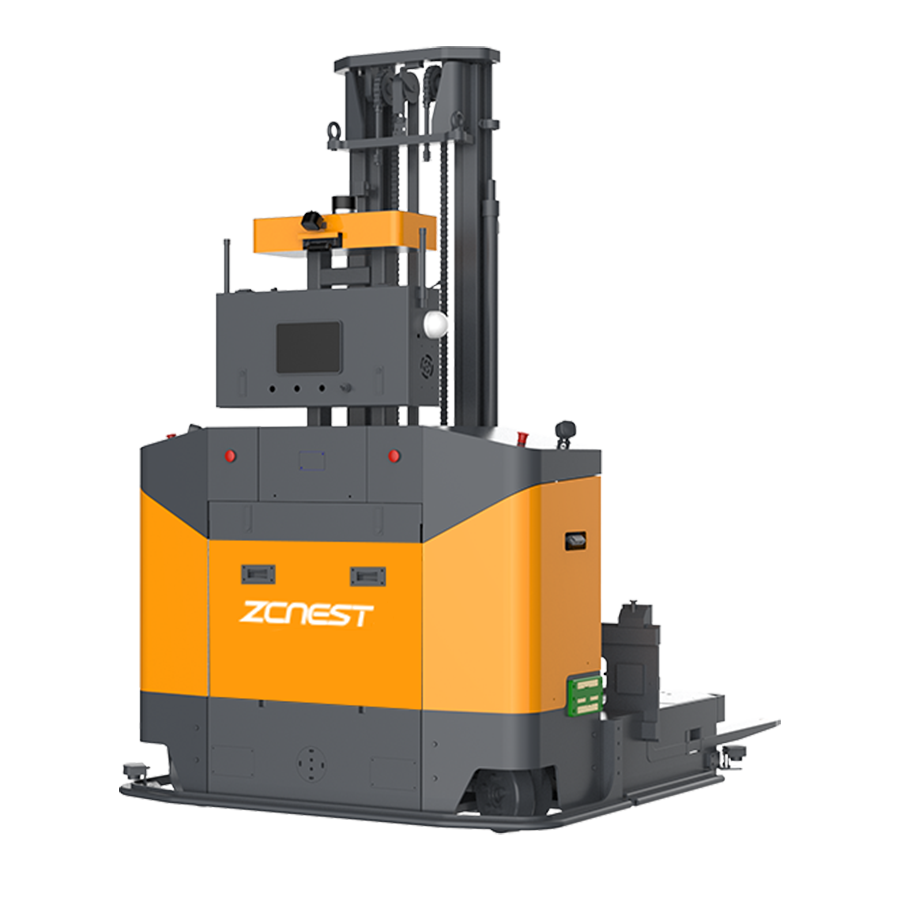
Proposed automation solution
Supplier comparison
Financial analysis
Risk assessment
Implementation roadmap
Expected operational benefits
Investment recommendation
This structure helps decision makers evaluate the project from strategic, operational, and financial perspectives without becoming overwhelmed by technical details.
A successful AGV proposal is not built around product features—it is built around business outcomes. By answering the questions executives care about most, including operational challenges, financial return, implementation risks, supplier capability, and long-term scalability, you create a business case that supports informed decision-making and increases the likelihood of project approval.
FREE ENGINEERING SUPPORT Stop Gambling on Generic Platforms. Get an AGV/AMR Tailored to Your Warehouse.Buying automated guided vehicles involves complex safety standards (CE/ANSI), navigation setups (Laser SLAM), and ERP system integration. Don't risk your factory safety with middle-men. ✓ 100% Direct Factory: Customized payload up to 5 Tons. ✓ Free CAD Simulation: Send us your layout, and our engineers will simulate the optimal AGV routes. ✓ Global Support: Overseas installation guidance & local maintenance partners. |





 Chinese
 English