

"Will this automation system still support future AI upgrades five or ten years from now?"
A warehouse automation project is a long-term investment. Choosing an AGV system that cannot evolve may create expensive replacement costs in the future.
The key is not purchasing the most advanced technology today, but selecting a system architecture that can continuously improve.
Many companies make the mistake of evaluating only current requirements:
Current pallet flow
Current warehouse layout
Current production volume
Current software requirements
However, warehouse operations usually change over time.
Future changes may include:
Higher order volume
More AGV vehicles
New warehouse zones
Automated loading docks
AI vision systems
Advanced warehouse analytics
A future-ready AGV platform should support these changes without requiring a complete system replacement.
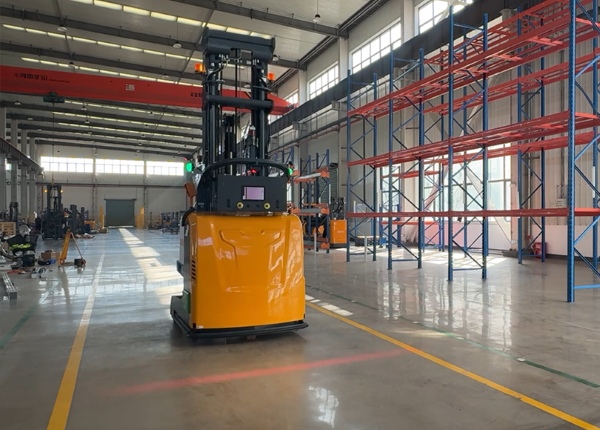
The warehouse environment directly affects future automation capability.
Before importing AGV forklifts, companies should consider:
Future AGV traffic routes
Charging station locations
Robot expansion areas
Safety zones
Loading and unloading points
Human and robot interaction areas
A flexible layout allows companies to add new automation technologies without major warehouse reconstruction.
One of the biggest concerns for buyers is whether the AGV hardware platform can support future technology improvements.
Important hardware considerations include:
Computing capability
Sensor interfaces
Camera compatibility
Communication ports
Controller upgrade options
Modular mechanical design
For example, future AI vision applications may require additional cameras, higher computing power, or improved sensor integration.
Before purchasing, buyers should ask whether the AGV chassis and controller architecture allow future upgrades.
Modern AGV systems rely heavily on software, not only hardware.
A future-ready fleet management platform should support:
Traffic optimization
Dynamic route planning
Fleet scheduling
Performance monitoring
Data analysis
Remote software updates
Some advanced systems can use operational data to improve efficiency, while others rely mainly on fixed programming rules.
When evaluating Chinese AGV manufacturers, companies should understand the software development roadmap rather than only current functions.
Many companies start automation inside the warehouse but later expand to outdoor or dock operations.
Future expansion may require:
Truck loading automation
Container unloading
Yard transportation
Dock scheduling integration
Weather-resistant equipment
A flexible AGV platform should support integration with future logistics processes instead of being limited to one warehouse area.
A common concern is whether future software upgrades will require new infrastructure.
Before purchasing, companies should clarify:
Local server requirements
Cloud platform compatibility
Operating system requirements
Database architecture
API availability
Software upgrade process
A modular software architecture reduces the risk of replacing the entire IT infrastructure when new AI functions are introduced.
A future-ready AGV solution usually has several characteristics:
Modular hardware design
Open communication protocols
Flexible API integration
Expandable fleet management
Upgradeable sensors
Continuous software development
Support for multiple robot types
These factors allow companies to expand automation gradually instead of replacing the entire system.
Can the AGV support future AI vision upgrades?
Is the controller hardware replaceable?
Does the software platform support continuous upgrades?
Can additional AGVs be added without changing the main system?
Does the RCS support third-party integration?
What is the manufacturer's five-year technology roadmap?
Can the system support future warehouse expansion?
The best AGV investment is not necessarily the system with the most features today.
It is the system that can continue improving as your business grows.
When importing AGV forklifts from China, companies should evaluate hardware flexibility, software scalability, network architecture, and future upgrade capability before making a decision.
A future-proof automation strategy reduces technology risk and helps companies build a warehouse that can adapt to the next generation of intelligent logistics.
FREE ENGINEERING SUPPORT Stop Gambling on Generic Platforms. Get an AGV/AMR Tailored to Your Warehouse.Buying automated guided vehicles involves complex safety standards (CE/ANSI), navigation setups (Laser SLAM), and ERP system integration. Don't risk your factory safety with middle-men. ✓ 100% Direct Factory: Customized payload up to 5 Tons. ✓ Free CAD Simulation: Send us your layout, and our engineers will simulate the optimal AGV routes. ✓ Global Support: Overseas installation guidance & local maintenance partners. |





 Chinese
 English