


Replacing traditional manual forklifts with electric AGV forklifts can potentially reduce emissions, improve energy efficiency, and support sustainability initiatives.
However, companies need a measurable calculation method rather than simply claiming that automation is environmentally friendly.
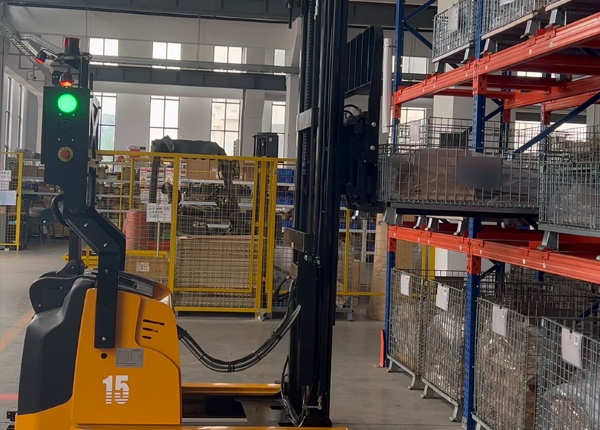
Many organizations now track environmental performance across their supply chain and operational facilities.
Warehouse equipment can influence sustainability performance through:
Fuel consumption
Electricity usage
Maintenance requirements
Equipment lifecycle
Operational efficiency
Material recycling potential
A clear carbon calculation helps companies evaluate whether AGV investment supports their environmental objectives.
The first step is comparing the energy consumption of the existing forklift fleet with the proposed AGV solution.
Traditional forklifts may use:
LPG fuel
Diesel
Lead-acid batteries
Electric AGV forklifts typically use:
Lithium batteries
Automated charging systems
Electric power supply
The carbon difference depends on actual operating hours, energy prices, electricity generation sources, and equipment efficiency.
A practical calculation should compare annual energy consumption before and after automation.
Important data points include:
Current forklift operating hours per year
LPG consumption per hour
Electric AGV electricity consumption
Local electricity emission factor
Number of replaced forklifts
Annual operating days
The result can be used to estimate annual carbon reduction and support internal sustainability reporting.
Charging infrastructure is an important part of AGV sustainability performance.
Companies should evaluate:
Battery charging efficiency
Charging frequency
Standby power consumption
Battery management system performance
Charging schedule optimization
Advanced charging strategies can reduce unnecessary energy consumption and improve battery lifecycle.
Carbon reduction is not only about daily operation. Companies should also consider the complete equipment lifecycle.
A lifecycle assessment may include:
Raw material production
Manufacturing process
International transportation
Daily energy consumption
Maintenance requirements
End-of-life recycling
This approach provides a more accurate sustainability evaluation than only comparing fuel consumption.
Industrial robots contain materials that may have recycling value.
Common recyclable materials include:
Steel structures
Aluminum components
Copper wiring
Electronic components
Battery materials
Plastic components
Before purchasing, companies can ask suppliers about:
Material composition
Battery recycling process
Equipment disposal recommendations
Environmental compliance documentation
Many companies include automation projects in their sustainability initiatives.
AGV projects may contribute to ESG goals through:
Lower direct fuel consumption
Reduced workplace emissions
Improved operational efficiency
Better resource utilization
Digital monitoring of energy usage
However, companies should use measured operational data rather than general assumptions when preparing ESG reports.
Some regions provide incentives related to:
Energy efficiency improvements
Electric equipment adoption
Carbon reduction projects
Clean technology investment
Eligibility depends on local government policies, industry requirements, and project documentation.
Companies should verify available programs before including incentives in their financial calculations.
Annual energy consumption estimate
Battery specifications and lifecycle information
Charging system efficiency data
Material composition information
Recycling recommendations
Environmental certifications
Manufacturing sustainability information
Energy monitoring capability
| Evaluation Area | Key Questions |
|---|---|
| Energy Consumption | How much electricity does the AGV use annually? |
| Carbon Reduction | How much emission is reduced compared with existing equipment? |
| Lifecycle | What happens after the equipment reaches end of life? |
| Compliance | Can sustainability data support ESG reporting? |
The sustainability value of AGV forklifts should be measured through real operational data, not only through the fact that they use electricity.
By comparing energy consumption, carbon emissions, lifecycle impact, and recycling potential, companies can build a stronger business case for warehouse automation.
For organizations importing AGV forklifts from China, sustainability analysis provides a clearer understanding of both environmental benefits and long-term business value.
FREE ENGINEERING SUPPORT Stop Gambling on Generic Platforms. Get an AGV/AMR Tailored to Your Warehouse.Buying automated guided vehicles involves complex safety standards (CE/ANSI), navigation setups (Laser SLAM), and ERP system integration. Don't risk your factory safety with middle-men. ✓ 100% Direct Factory: Customized payload up to 5 Tons. ✓ Free CAD Simulation: Send us your layout, and our engineers will simulate the optimal AGV routes. ✓ Global Support: Overseas installation guidance & local maintenance partners. |





 Chinese
 English