


One of the biggest concerns when importing AGV forklifts from China is not how Laser SLAM works in theory—it is whether it will work reliably in your existing warehouse without major modifications.
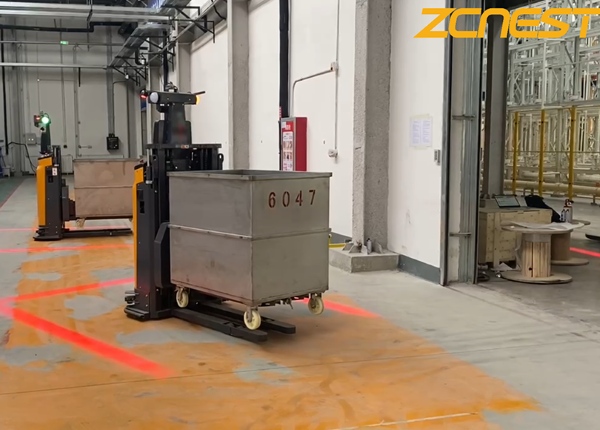
Warehouse managers and automation engineers typically ask practical questions such as:
Do I need to install reflectors or magnetic guides?
Can the AGV handle changing pallet layouts?
Will low-light conditions affect navigation?
How often will the warehouse map need to be updated?
Understanding these deployment considerations helps companies determine whether Laser SLAM is the right navigation technology for their facility.
Many companies want to automate their warehouse without shutting down operations or modifying infrastructure.
Before selecting an AGV solution, evaluate whether your facility requires:
Wall reflectors
Magnetic tape
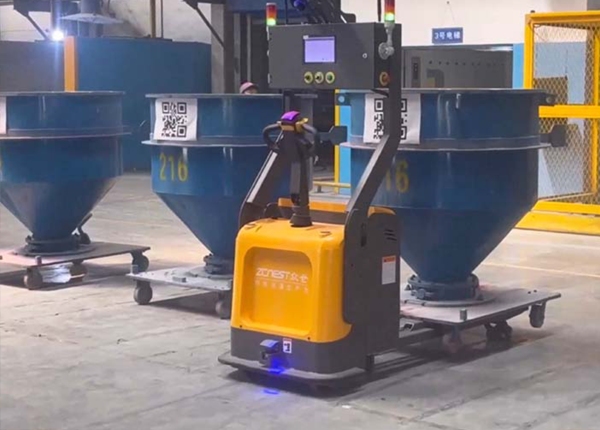
QR codes
Embedded navigation markers
Floor reconstruction
Different navigation technologies have different infrastructure requirements. Buyers should understand what preparation is needed before deployment.
Warehouses are dynamic environments. Pallets, racks, and temporary storage locations change frequently.
During supplier evaluation, companies should ask how the navigation system responds to:
Temporary pallet stacks
New storage areas
Relocated racks
Blocked aisles
Seasonal layout adjustments
Understanding the system's ability to adapt to operational changes is often more valuable than simply knowing the navigation technology it uses.
Many logistics facilities operate at night, in cold storage, or in areas with limited lighting.
When evaluating an AGV solution, companies should verify its performance under:
Low-light environments
Night shifts
Cold storage facilities
Dusty warehouses
Mixed indoor lighting conditions
Testing the system in conditions similar to your own warehouse is an important part of project validation.
A common concern is whether every layout change requires creating a new warehouse map.
Typical situations that may require map updates include:
Permanent rack relocation
Warehouse expansion
New production areas
Traffic route changes
Loading dock modifications
Before purchasing, buyers should understand how map maintenance is performed and who is responsible for updating navigation data.
No navigation technology is ideal for every application.
Companies should evaluate:
Warehouse size
Aisle width
Traffic density
Storage configuration
Future expansion plans
Integration with warehouse software
Choosing the right navigation method depends on the operational environment rather than marketing claims.
Does the system require reflectors, magnets, or QR codes?
How are warehouse maps created and maintained?
How does the AGV respond to changing pallet layouts?
Can navigation continue during low-light operation?
Who performs map updates after warehouse changes?
How long does remapping typically take?
Can additional warehouse areas be added without rebuilding the entire map?
| Evaluation Area | Questions to Consider |
|---|---|
| Infrastructure | Does the warehouse require physical navigation markers? |
| Flexibility | Can the system adapt to layout changes? |
| Environment | Will navigation remain reliable in your operating conditions? |
| Maintenance | How easy is map updating and long-term management? |
Selecting a Laser SLAM AGV system involves more than understanding the navigation technology. Companies should evaluate deployment requirements, operational flexibility, environmental suitability, and long-term maintenance before making a purchasing decision.
By asking practical deployment questions and validating the solution against real warehouse conditions, businesses can reduce implementation risks and improve the success of their AGV automation projects.
FREE ENGINEERING SUPPORT Stop Gambling on Generic Platforms. Get an AGV/AMR Tailored to Your Warehouse.Buying automated guided vehicles involves complex safety standards (CE/ANSI), navigation setups (Laser SLAM), and ERP system integration. Don't risk your factory safety with middle-men. ✓ 100% Direct Factory: Customized payload up to 5 Tons. ✓ Free CAD Simulation: Send us your layout, and our engineers will simulate the optimal AGV routes. ✓ Global Support: Overseas installation guidance & local maintenance partners. |





 Chinese
 English