


Companies that already use SAP, Oracle, Infor, Manhattan, Blue Yonder or custom warehouse management systems usually want to know whether Chinese AGVs can fit into their current IT environment instead of replacing it.
Before selecting a supplier, understanding the integration architecture, required infrastructure and project workflow is just as important as comparing AGV specifications.
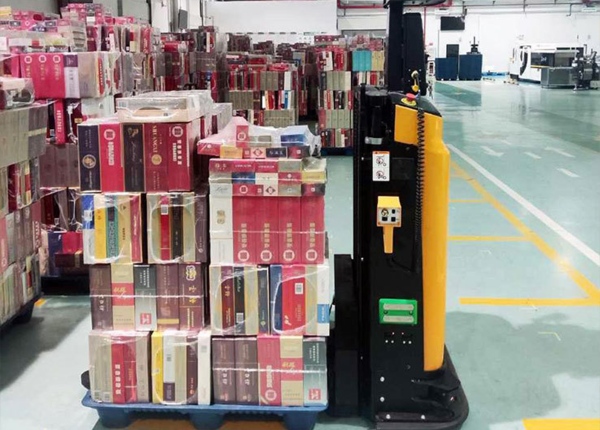
An AGV fleet creates the greatest value when it becomes part of the warehouse's existing digital workflow rather than operating as an isolated system.
Typical enterprise systems that may interact with AGVs include:
Warehouse Management System (WMS)
Enterprise Resource Planning (ERP)
Manufacturing Execution System (MES)
Warehouse Control System (WCS)
Barcode and handheld scanning systems
The goal is to exchange task information automatically while minimizing changes to existing business processes.
One of the first questions during supplier evaluation is whether the current warehouse software can continue operating after AGVs are introduced.
Companies should clarify:
Which system creates transport tasks?
How are tasks transmitted to the AGV fleet?
Can existing workflows remain unchanged?
What interface methods are available?
How much software customization is required?
Understanding these topics early helps reduce implementation risks and unexpected development costs.
Although every project is different, companies should understand how information moves between business systems and autonomous forklifts.
Warehouse software generates transport requests.
Fleet management software assigns tasks to available AGVs.
The AGV completes the movement.
Task completion is returned to warehouse systems.
Inventory and operational status are updated automatically.
Reviewing the complete workflow helps both warehouse operations and IT teams understand system responsibilities before deployment.
Many warehouses already rely on barcode scanners, RF terminals or handheld computers for daily operations.
Before deployment, companies should determine whether AGV transport requests can be initiated using existing operator tools instead of introducing additional manual processes.
This approach helps reduce training requirements and preserves established warehouse workflows.
Accurate inventory visibility is one of the key benefits of warehouse automation.
Companies should evaluate how completed transport tasks are reflected in enterprise systems, including:
Inventory location updates
Material movement records
Production supply status
Finished goods transactions
Warehouse activity history
Automatic synchronization can improve operational visibility and reduce manual data entry.
Before implementation, IT departments should evaluate whether current infrastructure can support the AGV fleet management platform.
Typical considerations include:
Server deployment options
Network availability
Database requirements
System backup strategy
User authentication
Software update management
High availability and disaster recovery planning
Infrastructure planning should be completed before installation to reduce project delays.
Successful AGV projects are typically introduced in phases rather than replacing all warehouse processes at once.
A phased implementation may include:
Pilot testing
System interface validation
Operator training
Performance monitoring
Gradual fleet expansion
Testing each stage helps identify potential issues before large-scale deployment.
What interface methods are supported?
Can the AGV fleet integrate with our current WMS?
What enterprise systems have been integrated previously?
How are inventory updates synchronized?
What server environment is recommended?
Who is responsible for interface development?
How are software updates managed after deployment?
Can the system support future warehouse expansion?
| Evaluation Area | Questions to Review |
|---|---|
| Business Systems | Can the AGV connect with existing WMS, ERP and MES platforms? |
| Workflow | Will current warehouse processes remain unchanged? |
| Infrastructure | Is current IT infrastructure sufficient for deployment? |
| Scalability | Can the software support future fleet expansion? |
Integrating AGV forklifts with existing warehouse software is often the most important stage of an automation project. Rather than focusing only on technical interface specifications, companies should evaluate implementation complexity, workflow compatibility, infrastructure readiness and long-term scalability.
A well-planned integration strategy helps reduce project risk, minimizes operational disruption and allows AGV systems to become a seamless part of the warehouse's digital ecosystem.
FREE ENGINEERING SUPPORT Stop Gambling on Generic Platforms. Get an AGV/AMR Tailored to Your Warehouse.Buying automated guided vehicles involves complex safety standards (CE/ANSI), navigation setups (Laser SLAM), and ERP system integration. Don't risk your factory safety with middle-men. ✓ 100% Direct Factory: Customized payload up to 5 Tons. ✓ Free CAD Simulation: Send us your layout, and our engineers will simulate the optimal AGV routes. ✓ Global Support: Overseas installation guidance & local maintenance partners. |





 Chinese
 English