


For most warehouse automation projects, purchasing AGVs is only the beginning. The real question for operations managers is how quickly the fleet can be installed, tested, accepted and integrated into daily warehouse operations without disrupting productivity.
A well-planned deployment strategy helps companies shorten the time between equipment delivery and full operational use, allowing them to realize automation benefits sooner while minimizing implementation risks.
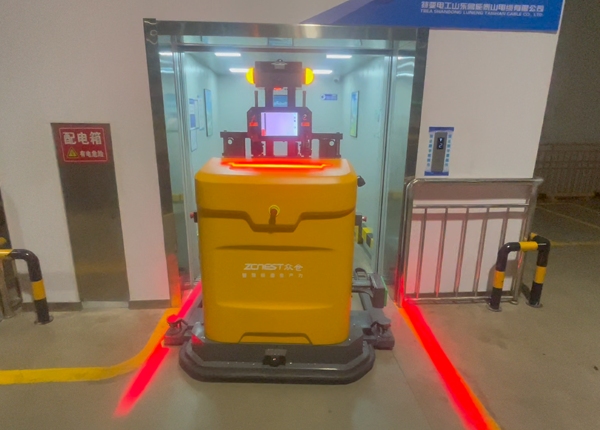
The faster an AGV fleet reaches stable operation, the sooner businesses can improve warehouse efficiency, reduce labor dependency and begin generating a return on investment.
Successful deployment depends on preparation, coordination and training rather than installation alone.
Although every warehouse is different, most AGV implementation projects follow a structured sequence of activities.
Equipment arrival and unloading.
Site inspection and infrastructure verification.
AGV installation and software configuration.
Warehouse mapping and navigation validation.
Integration with WMS, ERP or MES systems.
Functional testing and performance verification.
Operator and maintenance training.
Pilot operation before full production rollout.
Following a phased implementation plan helps reduce unexpected delays and improves project predictability.
Many warehouse managers worry that introducing autonomous forklifts will interrupt existing operations.
In many projects, deployment is carried out in stages rather than replacing the entire workflow at once. Companies may begin with a limited operating area, validate system performance and gradually expand automation as confidence increases.
A phased rollout can help reduce operational disruption while allowing employees to adapt to the new workflow.
Long-term project success depends on ensuring that warehouse personnel understand how to operate and maintain the AGV system.
Training programs often involve different user groups, including:
Warehouse operators
Maintenance technicians
System administrators
IT support personnel
Warehouse supervisors
Training should cover routine operation, basic troubleshooting, safety procedures and daily system management.
Software usability plays an important role in operator acceptance and long-term efficiency.
Before selecting a supplier, companies should evaluate:
English-language user interface
Clear operational dashboards
Role-based user permissions
Alarm and notification management
Reporting and performance analytics
An intuitive interface can shorten training time and reduce the learning curve for warehouse staff.
Preparation before equipment arrival often has the greatest impact on deployment speed.
Best practices include:
Preparing warehouse infrastructure in advance.
Completing network and server installation before delivery.
Verifying software integration requirements early.
Scheduling operator training before pilot testing.
Conducting phased acceptance testing before full production.
What is the typical implementation timeline for a project of our size?
Can installation be completed without shutting down warehouse operations?
What training is provided for operators, maintenance teams and IT personnel?
Is the fleet management software fully available in English?
How is Site Acceptance Testing (SAT) conducted?
What support is available during the go-live period?
How are software updates and future user training handled?
| Preparation Area | Key Questions |
|---|---|
| Warehouse Readiness | Is the facility prepared for AGV installation and testing? |
| System Integration | Are WMS, ERP and network infrastructure ready? |
| Training | Have operators, technicians and administrators received appropriate training? |
| Go-Live | Has pilot testing been completed before full production? |
Deploying an AGV fleet successfully involves much more than equipment installation. Companies should plan the entire onboarding process, including infrastructure preparation, software integration, user training and phased operational rollout.
By focusing on deployment readiness and structured implementation, businesses can reduce project risks, minimize operational disruption and bring their warehouse automation system into production more efficiently.
FREE ENGINEERING SUPPORT Stop Gambling on Generic Platforms. Get an AGV/AMR Tailored to Your Warehouse.Buying automated guided vehicles involves complex safety standards (CE/ANSI), navigation setups (Laser SLAM), and ERP system integration. Don't risk your factory safety with middle-men. ✓ 100% Direct Factory: Customized payload up to 5 Tons. ✓ Free CAD Simulation: Send us your layout, and our engineers will simulate the optimal AGV routes. ✓ Global Support: Overseas installation guidance & local maintenance partners. |





 Chinese
 English