


Warehouse automation is expanding beyond indoor facilities. Many manufacturers, logistics centers and industrial campuses now require autonomous forklifts to transport materials between buildings, loading docks and outdoor storage areas.
Before importing an outdoor AGV from China, companies should evaluate how the system performs under real environmental conditions, including changing weather, uneven lighting, outdoor navigation and facility infrastructure.
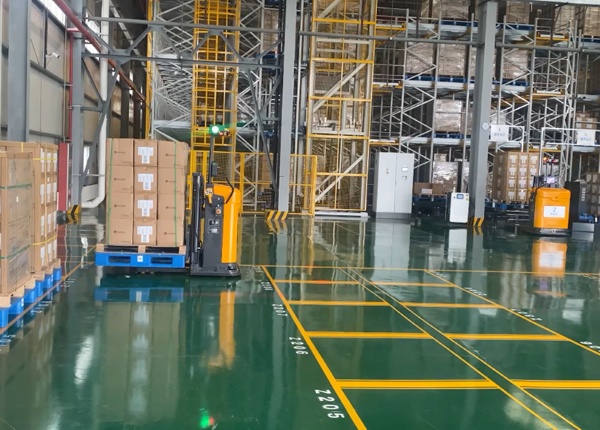
Unlike indoor warehouses, outdoor environments introduce variables that can affect autonomous operation, including weather, temperature, lighting and surface conditions.
Typical outdoor applications include:
Building-to-building material transport
Factory campus logistics
Loading dock operations
Outdoor warehouse connections
Industrial park transportation routes
Environmental conditions vary significantly between regions, making climate suitability an important part of project planning.
Before deployment, buyers should discuss with suppliers how the AGV is designed to operate under conditions such as:
Heavy rainfall
Snow and ice
High humidity
Extreme summer temperatures
Cold winter environments
Wind and airborne dust
Understanding environmental operating limits helps ensure reliable performance throughout the year.
Outdoor environments expose autonomous vehicles to changing sunlight, shadows and reflections throughout the day.
Companies should evaluate how the navigation system performs during:
Bright afternoon sunlight
Cloudy weather
Early morning and evening operation
Seasonal daylight changes
Mixed indoor-to-outdoor transitions
Stable localization under varying environmental conditions is essential for reliable outdoor operation.
Many outdoor transport routes require AGVs to pass through automatic roller doors, fire doors or loading dock entrances.
Before implementation, companies should determine whether the automation system can coordinate with existing door control systems to support safe and uninterrupted vehicle movement.
Door integration planning should also include safety interlocks, access permissions and traffic coordination.
Outdoor environments may occasionally expose sensors to temporary interference from leaves, dust, rain, snow or other obstacles.
When evaluating an outdoor AGV solution, buyers should understand how the system responds to unexpected environmental events while maintaining safe operation.
Important evaluation topics include:
Obstacle detection
Temporary sensor interference
Safety stop procedures
System recovery logic
Operator notification and alarm handling
A successful outdoor AGV project requires more than selecting a weather-resistant vehicle. Companies should assess the complete operating environment, including climate, infrastructure and traffic conditions.
Climate suitability
Road surface conditions
Building connectivity
Automatic door integration
Outdoor communication coverage
Maintenance accessibility
Which outdoor weather conditions has this AGV been validated for?
How does the navigation system maintain stable localization outdoors?
Can the AGV integrate with automatic roller doors and loading dock systems?
How does the vehicle respond if sensors are temporarily blocked?
What environmental operating limits should be considered?
Can the supplier provide reference projects with outdoor applications?
What maintenance recommendations apply to outdoor operation?
| Evaluation Area | Questions to Review |
|---|---|
| Climate | Can the AGV operate reliably in local weather conditions throughout the year? |
| Navigation | How does the system adapt to changing outdoor environments? |
| Infrastructure | Can the AGV interact with existing automatic doors and loading facilities? |
| Operational Safety | How does the system respond to temporary environmental interference? |
Outdoor AGV deployment requires careful evaluation of environmental conditions, infrastructure compatibility and operational safety. Rather than focusing solely on weather resistance, companies should assess how autonomous forklifts perform throughout the complete outdoor transportation process—from navigation and door integration to sensor reliability and seasonal climate changes.
A comprehensive site assessment and close collaboration with an experienced supplier can help ensure reliable outdoor material handling while supporting long-term warehouse and factory automation goals.
FREE ENGINEERING SUPPORT Stop Gambling on Generic Platforms. Get an AGV/AMR Tailored to Your Warehouse.Buying automated guided vehicles involves complex safety standards (CE/ANSI), navigation setups (Laser SLAM), and ERP system integration. Don't risk your factory safety with middle-men. ✓ 100% Direct Factory: Customized payload up to 5 Tons. ✓ Free CAD Simulation: Send us your layout, and our engineers will simulate the optimal AGV routes. ✓ Global Support: Overseas installation guidance & local maintenance partners. |





 Chinese
 English