


As autonomous forklifts become part of enterprise warehouse operations, cybersecurity has become just as important as mechanical reliability. Modern AGV systems exchange operational data with fleet management software, warehouse management systems (WMS), manufacturing execution systems (MES) and enterprise resource planning (ERP) platforms. Before importing AGVs from China, companies should evaluate how the supplier protects operational data, secures network communications and supports enterprise IT security policies.
Rather than asking whether an AGV is "connected to China," organizations should assess the complete cybersecurity architecture, including data ownership, deployment options, network isolation, remote maintenance controls and compliance with enterprise security requirements.
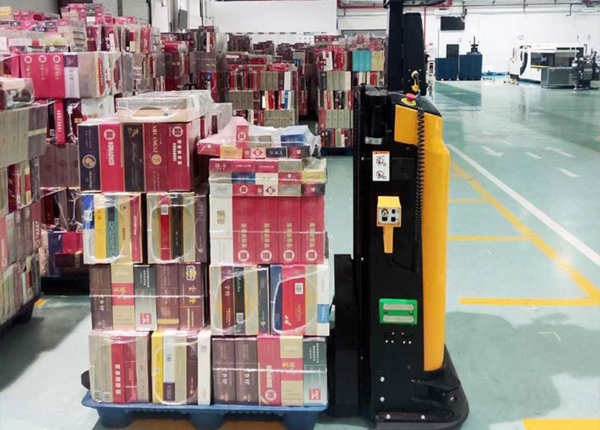
An AGV fleet is no longer an isolated machine. It communicates with warehouse software, industrial controllers and business systems. Protecting these connections helps reduce operational risk and supports business continuity.
A comprehensive cybersecurity strategy should address:
Operational data protection
Secure network communications
User authentication and authorization
Remote support controls
Software update security
System audit logging
One of the first questions enterprise IT teams ask is where operational data is stored and who controls it.
Before selecting a supplier, companies should clarify whether the AGV platform supports:
On-premises deployment
Private data center installation
Local database storage
Offline operation without Internet connectivity
Customer-controlled data backup and retention
Organizations with strict compliance requirements often prefer architectures that allow critical operational data to remain entirely within their own IT environment.
Remote diagnostics can significantly reduce support time, but enterprise customers typically require strict control over external access.
A secure support process should define:
Customer approval before every remote session
Time-limited maintenance access
Role-based user permissions
Comprehensive audit logs
Session recording where required
Many organizations adopt a "least privilege" approach so that external engineers receive only the permissions necessary to complete a specific maintenance task.
Separating operational technology (OT) from enterprise IT infrastructure is a common cybersecurity practice.
Companies should evaluate whether the AGV system supports:
Dedicated industrial VLANs
Firewall segmentation
Industrial DMZ architecture
Private network deployment
Restricted communication between business and operational systems
Proper network segmentation can reduce the impact of cyber incidents and improve overall system resilience.
AGVs exchange information continuously with fleet management software and warehouse infrastructure. Secure communication protocols help protect operational data during transmission.
When evaluating suppliers, ask about support for:
Encrypted communication channels
TLS-secured connections where applicable
Certificate-based authentication
Secure API communication
Protected software update mechanisms
The exact technologies used may vary depending on the system architecture and customer deployment requirements.
Security should be evaluated using recognized frameworks and documented processes rather than marketing claims.
Depending on the project and supplier, buyers may ask about alignment with:
ISO/IEC 27001 information security management practices
IEC 62443 industrial cybersecurity principles
Role-based access control (RBAC)
Password and identity management policies
Security patch management procedures
Software vulnerability response processes
The applicable certifications or compliance requirements will depend on the customer's industry and deployment model.
Can the entire AGV system be deployed on our local servers?
Does the platform support completely offline operation?
How is remote maintenance authorized and audited?
What encryption methods protect operational communications?
Can the AGV network be isolated from our corporate network?
How are software updates verified before installation?
What cybersecurity documentation can you provide during supplier evaluation?
How are security vulnerabilities reported and resolved?
| Security Area | Evaluation Focus |
|---|---|
| Data Governance | Can operational data remain under customer control? |
| Network Security | Does the system support network segmentation and secure communications? |
| Remote Access | Is remote support controlled, authenticated and auditable? |
| Compliance | Can the supplier provide relevant security documentation and policies? |
Cybersecurity should be treated as a core requirement of any AGV deployment rather than an afterthought. Organizations evaluating autonomous forklifts from China should assess how the system handles data ownership, network architecture, secure communications and remote support controls within their own IT governance framework.
By discussing cybersecurity requirements early in the procurement process and documenting them as part of the project specification, companies can reduce implementation risks while supporting secure, long-term warehouse automation.
FREE ENGINEERING SUPPORT Stop Gambling on Generic Platforms. Get an AGV/AMR Tailored to Your Warehouse.Buying automated guided vehicles involves complex safety standards (CE/ANSI), navigation setups (Laser SLAM), and ERP system integration. Don't risk your factory safety with middle-men. ✓ 100% Direct Factory: Customized payload up to 5 Tons. ✓ Free CAD Simulation: Send us your layout, and our engineers will simulate the optimal AGV routes. ✓ Global Support: Overseas installation guidance & local maintenance partners. |





 Chinese
 English