


In real warehouse environments, pallets are not always perfect. Wooden pallets may be damaged, loads may shift during transportation, and packaging materials may block forklift entry points.
Before importing automated forklifts from China, companies need to understand how AGV systems detect pallet conditions, prevent unsafe handling and decide when a task should be stopped.
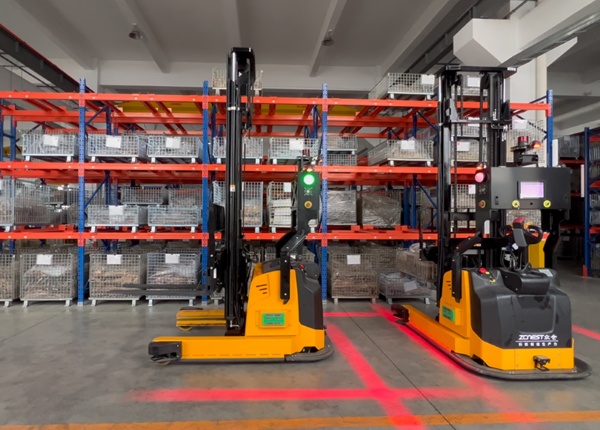
Human forklift operators naturally evaluate pallet conditions before picking up a load. They can visually identify broken boards, unstable products or unsafe positioning.
An autonomous forklift needs sensors and software algorithms to perform similar safety checks.
Common warehouse pallet problems include:
Broken wooden pallet boards
Missing pallet sections
Uneven load distribution
Damaged packaging
Blocked forklift pockets
Overloaded pallets
Modern autonomous forklifts use multiple sensing technologies to understand pallet position and surrounding conditions.
Typical technologies include:
3D vision cameras
Laser scanners
Distance sensors
Pallet detection algorithms
Load position monitoring systems
By combining sensor information with control software, the AGV can determine whether a pallet is correctly positioned before starting a lifting operation.
The ability to detect pallet damage depends on the sensor configuration, software capability and warehouse environment.
Possible detection functions include:
Identifying missing pallet structures
Detecting abnormal pallet positions
Recognizing obstacles around fork entry areas
Checking whether lifting conditions are acceptable
If the system detects unsafe conditions, the AGV can stop the operation or request human confirmation depending on the configured workflow.
Load movement can create safety risks during automated transportation, especially when pallets contain unstable goods.
An advanced AGV system may monitor:
Load position
Pallet alignment
Fork engagement condition
Vehicle movement stability
Abnormal operating situations
If an abnormal condition is detected, the system can trigger warnings or stop the task based on safety rules.
Stretch wrapping film, damaged packaging or incorrectly positioned goods can block pallet entry points.
AGV systems can use vision and positioning technologies to evaluate:
Fork entry alignment
Pallet pocket position
Obstacles near the fork area
Approach accuracy
If the system cannot confirm a safe pickup position, the AGV should avoid forcing the operation.
Overloading is a critical safety issue for any automated forklift system.
AGV safety mechanisms may include:
Rated load limitation
Weight detection systems
Software protection rules
Lift monitoring
Task rejection procedures
If the detected load exceeds the configured capacity, the system should prevent unsafe lifting operations.
An autonomous forklift does not simply execute every assigned movement. It evaluates conditions before and during operation.
The decision process may consider:
Pallet recognition result
Load information
Sensor feedback
Safety zone status
Vehicle position accuracy
When conditions are outside safe operating limits, the system can stop, report an issue or request operator assistance.
Automated pallet verification helps reduce risks caused by inconsistent manual judgment.
Potential benefits include:
Fewer damaged pallets
Reduced product handling accidents
Lower risk of unsafe lifting
More consistent warehouse operations
Better safety documentation
Can the AGV detect damaged pallets?
What sensors are used for pallet recognition?
Can the system detect shifted loads?
How does the AGV handle blocked pallet openings?
Does the forklift verify load weight before lifting?
What happens when pickup conditions are unsafe?
Can safety events be recorded in the software?
| Safety Item | Evaluation Requirement |
|---|---|
| Pallet Recognition | Can the AGV accurately identify pallet position? |
| Load Verification | Can the system prevent unsafe lifting? |
| Obstacle Detection | Can sensors identify blocked fork areas? |
| Failure Handling | Does the AGV stop safely when conditions are abnormal? |
A reliable automated forklift must do more than move pallets. It must understand pallet conditions, identify potential risks and make safe decisions before performing lifting operations.
Before importing AGV forklifts from China, companies should evaluate sensor capability, safety logic and real warehouse application performance to ensure reliable automation in daily operations.
FREE ENGINEERING SUPPORT Stop Gambling on Generic Platforms. Get an AGV/AMR Tailored to Your Warehouse.Buying automated guided vehicles involves complex safety standards (CE/ANSI), navigation setups (Laser SLAM), and ERP system integration. Don't risk your factory safety with middle-men. ✓ 100% Direct Factory: Customized payload up to 5 Tons. ✓ Free CAD Simulation: Send us your layout, and our engineers will simulate the optimal AGV routes. ✓ Global Support: Overseas installation guidance & local maintenance partners. |





 Chinese
 English