


Industrial warehouses and factories often operate in challenging environments where dust, particles and airborne materials are unavoidable. Before importing AGV/AMR forklifts from China, companies need to understand whether autonomous vehicles can maintain reliable operation under high-dust conditions.
The key considerations include sensor protection, navigation reliability, electrical protection levels and maintenance requirements.
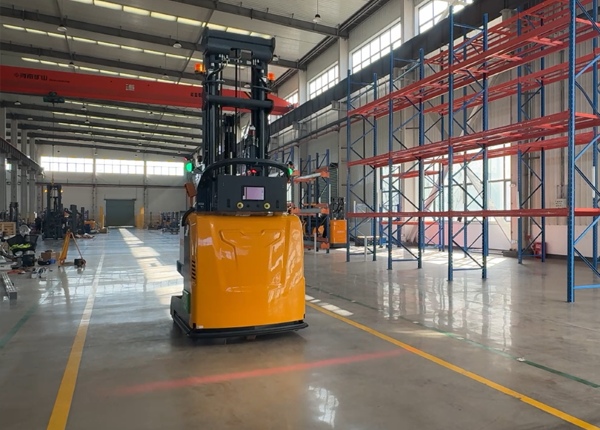
Unlike office environments, industrial facilities may contain dust generated from production processes, packaging materials, raw materials and vehicle movement.
Common dust sources include:
Wood particles from pallets
Metal dust from machining operations
Plastic particles from packaging
Powder materials from manufacturing
Warehouse debris from daily operations
Excessive dust accumulation may affect sensors, mechanical components and electrical systems if the AGV is not designed for industrial environments.
Many industrial AGVs use LiDAR-based navigation, which relies on laser scanning to understand the surrounding environment.
Heavy dust may create challenges such as:
Sensor window contamination
Reduced scanning accuracy
False obstacle detection
Additional maintenance requirements
Professional AGV systems are designed with protective sensor placement and maintenance procedures to maintain navigation reliability in industrial environments.
Sensor protection is an important part of AGV reliability in dusty facilities.
Common protection methods include:
Protective sensor covers
Optimized sensor mounting positions
Dust-resistant housing designs
Regular cleaning procedures
Sensor monitoring software
The actual protection level depends on the AGV model and application environment.
Maintenance frequency depends on dust concentration, operating hours and factory conditions.
A typical maintenance program may include:
Daily visual inspection of critical sensors
Regular cleaning of LiDAR and camera surfaces
Weekly condition checks
Scheduled preventive maintenance
Facilities with extremely high dust levels may require more frequent inspections.
Industrial AGVs should include protective designs for electrical components, controllers and drive systems.
Important specifications to evaluate include:
IP protection rating
Electrical enclosure design
Motor protection level
Battery compartment protection
Cooling system design
Higher IP ratings generally indicate stronger protection against dust and water ingress, but the correct specification depends on the working environment.
IP ratings describe the protection level of equipment against solid particles and liquids.
When evaluating AGVs for dusty environments, companies should ask suppliers:
What is the IP rating of the vehicle body?
What is the protection level of electrical cabinets?
Are motors designed for industrial environments?
Are sensors protected against dust exposure?
Some specialized AGV solutions may include additional cleaning features depending on application requirements.
Possible solutions include:
Air blow cleaning systems
Protective covers
Dust shields
Special industrial sensor configurations
However, automatic cleaning systems are usually application-specific and should be confirmed with the manufacturer before purchase.
Successful deployment depends on both equipment selection and operating practices.
Recommended actions include:
Select AGVs designed for industrial environments
Confirm IP protection requirements
Define sensor maintenance schedules
Keep operating routes clean
Train operators on preventive maintenance
Monitor system alarms regularly
What dust protection rating does the AGV have?
What is the IP rating of the electrical components?
How does the navigation system handle dust interference?
How frequently should sensors be cleaned?
Are automatic sensor cleaning options available?
Do you have AGV cases in dusty industrial environments?
What maintenance procedures are recommended?
| Evaluation Area | Key Requirement |
|---|---|
| Navigation System | Reliable operation despite dust exposure |
| Sensor Protection | Easy cleaning and protective design |
| Electrical Protection | Suitable IP protection level |
| Maintenance | Clear preventive maintenance plan |
AGV forklifts can operate successfully in many industrial environments, but high-dust applications require careful evaluation of sensor protection, IP ratings and maintenance procedures.
Before importing AGV systems from China, companies should communicate their environmental conditions with suppliers and select a solution designed for their specific dust level and operating requirements.
FREE ENGINEERING SUPPORT Stop Gambling on Generic Platforms. Get an AGV/AMR Tailored to Your Warehouse.Buying automated guided vehicles involves complex safety standards (CE/ANSI), navigation setups (Laser SLAM), and ERP system integration. Don't risk your factory safety with middle-men. ✓ 100% Direct Factory: Customized payload up to 5 Tons. ✓ Free CAD Simulation: Send us your layout, and our engineers will simulate the optimal AGV routes. ✓ Global Support: Overseas installation guidance & local maintenance partners. |





 Chinese
 English