


For many warehouse operators, the biggest limitation is not labor availability but physical space. Warehouse expansion costs continue to increase, making storage density one of the most important factors when evaluating automation projects.
When companies consider importing VNA AGVs from China, the key question is not simply whether the robots can move pallets automatically. The real business question is how much additional storage capacity can be created inside the same building footprint.
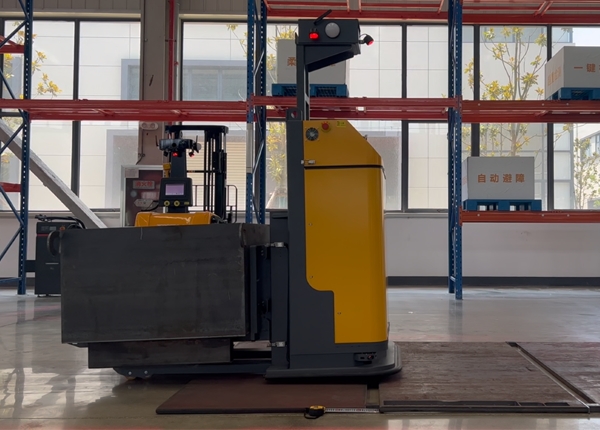
Traditional forklift operations require wider aisles because human operators need enough space for steering, visibility and safety margins.
In high-cost warehouse markets such as the United States and Europe, every square meter of unused floor space represents additional operating costs.
From our experience in warehouse automation projects, many companies underestimate the value of space recovery. They focus heavily on labor savings but overlook the financial impact of increasing pallet positions without expanding the facility.
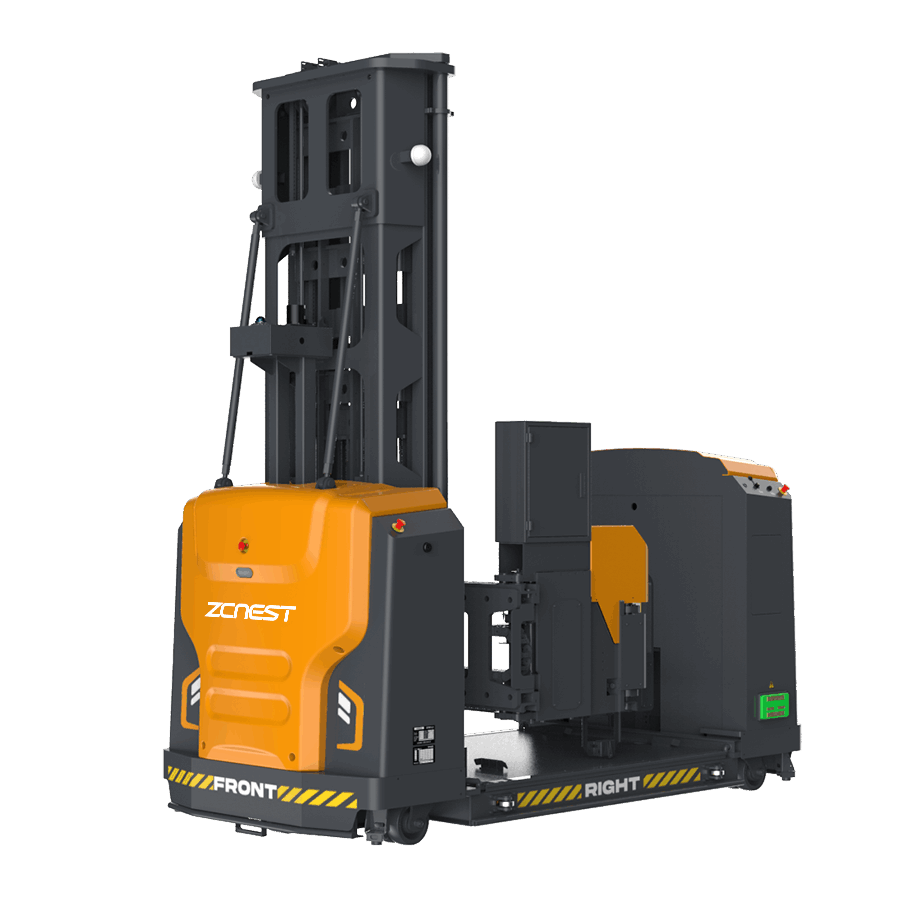
Very Narrow Aisle (VNA) AGV systems are designed specifically to maximize storage density by reducing the space required for forklift movement.
Traditional counterbalance forklift operations may require approximately 3 meters or more of aisle width depending on pallet size and operating conditions.
A VNA autonomous forklift can operate in significantly narrower aisles. In properly designed applications, some Chinese VNA AGV solutions can achieve aisle widths as narrow as approximately 1.65 meters.
The final aisle requirement depends on:
Pallet dimensions
Forklift turning radius
Rack design
Load weight
Safety clearance requirements
In many warehouse redesign projects, increasing storage density by 20%-30% is achievable, but the exact improvement depends on the existing layout.
A VNA AGV project can create additional storage capacity through several methods:
Reducing aisle width
Increasing rack height
Optimizing pallet positioning
Reducing unnecessary travel space
Improving warehouse layout planning
A common mistake is expecting automation alone to create more space. The largest gains usually come from combining the right AGV model with professional warehouse layout optimization.
Storage density is not only determined by aisle width. Vertical utilization is equally important.
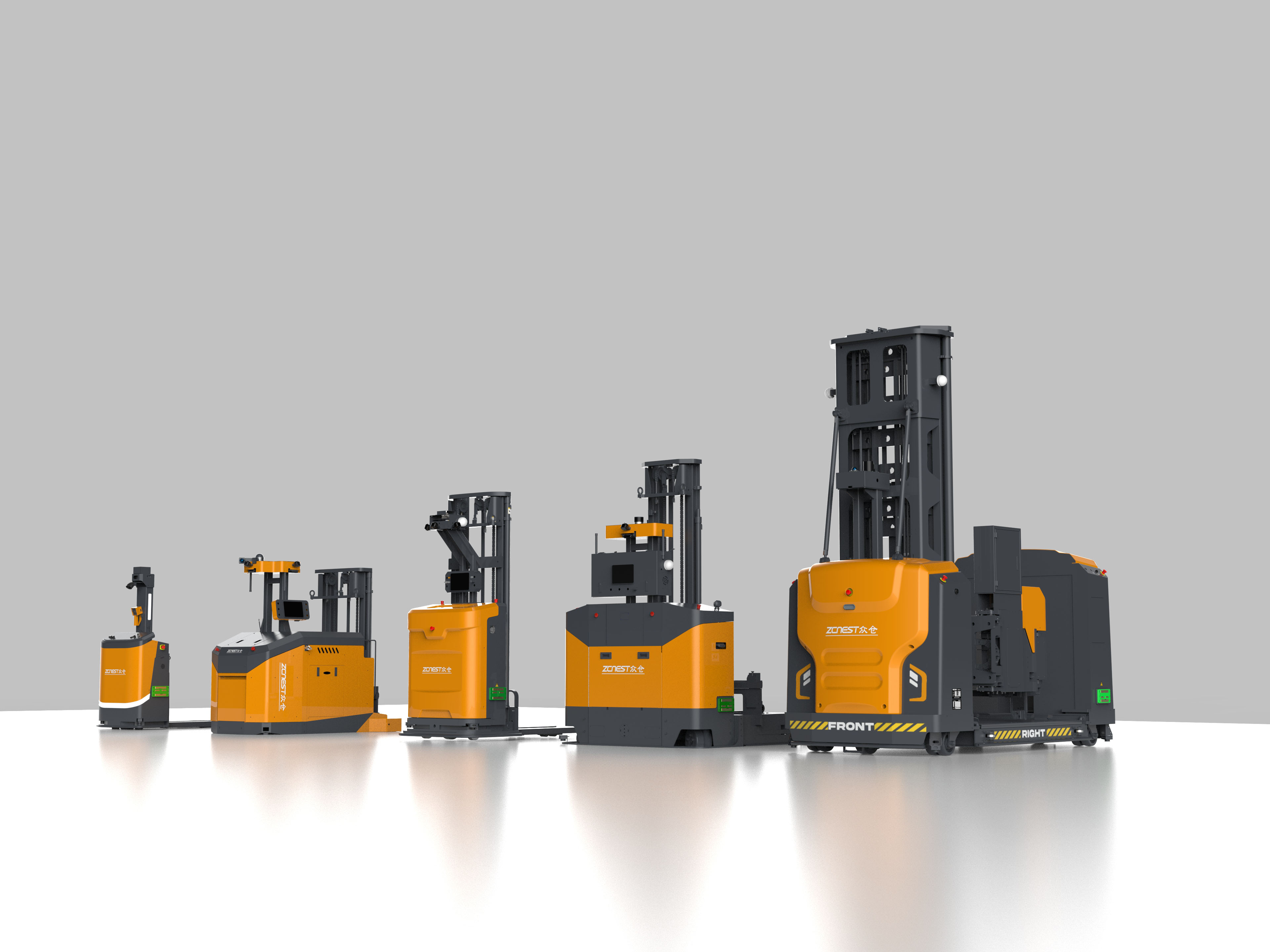
Modern reach-type AGVs can support high-level storage applications, including warehouse systems requiring lifting heights above 10 meters depending on vehicle configuration and rack design.
Before selecting a high-level AGV, companies should evaluate:
Maximum lifting height
Load capacity at maximum height
Rack stability
Floor flatness requirements
Navigation accuracy
Installing VNA AGVs is not simply replacing manual forklifts with robots. The warehouse layout should be reviewed as a complete system.
Important design areas include:
Rack configuration
AGV travel lanes
Loading and unloading stations
Charging locations
Temporary staging areas
Pedestrian safety zones
Experienced automation suppliers usually perform simulation before deployment because small layout changes can significantly affect fleet efficiency.
Many companies calculate AGV ROI only by comparing forklift operators removed from the warehouse.
However, in high-cost markets, warehouse space often creates greater long-term value.
For example, increasing pallet capacity inside an existing facility may delay the need for a warehouse expansion project costing millions of dollars.
From an industry perspective, the best automation projects are not only labor replacement projects. They are space optimization projects.
| Optimization Factor | Potential Improvement |
|---|---|
| Narrower aisles | More available storage area |
| Higher racks | Additional pallet positions |
| Better traffic planning | Higher warehouse throughput |
What is the minimum aisle width of your VNA AGV?
How many pallet positions can be added after automation?
What maximum lifting height can the AGV achieve?
Can you provide warehouse simulation before installation?
Do you have high-density warehouse case studies?
How does the system optimize AGV traffic?
VNA AGVs imported from China can help companies significantly improve warehouse space utilization by reducing aisle width, increasing vertical storage and optimizing material flow.
However, the biggest value does not come from the robot itself. It comes from combining the correct AGV model, warehouse layout design and operational strategy.
For companies facing limited warehouse space and rising expansion costs, VNA AGV automation can become a strategic investment rather than only an equipment purchase.
FREE ENGINEERING SUPPORT Stop Gambling on Generic Platforms. Get an AGV/AMR Tailored to Your Warehouse.Buying automated guided vehicles involves complex safety standards (CE/ANSI), navigation setups (Laser SLAM), and ERP system integration. Don't risk your factory safety with middle-men. ✓ 100% Direct Factory: Customized payload up to 5 Tons. ✓ Free CAD Simulation: Send us your layout, and our engineers will simulate the optimal AGV routes. ✓ Global Support: Overseas installation guidance & local maintenance partners. |





 Chinese
 English