


For companies investing in AGV forklifts, battery performance is one of the most important factors affecting long-term operating costs.
Many businesses focus on the initial purchase price of autonomous forklifts, but experienced warehouse operators understand that battery lifecycle management directly affects equipment availability, maintenance costs and total cost of ownership.
A well-designed AGV system does not simply consume battery power. It actively manages energy usage to maximize battery lifespan and maintain stable warehouse operations.
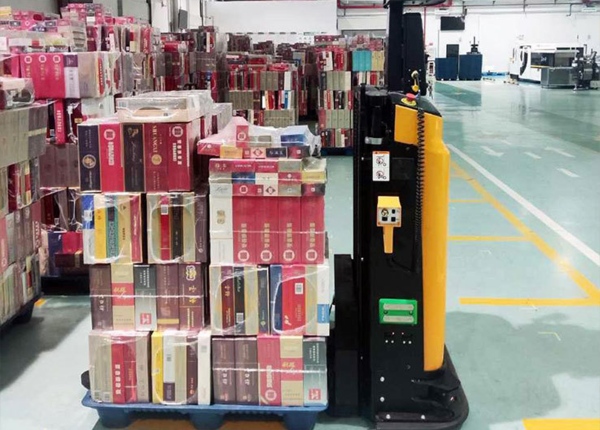
Unlike traditional forklifts operated manually, AGV fleets often operate continuously for long periods.
In a large automated warehouse, battery performance influences:
Daily operating availability
Maintenance frequency
Replacement costs
Charging efficiency
Production stability
From an industry perspective, battery management should be evaluated as part of the complete AGV solution rather than as a separate component.
Modern Chinese AGV systems use intelligent battery management strategies to reduce unnecessary stress on battery cells.
Common optimization methods include:
Smart charging control
Battery temperature monitoring
Charging schedule optimization
Battery health analysis
Fleet-level energy management
The objective is not simply to charge the battery faster, but to charge it in a way that minimizes long-term degradation.
In larger fleets, charging management becomes more complex because every vehicle has different operating conditions.
Advanced fleet management software can analyze:
Current battery level
Vehicle workload
Charging availability
Upcoming transportation tasks
Battery health status
Instead of allowing every AGV to charge at the same time, intelligent scheduling can distribute charging demand and prevent unnecessary battery stress.
For industrial customers, battery visibility is becoming an important requirement.
A professional AGV monitoring system may provide information such as:
State of Charge (SOC)
State of Health (SOH)
Charging history
Battery temperature
Remaining operating time
Battery replacement prediction
This information allows maintenance teams to plan replacement before unexpected downtime occurs.
Many modern AGV forklifts use lithium iron phosphate (LiFePO4) batteries because of their stability, safety and long cycle life.
The actual lifespan depends on:
Charging frequency
Depth of discharge
Operating temperature
Charging strategy
Daily working hours
In industrial applications, properly managed LiFePO4 batteries can typically support thousands of charging cycles, making them suitable for long-term AGV operation.
Warehouses often experience periods of low activity, such as weekends or holidays.
Leaving batteries in unsuitable charging conditions for long periods may reduce performance.
Smart charging systems can manage:
Charging limits
Battery standby condition
Maintenance charging
Temperature protection
The goal is to maintain battery health without unnecessary charging cycles.
| Cost Factor | Impact |
|---|---|
| Battery replacement | Major long-term expense |
| Charging efficiency | Influences electricity cost |
| Battery downtime | Affects warehouse productivity |
| Maintenance planning | Reduces unexpected failures |
What battery chemistry does the AGV use?
How many charging cycles can the battery support?
Does the software monitor battery SOH?
How does the system manage multiple AGV charging?
What battery warranty is provided?
What is the expected replacement cost after several years?
Battery management is one of the most overlooked factors when evaluating AGV investment.
A low-cost AGV with poor energy management may create higher long-term expenses, while a well-designed system can maintain stable performance throughout its lifecycle.
For companies importing AGVs from China, evaluating battery technology, charging strategy and fleet energy management is essential for achieving the expected return on automation investment.
FREE ENGINEERING SUPPORT Stop Gambling on Generic Platforms. Get an AGV/AMR Tailored to Your Warehouse.Buying automated guided vehicles involves complex safety standards (CE/ANSI), navigation setups (Laser SLAM), and ERP system integration. Don't risk your factory safety with middle-men. ✓ 100% Direct Factory: Customized payload up to 5 Tons. ✓ Free CAD Simulation: Send us your layout, and our engineers will simulate the optimal AGV routes. ✓ Global Support: Overseas installation guidance & local maintenance partners. |





 Chinese
 English