


Warehouses that handle flammable liquids, combustible dust, chemicals or explosive gases require a much higher level of equipment safety than conventional logistics facilities. For companies planning to import AGV forklifts from China, selecting an explosion-proof solution is not simply about choosing a different forklift model—it is about ensuring the entire automation system is designed for hazardous environments.
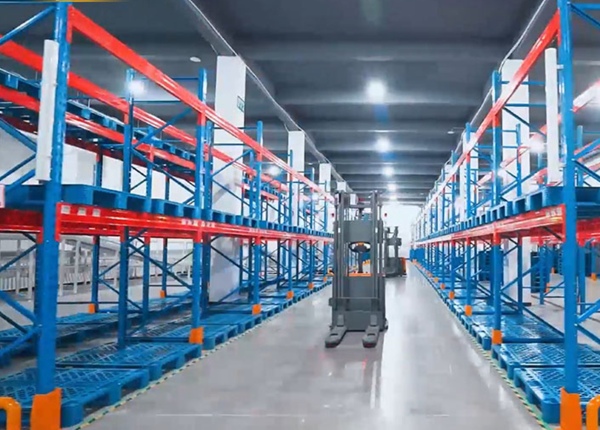
From our experience, companies in chemical, pharmaceutical, lithium battery and petrochemical industries are increasingly evaluating explosion-proof AGVs as part of their automation strategy. However, the biggest challenge is not finding a supplier that advertises an "explosion-proof AGV," but verifying whether the complete system meets the regulatory and operational requirements of the intended application.
Explosion-proof AGVs are typically considered when materials or processes create a potentially explosive atmosphere. Typical industries include:
Chemical manufacturing plants
Petrochemical storage facilities
Lithium battery production
Paint and coating factories
Pharmaceutical manufacturing
Oil and gas logistics operations
Warehouses handling flammable solvents
Before selecting an AGV, companies should identify the hazardous area classification defined by local regulations and determine whether automation equipment is permitted within those zones.
Certification requirements vary by country and industry. Depending on the project location, customers may request compliance with standards such as:
ATEX for European hazardous areas
IECEx for international applications
Class I, Division 1 or Division 2 for certain North American installations
Local electrical and industrial safety regulations
Rather than relying on marketing claims, buyers should review the applicable certification scope, approved operating conditions and documentation for the complete vehicle configuration.
A common misconception is that replacing the drive motor with an explosion-proof version is sufficient. In reality, every electrical and mechanical component should be evaluated as part of the overall safety design.
Key components may include:
Drive motors and lift motors
Battery system and battery management
Electrical control cabinet
Laser scanners and vision sensors
Camera housings
Wiring and cable routing
Charging interface
Grounding and static discharge protection
From an engineering perspective, the weakest component often determines the overall safety level of the system.
Depending on the application, explosion-proof AGVs may incorporate multiple design measures intended to reduce ignition sources, including:
Protected electrical enclosures
Static electricity control and grounding
Temperature management for electrical components
Sealed sensor housings where required
Protection against electrical arcing under specified operating conditions
The specific design depends on the hazardous area classification and should be confirmed with the manufacturer for the intended application.
For many hazardous facilities, vehicle design alone is not enough. Integration with the plant's safety infrastructure is equally important.
Depending on the project requirements, the AGV control system may be integrated with:
Gas detection systems
PLC-based safety systems
Fire alarm systems
Access control systems
Building management systems (BMS)
For example, if environmental monitoring detects unsafe gas concentrations, the automation system can be configured to prevent new tasks from entering affected areas or to initiate predefined safety procedures, subject to project-specific engineering and validation.
| Evaluation Item | Questions to Discuss |
|---|---|
| Hazard Classification | Which hazardous zones is the vehicle designed for? |
| Certification | What certifications apply to the supplied configuration? |
| Safety Integration | Can the AGV communicate with plant safety systems? |
| Maintenance | How are certified components serviced and replaced? |
| Project Experience | Has the supplier delivered similar hazardous-area projects? |
In our view, the most successful hazardous-area AGV projects are not defined by the number of robots deployed, but by how well the automation system integrates with the facility's overall safety strategy.
Companies should evaluate explosion-proof AGVs as part of a complete risk management program that includes equipment selection, hazardous area classification, operator procedures, maintenance planning and system integration. Choosing a supplier with proven engineering capability and relevant industry experience is often more valuable than selecting the lowest purchase price.
Explosion-proof AGV forklifts can provide significant benefits for hazardous warehouses when the solution is correctly engineered for the operating environment. Before importing equipment from China, buyers should verify certification requirements, review the complete vehicle design, evaluate integration with plant safety systems and ensure the proposed solution matches the specific hazardous area classification of their facility.
FREE ENGINEERING SUPPORT Stop Gambling on Generic Platforms. Get an AGV/AMR Tailored to Your Warehouse.Buying automated guided vehicles involves complex safety standards (CE/ANSI), navigation setups (Laser SLAM), and ERP system integration. Don't risk your factory safety with middle-men. ✓ 100% Direct Factory: Customized payload up to 5 Tons. ✓ Free CAD Simulation: Send us your layout, and our engineers will simulate the optimal AGV routes. ✓ Global Support: Overseas installation guidance & local maintenance partners. |





 Chinese
 English