

For many companies evaluating warehouse automation, the purchase price of an AGV is only the beginning of the investment. The real financial question is how much the entire system will cost over the next five years and whether that investment will generate measurable operational savings.
A comprehensive Total Cost of Ownership (TCO) analysis goes far beyond the factory quotation. It considers every major expense throughout the equipment lifecycle, allowing decision-makers to compare automation with traditional material handling on a fair basis.
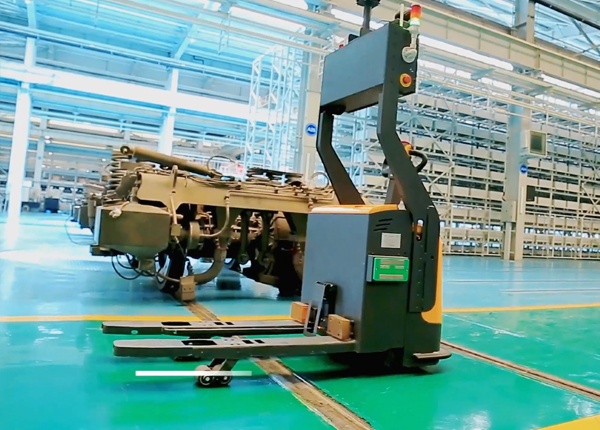
Many buyers naturally focus on the initial purchase price when comparing AGV suppliers. However, experienced warehouse operators understand that the acquisition cost often represents only part of the total investment.
A realistic TCO assessment should also include recurring operational costs, maintenance, energy consumption and system support over multiple years of operation.
| Cost Category | Typical Considerations |
|---|---|
| Initial Investment | AGV hardware, charging system, software deployment, shipping and installation |
| Software | License model, upgrades, technical support and future expansion |
| Maintenance | Preventive maintenance, inspections and spare parts |
| Energy | Battery charging and electricity consumption |
| Operations | Training, IT support, fleet management and system optimization |
Software is one of the most frequently overlooked elements of AGV ownership. Different suppliers may adopt different licensing models, so buyers should clarify the long-term software strategy before signing a contract.
Is the fleet management software permanently licensed or subscription-based?
Are software upgrades included?
Is remote technical support covered?
Will additional AGVs require new software licenses?
Are API integrations included or charged separately?
Like any industrial vehicle, AGVs include components that experience normal wear during operation. Buyers should estimate maintenance budgets based on operating hours, application intensity and environmental conditions.
Typical maintenance items may include:
Drive wheels and load wheels
Hydraulic system servicing (where applicable)
Safety sensors inspection
Battery health monitoring
Routine preventive maintenance
For warehouses operating around the clock, electricity consumption becomes an important part of operational expenditure. Actual energy usage depends on payload, travel distance, charging strategy, battery type and daily operating hours.
Rather than focusing only on charger power ratings, companies should evaluate overall fleet energy efficiency and intelligent charging strategies that reduce peak demand and improve battery utilization.
Many companies compare AGVs with purchasing or leasing manual forklifts. While manual equipment may require a lower initial investment, long-term operating costs often include factors that are less visible in the first-year budget.
| Manual Forklift Fleet | Automated AGV Fleet |
|---|---|
| Operator wages | Automated transport tasks |
| Driver recruitment and turnover | Centralized fleet scheduling |
| Higher accident exposure | Integrated safety systems |
| Variable labor availability | Consistent 24/7 operation |
What costs are included after the warranty expires?
How are software updates managed over five years?
What maintenance parts are expected to require replacement?
How much electricity will the fleet consume under actual operating conditions?
How will future fleet expansion affect software licensing?
What operational savings are realistically achievable for my warehouse?
In our experience, companies that achieve the strongest return on warehouse automation are rarely those that purchase the lowest-cost AGV. Instead, they are the organizations that evaluate automation as a long-term operational strategy rather than a one-time equipment purchase.
A five-year TCO model should balance both capital expenditure and operating expenditure while considering factors such as labor availability, maintenance planning, software scalability and production continuity. These elements often have a greater impact on long-term profitability than the initial purchase price alone.
As labor shortages continue and warehouses pursue higher levels of automation, we believe future procurement decisions will increasingly be based on lifecycle value instead of upfront cost. Companies that understand and control their long-term TCO are generally in a stronger position to achieve sustainable operational improvements and maximize the return on their automation investment.
FREE ENGINEERING SUPPORT Stop Gambling on Generic Platforms. Get an AGV/AMR Tailored to Your Warehouse.Buying automated guided vehicles involves complex safety standards (CE/ANSI), navigation setups (Laser SLAM), and ERP system integration. Don't risk your factory safety with middle-men. ✓ 100% Direct Factory: Customized payload up to 5 Tons. ✓ Free CAD Simulation: Send us your layout, and our engineers will simulate the optimal AGV routes. ✓ Global Support: Overseas installation guidance & local maintenance partners. |





 Chinese
 English