

When companies import AGV forklifts from China, the purchase decision should not end after the equipment arrives at the warehouse. Long-term operational success depends on how quickly the company can recover from unexpected equipment failures.
A well-planned spare parts strategy helps international customers reduce downtime, improve maintenance efficiency and operate Chinese AGV systems with greater confidence.
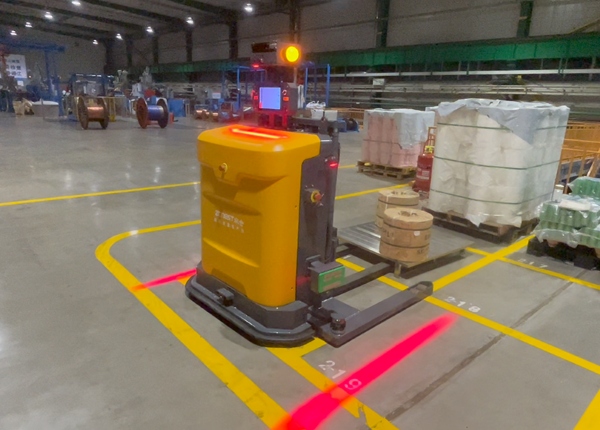
Unlike traditional forklifts, AGVs combine mechanical components, electrical systems, sensors and software. A failure in one critical component may stop an entire automated workflow.
For overseas customers, the key question is not only whether a replacement part is available, but also how quickly the system can return to normal operation.
Reduce unexpected warehouse downtime
Improve maintenance response speed
Avoid long international shipping delays
Increase confidence in automation investment
The recommended spare parts inventory depends on fleet size, operating hours and application conditions. However, some components generally have higher operational importance.
| Component | Reason to Stock |
|---|---|
| Safety sensors and LiDAR components | Critical for navigation and safety functions. |
| Drive wheels and polyurethane wheels | Normal wear items affected by operating hours. |
| Controllers and electronic modules | Important for vehicle operation and communication. |
| Charging components | Required to maintain fleet availability. |
| Battery-related components | Important for long-term energy management. |
Many international customers request an initial spare parts package when purchasing their first AGV fleet.
A recommended starter kit may include:
Common wear parts
Emergency replacement sensors
Electrical protection components
Charging accessories
Maintenance tools
The exact quantity should be based on fleet size, working environment and required equipment availability.
For non-critical components, normal international shipping may be acceptable. However, critical components require a faster response strategy.
Many suppliers support emergency logistics options such as:
Air express shipment
Priority spare parts handling
Remote troubleshooting before shipment
Technical confirmation of replacement requirements
Before purchasing, customers should confirm the supplier's emergency response process and expected delivery time for critical components.
Some mechanical wear components may be easier to source locally, depending on the design standard.
For example, polyurethane wheels may sometimes use common industrial sizes. However, customized mechanical structures or electronic modules usually require supplier support.
| Part Type | Local Sourcing Possibility |
|---|---|
| Standard wheels | Possible depending on specification. |
| Electronic controllers | Usually supplier-supported. |
| Navigation sensors | Usually requires original supplier compatibility. |
What spare parts are recommended for the first two years?
Does the supplier provide an initial spare parts package?
Which components have the highest failure probability?
What is the emergency delivery process for critical parts?
Can maintenance teams replace components locally?
Are technical documents provided for maintenance personnel?
A practical strategy is usually based on risk rather than simply stocking every possible component.
Companies should classify parts into:
Critical parts requiring local inventory
Important parts requiring fast supplier delivery
Non-critical parts ordered when needed
From our experience in warehouse automation projects, many customers initially focus heavily on equipment price but underestimate the importance of spare parts planning.
A successful AGV deployment is not only about installing robots. It requires a complete operational support system, including maintenance processes, technical training and spare parts availability.
In our opinion, the best automation suppliers are not simply those who provide competitive equipment prices. They are the partners who help customers reduce operational risk throughout the entire lifecycle of the system.
For companies importing AGVs from China, building the right spare parts strategy before deployment can significantly improve equipment availability and protect the long-term return on automation investment.
FREE ENGINEERING SUPPORT Stop Gambling on Generic Platforms. Get an AGV/AMR Tailored to Your Warehouse.Buying automated guided vehicles involves complex safety standards (CE/ANSI), navigation setups (Laser SLAM), and ERP system integration. Don't risk your factory safety with middle-men. ✓ 100% Direct Factory: Customized payload up to 5 Tons. ✓ Free CAD Simulation: Send us your layout, and our engineers will simulate the optimal AGV routes. ✓ Global Support: Overseas installation guidance & local maintenance partners. |





 Chinese
 English