


Importing AGV forklifts from China is not the final step of warehouse automation. The real value comes from continuously improving fleet performance after deployment.
Successful companies treat AGV systems as long-term operational platforms that require data analysis, software optimization and continuous improvement.
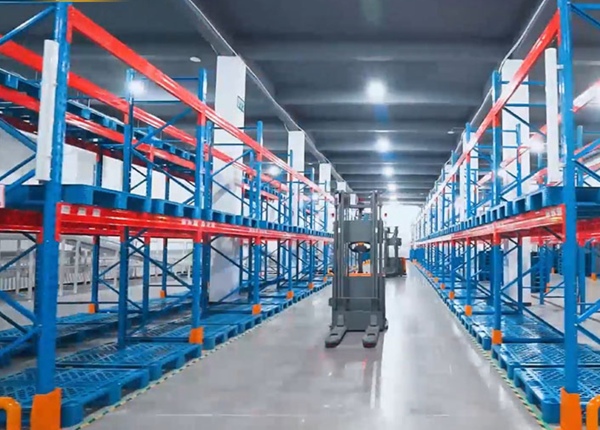
Many companies believe that once AGVs are installed and running, the automation project is complete.
However, warehouse operations constantly change. Order volumes, SKU structures, storage locations and transportation requirements may change over time.
Without continuous optimization, AGV systems may gradually experience:
Increased waiting time
Traffic congestion
Unbalanced vehicle utilization
Longer travel distance
Lower transportation efficiency
Modern AGV systems generate large amounts of operational data that can be used for continuous improvement.
Important performance indicators include:
Vehicle utilization rate
Completed transportation tasks
Idle time percentage
Battery charging frequency
Equipment downtime
Average task completion time
One of the biggest advantages of intelligent AGV systems is the ability to identify operational problems through real-time data.
For example, if multiple vehicles frequently slow down in the same warehouse area, engineers can analyze:
Traffic flow design
Task distribution rules
Intersection priorities
Temporary storage locations
Travel path efficiency
The goal is not simply to add more AGVs, but to make existing vehicles operate more efficiently.
Many industrial AGV systems allow authorized engineers to adjust software parameters after analyzing operational data.
Possible optimization areas include:
Acceleration and deceleration settings
Speed limits in specific zones
Traffic priority rules
Charging strategies
Task scheduling logic
Remote optimization should always follow customer security policies and controlled access procedures.
| KPI | Business Value |
|---|---|
| AGV utilization rate | Shows whether equipment capacity is fully used. |
| Transportation volume | Measures actual logistics output. |
| Downtime rate | Shows system reliability. |
| Labor savings | Measures automation impact. |
| ROI improvement | Shows long-term investment value. |
In many cases, performance improvements can be achieved through software optimization rather than replacing equipment.
Adjustments to fleet scheduling, maps, traffic rules and operating parameters can significantly improve efficiency.
Collect operational data after deployment.
Review system performance regularly.
Identify bottlenecks and inefficient workflows.
Adjust software parameters and operating rules.
Measure improvement results.
Repeat the optimization cycle.
Do you provide regular fleet performance reviews?
Can engineers analyze operational data remotely?
Which software parameters can be adjusted?
Are software upgrades included after deployment?
Can the system generate management reports?
How do you support international customers long term?
From our experience with warehouse automation projects, the installation of AGVs is only the beginning of the automation journey.
The companies that achieve the highest return from AGV investments are usually those that continuously analyze operational data and improve workflows.
In our opinion, future AGV suppliers will compete not only through hardware performance, but also through their ability to provide long-term optimization services and operational intelligence.
For companies importing AGV forklifts from China, selecting a supplier with strong software capability and continuous improvement support is essential for long-term success.
FREE ENGINEERING SUPPORT Stop Gambling on Generic Platforms. Get an AGV/AMR Tailored to Your Warehouse.Buying automated guided vehicles involves complex safety standards (CE/ANSI), navigation setups (Laser SLAM), and ERP system integration. Don't risk your factory safety with middle-men. ✓ 100% Direct Factory: Customized payload up to 5 Tons. ✓ Free CAD Simulation: Send us your layout, and our engineers will simulate the optimal AGV routes. ✓ Global Support: Overseas installation guidance & local maintenance partners. |











 Chinese
 English




