


When importing autonomous forklifts from China, many US companies have one important concern: whether Chinese AGV systems can work with their existing local pallets.
Unlike replacing a simple piece of equipment, warehouse automation must adapt to existing logistics standards, including pallet dimensions, SKU types and storage processes.
For US warehouses using wooden stringer pallets, pallet compatibility should be evaluated before selecting an AGV forklift system.
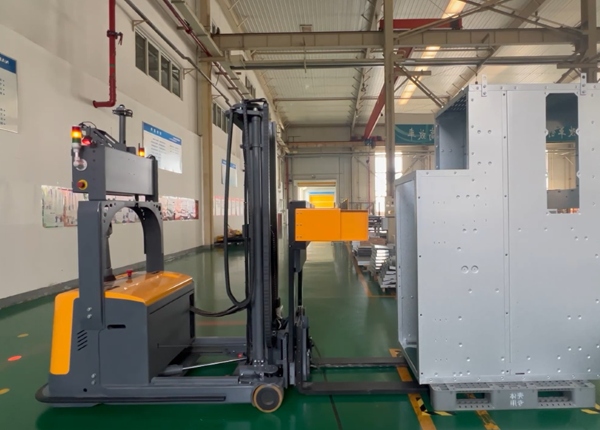
A warehouse may operate thousands of pallets every day. If an autonomous forklift cannot reliably handle existing pallets, automation efficiency will be reduced.
Before importing AGVs from China, companies should evaluate:
Pallet dimensions
Pallet construction type
Load weight distribution
SKU size variation
Storage rack requirements
Modern autonomous forklifts can use multiple sensing technologies to improve pallet handling accuracy.
3D vision cameras
Laser sensors
Fork position feedback
Distance measurement sensors
These technologies help the AGV determine pallet position and adjust its movement before inserting the forks.
In many cases, AGV forklifts can be customized according to local pallet standards.
Customization options may include:
Fork width adjustment
Fork length modification
Load center optimization
Fork positioning control
Special attachment design
Professional suppliers usually confirm pallet drawings and operating conditions before manufacturing.
Real warehouses rarely contain perfect pallets. Wooden pallets may have broken boards, uneven structures or damaged edges.
A reliable AGV system should be able to:
Detect abnormal pallet positions
Adjust approach angles
Reduce movement speed when necessary
Stop and report unsafe conditions
The goal is not to handle every damaged pallet automatically, but to prevent unsafe lifting operations.
Yes, AGV forklifts can usually be configured according to customer requirements.
Important engineering parameters include:
| Parameter | Consideration |
|---|---|
| Fork Width | Match pallet opening dimensions. |
| Fork Length | Ensure safe pallet support. |
| Load Capacity | Maintain stability with customized forks. |
Provide pallet drawings
Share SKU dimensions
Provide warehouse layout
Describe damaged pallet conditions
Define maximum load requirements
From our experience with warehouse automation projects, pallet compatibility is one of the most underestimated factors during AGV deployment.
Many companies focus on robot specifications but ignore the relationship between the forklift, pallet and warehouse workflow.
A successful AGV project is not only about purchasing an autonomous forklift. It requires engineering adaptation between the robot and the customer's real operating environment.
For US warehouses importing AGV forklifts from China, verifying pallet compatibility before production is one of the most effective ways to reduce deployment risks.
FREE ENGINEERING SUPPORT Stop Gambling on Generic Platforms. Get an AGV/AMR Tailored to Your Warehouse.Buying automated guided vehicles involves complex safety standards (CE/ANSI), navigation setups (Laser SLAM), and ERP system integration. Don't risk your factory safety with middle-men. ✓ 100% Direct Factory: Customized payload up to 5 Tons. ✓ Free CAD Simulation: Send us your layout, and our engineers will simulate the optimal AGV routes. ✓ Global Support: Overseas installation guidance & local maintenance partners. |











 Chinese
 English




