


Modern warehouses are rarely completely automated environments. Most fulfillment centers, distribution warehouses and manufacturing facilities still have employees walking, picking goods and performing manual operations around autonomous vehicles.
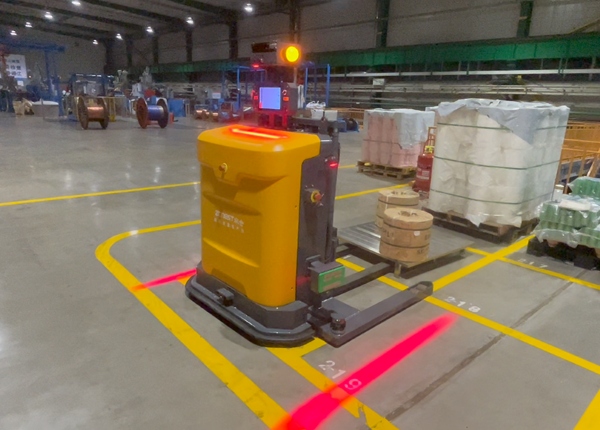
For companies importing AMR forklifts from China, one important question is whether autonomous mobile robots can maintain efficiency and safety in dynamic environments with frequent human movement.
The answer depends not only on the robot hardware, but also on navigation algorithms, traffic management software and human-machine cooperation design.
Traditional AGV systems often rely on fixed routes. However, modern AMR forklifts use sensors and intelligent software to understand changing environments and make real-time decisions.
Dynamic warehouses require robots to handle:
Moving workers
Temporary obstacles
Changing storage locations
Unexpected aisle blockage
Peak-hour traffic congestion
When an employee blocks the planned route, a modern AMR forklift does not simply continue forward. The system evaluates the surrounding environment and determines the safest action.
Possible responses include:
Stopping temporarily
Waiting for the path to clear
Calculating an alternative route
Adjusting travel speed
Sending status information to the fleet management system
Heavy pedestrian traffic can influence robot efficiency, but a properly designed AMR system should not frequently freeze or stall.
Fleet performance depends on several factors:
| Factor | Impact |
|---|---|
| Traffic Management | Prevents vehicle congestion. |
| Path Planning | Reduces unnecessary waiting. |
| Warehouse Layout | Determines movement efficiency. |
| Fleet Size | Affects traffic density. |
Professional AMR systems usually allow customers to configure different operating rules for different areas.
Examples include:
High-speed warehouse aisles
Low-speed pedestrian areas
Restricted zones
Loading and unloading areas
Shared human-machine workspaces
This allows companies to improve productivity while maintaining safety requirements.
A successful AMR deployment is not about achieving the highest possible speed. It is about achieving the highest productivity under safe operating conditions.
The system continuously balances:
Obstacle detection
Safe stopping distance
Task priority
Travel optimization
Warehouse throughput
Before importing AMR forklifts from China, companies should provide suppliers with detailed operational information.
Daily pedestrian traffic patterns
Peak warehouse activity periods
Current forklift routes
Storage area layout
Safety requirements
Based on practical warehouse automation experience, the biggest challenge of AMR deployment is usually not robot movement itself, but designing effective cooperation between humans and machines.
A warehouse with high pedestrian traffic requires intelligent traffic rules, flexible navigation and proper operating procedures.
The future of warehouse automation is not a completely human-free environment. Instead, successful facilities will combine human decision-making with autonomous transportation efficiency.
For companies importing Chinese AMR forklifts, evaluating dynamic navigation capability before purchase is one of the most important steps to achieve stable long-term automation performance.
FREE ENGINEERING SUPPORT Stop Gambling on Generic Platforms. Get an AGV/AMR Tailored to Your Warehouse.Buying automated guided vehicles involves complex safety standards (CE/ANSI), navigation setups (Laser SLAM), and ERP system integration. Don't risk your factory safety with middle-men. ✓ 100% Direct Factory: Customized payload up to 5 Tons. ✓ Free CAD Simulation: Send us your layout, and our engineers will simulate the optimal AGV routes. ✓ Global Support: Overseas installation guidance & local maintenance partners. |




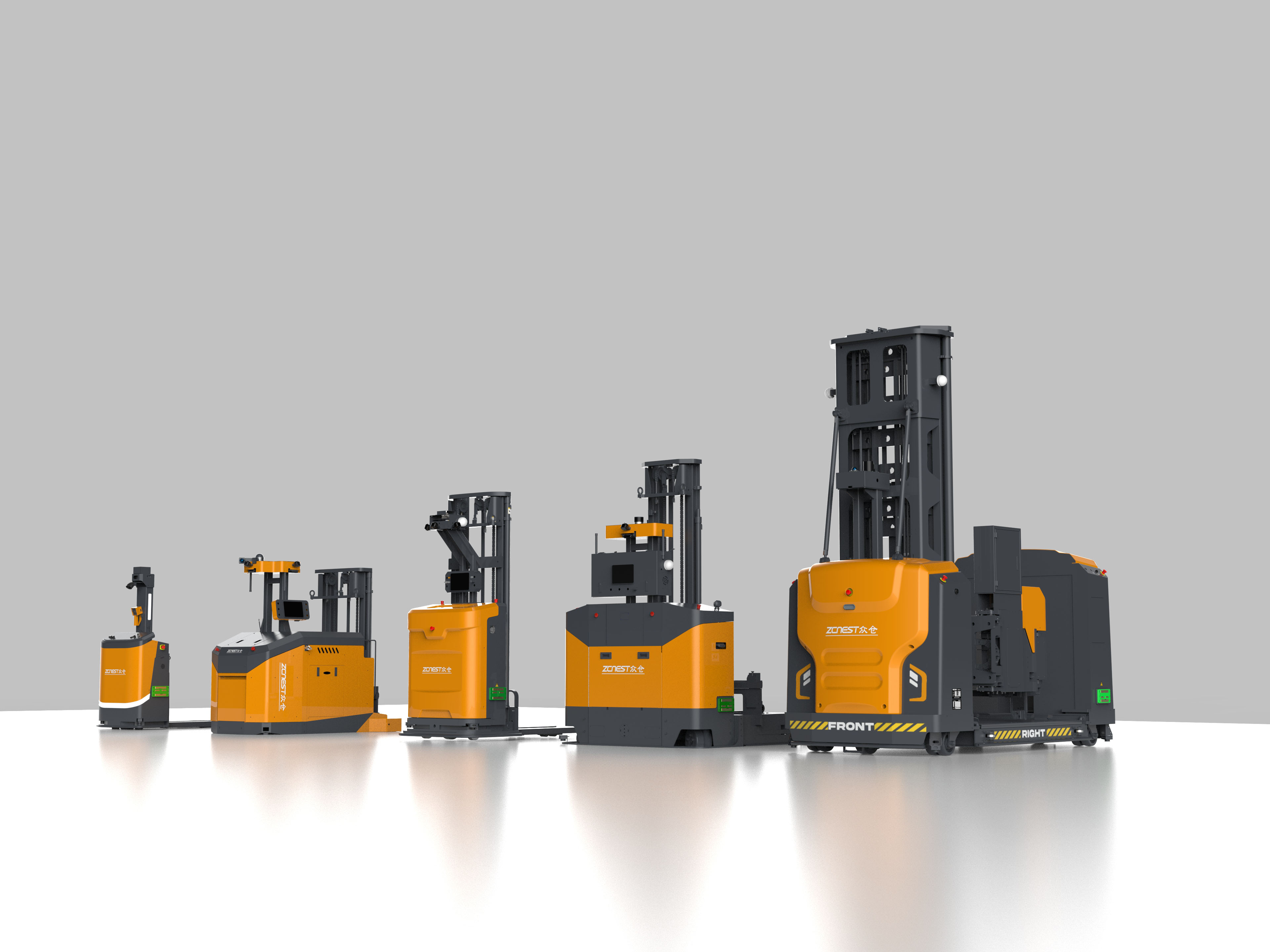
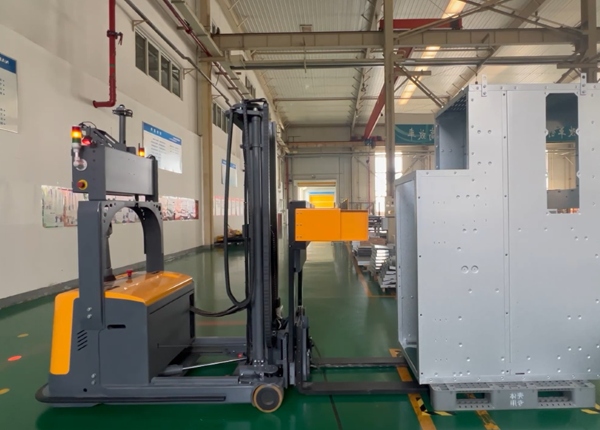
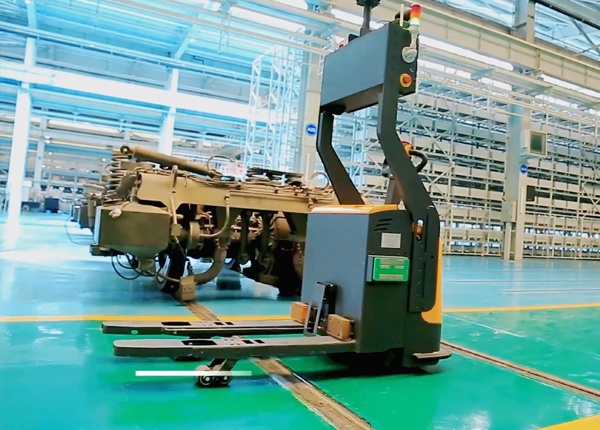

 Chinese
 English