


When companies import autonomous forklifts from China, one common technical concern is whether the existing warehouse Wi-Fi network can support stable robot communication.
A reliable AGV operation depends not only on the vehicle hardware, but also on communication between the fleet management software, warehouse systems and mobile robots.
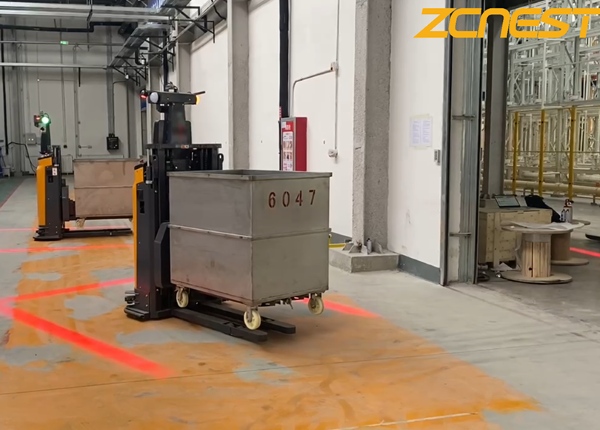
AGV systems use wireless communication for task assignment, status monitoring, fleet coordination and system integration.
The typical communication process is:
WMS → Fleet Management System → Wi-Fi Network → AGV Controller → Vehicle Operation
| Latency | Impact |
|---|---|
| Below 20ms | Excellent network performance |
| 20-50ms | Suitable for industrial AGV applications |
| 50-100ms | Requires network optimization |
A properly designed AGV system does not rely on Wi-Fi for immediate safety control.
The onboard controller manages local safety functions, while wireless communication handles task coordination and data exchange.
Short interruptions: vehicle waits and reconnects
Long interruptions: vehicle enters a safe stop mode
Tasks are protected by the fleet management system
Perform warehouse wireless coverage testing
Install industrial access points in suitable locations
Avoid signal blocking from metal racks
Enable fast roaming functions
Create a dedicated AGV network VLAN
Professional fleet management software normally provides tools for monitoring communication quality.
Signal strength monitoring
Connection status tracking
Packet loss detection
Communication history logs
Network troubleshooting reports
What Wi-Fi requirements does the AGV system have?
Does the software support local server deployment?
How does the system handle temporary network failures?
Does it support industrial roaming standards?
Can my IT team monitor AGV communication status?
From practical warehouse automation projects, network design is often one of the most underestimated parts of AGV deployment.
Many companies focus on robot specifications but discover after installation that unstable wireless coverage affects operational efficiency.
For overseas warehouses importing AGVs from China, a successful automation project requires more than reliable robots. It requires a complete system including software, wireless infrastructure, IT security and professional integration support.
The future competition of AGV suppliers will not only depend on hardware performance, but also on their ability to deliver complete warehouse automation solutions.
FREE ENGINEERING SUPPORT Stop Gambling on Generic Platforms. Get an AGV/AMR Tailored to Your Warehouse.Buying automated guided vehicles involves complex safety standards (CE/ANSI), navigation setups (Laser SLAM), and ERP system integration. Don't risk your factory safety with middle-men. ✓ 100% Direct Factory: Customized payload up to 5 Tons. ✓ Free CAD Simulation: Send us your layout, and our engineers will simulate the optimal AGV routes. ✓ Global Support: Overseas installation guidance & local maintenance partners. |





 Chinese
 English