

Cross-docking operations require fast and accurate movement of pallets from inbound receiving areas directly to outbound shipping areas.
For companies importing unmanned forklifts from China, the key question is whether AGV systems can handle high-volume logistics operations while maintaining reliable delivery performance.
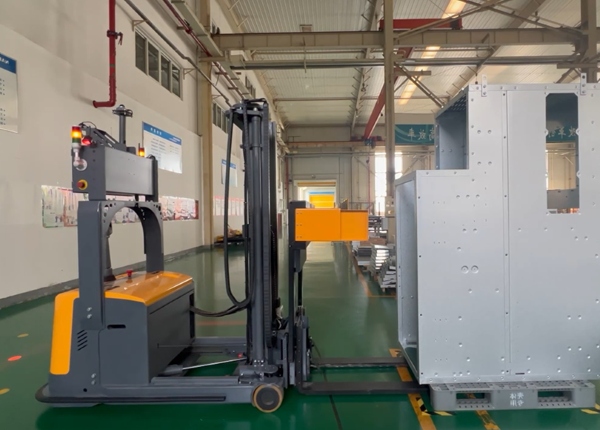
Unlike traditional storage warehouses, cross-docking facilities focus on speed and coordination rather than long-term inventory storage.
Reduce pallet waiting time
Improve dock efficiency
Reduce manual forklift dependency
Increase transportation accuracy
Inbound pallet identification
Automatic transport task generation
AGV fleet assignment
Outbound dock delivery
Task completion confirmation
The ability of an AGV system to handle peak periods depends on fleet size, warehouse layout and dispatching software performance.
Hourly pallet volume
Number of loading docks
Transportation distance
Traffic management rules
Automatic task allocation
Dynamic route planning
Intersection management
Priority task scheduling
Traffic congestion prevention
AGV cycle time depends on several operational factors.
Travel distance
Load weight
Pickup and drop-off time
Warehouse traffic conditions
System response time
Hourly pallet movement volume
Peak inbound and outbound waves
Warehouse layout drawings
Pallet specifications
Dock operation processes
From real logistics automation projects, cross-docking success is not determined only by AGV driving speed.
The most important factors are fleet scheduling intelligence, warehouse process design and system integration capability.
For future logistics centers, the competitive advantage will come from creating a complete automated material flow system instead of simply replacing manual forklifts with robots.
Chinese AGV suppliers that combine hardware, software and logistics optimization experience will have stronger opportunities in global warehouse automation markets.
FREE ENGINEERING SUPPORT Stop Gambling on Generic Platforms. Get an AGV/AMR Tailored to Your Warehouse.Buying automated guided vehicles involves complex safety standards (CE/ANSI), navigation setups (Laser SLAM), and ERP system integration. Don't risk your factory safety with middle-men. ✓ 100% Direct Factory: Customized payload up to 5 Tons. ✓ Free CAD Simulation: Send us your layout, and our engineers will simulate the optimal AGV routes. ✓ Global Support: Overseas installation guidance & local maintenance partners. |





 Chinese
 English