

When importing autonomous forklifts from China, the final Site Acceptance Test (SAT) is the key step to confirm that the system performs correctly in the customer's actual warehouse environment.
A successful SAT ensures that the equipment, software and operational performance meet the agreed project requirements.
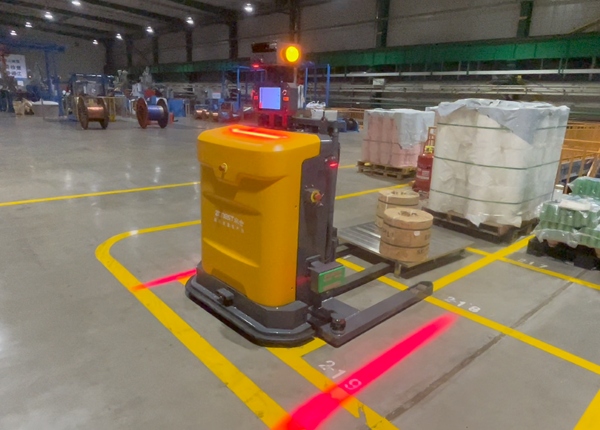
Factory Acceptance Test (FAT) is completed at the Chinese manufacturing facility before shipment.
Site Acceptance Test (SAT) is completed after installation at the customer's warehouse.
Verify real warehouse performance
Confirm software integration
Test actual transportation workflows
Reduce deployment risks
Vehicle quantity and model verification
Navigation accuracy testing
Load handling verification
Safety function testing
Software communication testing
Cycle time measurement
Cycle time testing should use real warehouse tasks instead of laboratory conditions.
Pallet pickup time
Transportation distance
Drop-off accuracy
Return route efficiency
If the system does not achieve agreed performance targets, suppliers normally optimize software settings, adjust workflows or continue commissioning until requirements are achieved.
Many international AGV projects include a final payment milestone after successful site acceptance testing.
Confirm supplier responsibility
Ensure complete commissioning
Reduce project risks
From practical automation projects, the biggest challenge is often not manufacturing the AGV, but clearly defining what successful delivery means.
Professional AGV projects should define measurable targets including throughput, cycle time, positioning accuracy, availability and safety performance.
For global warehouse automation, suppliers with strong FAT, SAT and commissioning processes will have a significant advantage because customers need reliable long-term operation, not only equipment delivery.
FREE ENGINEERING SUPPORT Stop Gambling on Generic Platforms. Get an AGV/AMR Tailored to Your Warehouse.Buying automated guided vehicles involves complex safety standards (CE/ANSI), navigation setups (Laser SLAM), and ERP system integration. Don't risk your factory safety with middle-men. ✓ 100% Direct Factory: Customized payload up to 5 Tons. ✓ Free CAD Simulation: Send us your layout, and our engineers will simulate the optimal AGV routes. ✓ Global Support: Overseas installation guidance & local maintenance partners. |





 Chinese
 English