


When importing autonomous forklifts from China, many buyers focus on software and navigation technology. However, the structural quality of the vehicle determines long-term reliability.
The mast, chassis and load-bearing components must withstand thousands of lifting and transportation cycles under heavy loads.
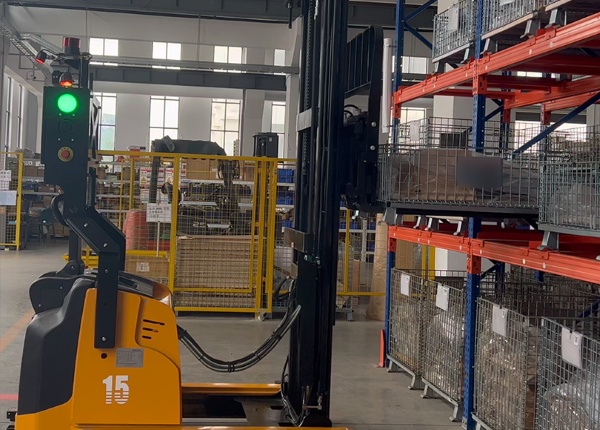
Prevent structural deformation
Improve fatigue resistance
Maintain lifting accuracy
Increase equipment lifetime
Industrial AGVs commonly use high-strength structural steel, alloy steel and welded steel structures for critical components.
Professional suppliers can provide material certification documents such as Mill Test Certificates (MTC).
Steel grade information
Chemical composition
Mechanical properties
Material supplier records
Finite element analysis
Fatigue testing
Controlled welding processes
Load-bearing inspections
Visual welding inspection
Dimensional inspection
Magnetic particle testing
Ultrasonic testing
Material certificates
Welding inspection records
Load testing reports
Quality control checklists
From practical automation projects, software intelligence is important, but mechanical reliability remains the foundation of industrial AGV performance.
A reliable autonomous forklift requires not only advanced algorithms but also strong structural engineering, quality materials and strict manufacturing control.
For overseas customers, supplier transparency in materials, welding and testing processes is becoming an important factor when selecting long-term automation partners.
FREE ENGINEERING SUPPORT Stop Gambling on Generic Platforms. Get an AGV/AMR Tailored to Your Warehouse.Buying automated guided vehicles involves complex safety standards (CE/ANSI), navigation setups (Laser SLAM), and ERP system integration. Don't risk your factory safety with middle-men. ✓ 100% Direct Factory: Customized payload up to 5 Tons. ✓ Free CAD Simulation: Send us your layout, and our engineers will simulate the optimal AGV routes. ✓ Global Support: Overseas installation guidance & local maintenance partners. |











 Chinese
 English




