


The ROI of an imported AGV fleet should not be evaluated only when the project is commissioned.
A warehouse automation project can meet its original acceptance criteria and still lose efficiency over time because of changing order volumes, new storage locations, traffic congestion, battery behavior, charging constraints, software settings or changes in warehouse processes.
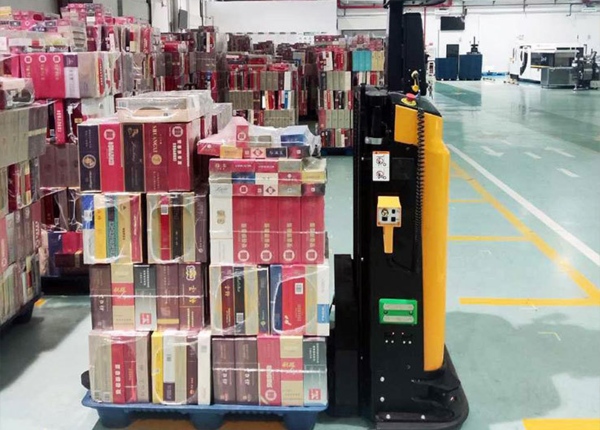
For this reason, a long-term ROI review should continue after deployment, with the first major review normally taking place around 6 to 12 months after stable operation.
The objective is not simply to ask whether the AGVs are working.
The better question is:Are the AGVs delivering the warehouse capacity, labor savings and operating consistency that justified the original investment?
A useful long-term review should combine financial, operational and technical data.
| Category | Useful KPI |
|---|---|
| Throughput | Pallets moved per hour/day |
| Labor | Operator hours required per shift |
| Utilization | Active, waiting and charging time |
| Reliability | Faults, interventions and recovery events |
| Energy | Charging frequency and electricity consumption |
| Maintenance | Parts, service labor and downtime |
| Warehouse performance | Travel distance, congestion and task cycle time |
This depends on the supplier's service agreement and should not be assumed simply because the AGVs were purchased from China.
Before placing the order, buyers should clarify whether post-deployment optimization is included in the commercial scope.
A useful agreement can define several levels of support:
Remote system diagnostics
Fleet performance analysis
Software parameter optimization
Traffic-management optimization
Charging strategy review
Task scheduling analysis
Periodic performance reports
Remote software updates
On-site engineering support when required
The important point is to define the deliverables rather than simply writing "one year of technical support."
For example, the contract could specify a quarterly fleet-performance review and a defined response process when throughput falls below the agreed operating target.
The first step is to determine what data the fleet management system actually stores and how that data can be exported.
Depending on the system, useful options may include:
CSV or Excel exports
Database access
REST APIs
Historical task reports
Fleet dashboard exports
WMS or ERP transaction records
Alarm and event logs
A buyer should ask for data-access documentation before deployment rather than discovering after one year that the required historical information cannot be exported.
At minimum, the system should provide enough information to reconstruct individual tasks, including task creation time, assignment time, start time, completion time, vehicle identification and exception events.
The original business case should be compared with actual operating data.
For example, the financial review can separate:
Labor hours eliminated or redeployed
Overtime reduction
Forklift operating costs
Fuel or electricity costs
Maintenance costs
Product damage costs
Warehouse space benefits
AGV software and service costs
Downtime-related costs
A simple comparison is:
Actual annual operating benefit = Actual measurable savings − Actual annual AGV operating costs
The calculation should use the same baseline assumptions that were used when the project was approved whenever possible.
Otherwise, a company can mistakenly claim a high ROI simply by changing the assumptions after deployment.
When an AGV fleet misses its throughput target, increasing the number of robots should not automatically be the first solution.
The bottleneck may exist elsewhere in the warehouse.
Start by checking these areas:
If AGVs spend a large percentage of their shift waiting for assignments, the problem may be task generation rather than vehicle capacity.
Multiple AGVs may be competing for the same narrow aisle, intersection, staging zone or charging area.
A fleet can lose significant capacity if vehicles are frequently waiting for chargers or if charging rules remove too many vehicles from service during peak periods.
Poorly distributed storage locations can create excessive travel distance even when the AGV navigation itself is working correctly.
In multi-floor warehouses, automatic doors, elevators and other shared resources can become major bottlenecks.
Frequent human intervention can indicate problems with pallet positioning, sensors, maps, task logic or upstream warehouse processes.
This distinction is important because replacing or adding AGVs will not solve a warehouse-process bottleneck.
For example, suppose the target is 500 pallet movements per day, but the fleet achieves only 400.
Before modifying the routing algorithm, examine the complete task cycle:
Task Creation → Assignment → AGV Travel → Pickup → Travel → Drop-off → Confirmation → Next Task
If most of the lost time occurs while waiting for pallets to become available, changing AGV navigation will have limited impact.
If most of the lost time occurs because vehicles repeatedly queue at the same intersection, traffic optimization may produce a much larger improvement.
Potentially, yes, but buyers should distinguish between configurable fleet parameters and changes to the core navigation algorithm.
Many fleet systems provide configurable parameters for:
Task priority
Vehicle assignment
Traffic restrictions
Preferred routes
One-way sections
Waiting positions
Charging priorities
Zone permissions
Task batching
Empty-travel reduction
These parameters can sometimes improve throughput without changing the underlying navigation software.
Core navigation algorithms, however, should not normally be modified casually by warehouse personnel.
Changes to localization, obstacle avoidance or safety-related motion behavior should be handled through the supplier's engineering process and validated before production use.
The highest-value optimization is often not the shortest physical route.
The objective is to optimize the complete task cycle.
For example, a slightly longer route may produce higher overall throughput if it avoids a heavily congested intersection.
Useful optimization strategies include:
Separating inbound and outbound traffic where practical
Reducing unnecessary crossing points
Creating preferred routes for high-volume tasks
Balancing traffic between parallel aisles
Reducing empty travel
Adjusting task priorities during peak periods
Improving charging schedules
Moving frequently accessed inventory closer to high-demand areas
Not before identifying the limiting resource.
If five AGVs are already waiting at the same staging area, adding three more vehicles may increase congestion rather than pallet throughput.
Likewise, if the charging system, elevator or pallet buffer is the bottleneck, additional AGVs will not necessarily increase the number of completed tasks.
A better approach is to measure the capacity of each shared resource before expanding the fleet.
A practical review can be organized into four stages.
Compare actual labor hours, throughput, downtime, maintenance and operating costs with the assumptions used to approve the project.
Use fleet data to determine whether the lost capacity comes from travel, waiting, charging, congestion, manual intervention or upstream processes.
Change one significant parameter or process at a time whenever possible. Measure the result against a comparable operating period.
Once the new operating data is available, update the financial model and determine whether the fleet is delivering the expected long-term business value.
If long-term optimization matters to the project, it should be discussed before the purchase order is issued.
Important items include:
Data ownership and data export rights
API availability
Historical data retention
Remote diagnostic capability
Software update policy
Post-deployment optimization support
Response times for software issues
Engineering support after warranty
Configuration backup procedures
Documentation for fleet-management parameters
These requirements can be more important to long-term ROI than a small difference in the initial AGV purchase price.
The best long-term ROI review does not ask only whether the AGVs have replaced forklift operators.
It asks whether the entire warehouse system is becoming more productive.
After 12 months, the most useful questions are:
How many pallets are actually moved per day?
How much labor time has been eliminated or redeployed?
Where do AGVs spend most of their idle time?
Which routes create the most congestion?
How much capacity is lost during charging?
How often do operators intervene?
Which warehouse processes limit AGV throughput?
Can fleet parameters be adjusted without changing core software?
Can the Chinese supplier analyze the operating data remotely?
Does the actual ROI still match the original business case?
The key advantage of a long-term review is that the warehouse can move from simply operating an AGV fleet to continuously improving how the fleet is used.
For an imported Chinese AGV project, this also provides a practical way to evaluate the supplier after the initial installation: not only by whether the robots work, but by how effectively the supplier supports data analysis, software optimization, troubleshooting and continuous improvement over the life of the system.
FREE ENGINEERING SUPPORT Stop Gambling on Generic Platforms. Get an AGV/AMR Tailored to Your Warehouse.Buying automated guided vehicles involves complex safety standards (CE/ANSI), navigation setups (Laser SLAM), and ERP system integration. Don't risk your factory safety with middle-men. ✓ 100% Direct Factory: Customized payload up to 5 Tons. ✓ Free CAD Simulation: Send us your layout, and our engineers will simulate the optimal AGV routes. ✓ Global Support: Overseas installation guidance & local maintenance partners. |











 Chinese
 English




