


When importing an autonomous forklift from China, the weight of the robot itself is only one part of the logistics calculation.
The shipping weight may also include the wooden crate, protective structure, battery, accessories, forks, mast components and other packaging materials.
For this reason, an overseas buyer should not ask only, "How much does the AGV weigh?"
The more useful logistics questions are:What is the gross package weight, what are the package dimensions, how is the machine loaded, and what equipment will be required at the destination?
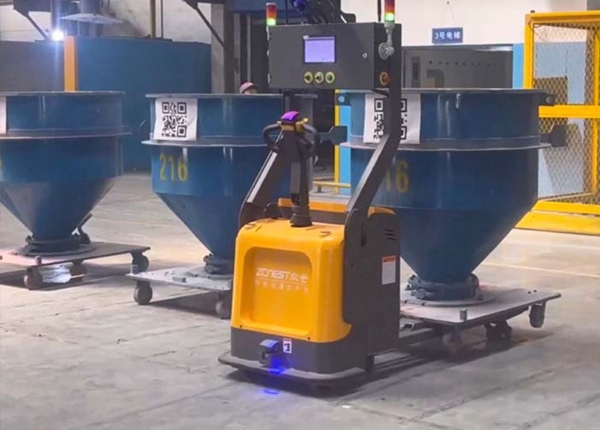
There is no single standard shipping-crate weight for a Chinese counterbalanced autonomous forklift.
A compact pallet-handling AGV and a large counterbalanced forklift can have very different shipping weights.
The final gross weight depends on factors such as:
Vehicle model
Rated payload
Counterweight
Mast configuration
Maximum lift height
Battery capacity
Fork dimensions
LiDAR and sensor equipment
Protective packaging
Whether the mast is shipped assembled or separated
For transportation planning, the supplier should provide the exact gross weight for each shipping package rather than an estimated average.
The commercial packing list should normally distinguish between net equipment weight and gross shipping weight so that the freight forwarder and destination handling team can plan correctly.
The total package weight can include considerably more than the AGV chassis.
A typical shipment may contain:
AGV chassis
Battery
Mast or lifting assembly
Forks
Protective frame
Wooden crate or skid
Charging equipment
Spare parts
Tools
Documentation and accessories
Some of these items may be packed separately.
Therefore, an importer should request a package-by-package packing list rather than relying on one total shipment weight.
The answer depends on how the AGV is packaged and how it is designed to be removed from the transport equipment.
Some AGVs can be unloaded with a sufficiently rated forklift if the crate or skid provides appropriate forklift entry points.
Other configurations may require a crane, gantry or other lifting equipment, particularly when:
The package is too heavy for the available forklift
The center of gravity is difficult to handle
The crate does not provide suitable fork pockets
The machine must be lifted from designated lifting points
The vehicle is delivered in a partially disassembled configuration
Site access prevents normal forklift unloading
The correct equipment should be selected from the supplier's documented gross weight, center of gravity, lifting points and unloading instructions.
The delivery vehicle is only one part of the unloading plan.
The destination facility also needs to have an appropriate unloading area.
Before the shipment leaves China, confirm:
Truck or container type
Container door dimensions
Package dimensions
Gross package weight
Center of gravity where relevant
Required unloading equipment
Forklift capacity
Fork length and fork spacing
Available dock height
Clearance around the unloading area
A standard dock may be sufficient for some shipments, but the decision should be based on the actual package configuration rather than the vehicle category alone.
Four reach AGVs cannot automatically be assumed to fit into one standard ocean container.
Container selection depends on the dimensions of the complete shipping packages rather than the dimensions of the bare AGVs.
The logistics team should compare:
Vehicle length
Vehicle width
Vehicle height
Mast height
Crate dimensions
Skid dimensions
Number of packages
Gross cargo weight
Door opening dimensions
Internal container dimensions
A high-mast reach AGV may require the mast to be lowered or separated for ocean transportation.
In some cases, four units may fit after optimized packing. In other configurations, two or three units per container may be more practical.
The supplier or freight forwarder should create a container loading plan before the order is finalized.
For container planning, do not look only at the nominal container type.
The actual loading plan should consider the usable internal dimensions and door opening.
A typical planning check includes:
| Dimension | Why It Matters |
|---|---|
| Internal length | Determines how many packages can be positioned longitudinally |
| Internal width | Determines side-by-side loading possibilities |
| Internal height | Important for mast and crate height |
| Door opening | Limits what can physically enter the container |
| Floor loading | Important for heavy concentrated loads |
The final container specification should be confirmed using the actual carrier and freight-forwarder requirements.
Yes. The battery can represent a significant portion of an electric autonomous forklift's total weight.
Battery capacity, chemistry, enclosure design and whether the battery is installed or separately packed all affect the shipping configuration.
For international transportation, the battery documentation should also be reviewed before shipment.
The logistics package may require relevant battery transport documentation and test information depending on the battery type, shipping method and applicable transport rules.
A properly prepared AGV shipment does not necessarily require the Chinese manufacturer's technicians to perform every physical unloading task.
However, the difficulty depends heavily on the shipping configuration.
For example, a supplier may ship:
Fully assembled AGV
AGV with mast separated
AGV with forks packed separately
Battery packed separately
Sensor assemblies protected separately
Charging equipment in separate cartons or crates
The more components that are separated for transportation, the more important the supplier's assembly documentation becomes.
If the destination team will perform assembly, request a complete installation package before shipment.
Useful documentation includes:
Unpacking instructions
Assembly drawings
Lifting instructions
Center-of-gravity information
Designated lifting points
Bolt torque specifications
Electrical connection instructions
Battery installation instructions
Sensor installation instructions
Initial commissioning procedure
Calibration procedure
Safety inspection checklist
Photographs or videos of the factory packing and assembly sequence can also help the destination team understand how the machine should be handled.
For mechanical unloading and basic assembly, a qualified local rigging or material-handling team may be able to perform the physical work.
However, mechanical assembly and AGV commissioning are not the same activity.
The local team may handle tasks such as:
Removing packaging
Positioning the machine
Installing designated mechanical components
Installing forks or other shipping-separated components
Moving the equipment into the warehouse
The supplier or an appropriately qualified commissioning engineer may still need to handle:
Sensor calibration
Navigation configuration
Software setup
Safety parameter verification
Battery and charging configuration
Fleet-system integration
Functional testing
The first inspection should compare the physical shipment with the packing list and shipping photographs.
Check for:
Visible transport damage
Damaged sensors
Fork or mast damage
Battery damage
Loose components
Missing accessories
Packaging penetration
Moisture exposure where relevant
Photographing the shipment before and during unboxing is useful for documenting the condition of the equipment when it arrives.
The warehouse should be ready before the vessel arrives rather than preparing the unloading area after delivery.
Confirm:
Unloading location
Forklift or crane availability
Required lifting capacity
Temporary storage space
Access route into the warehouse
Door and aisle clearance
Battery charging area
Assembly area
Floor condition
Local rigging personnel
This preparation becomes particularly important when importing several autonomous forklifts in the same shipment.
For a multi-unit purchase, request a detailed shipping plan rather than a simple statement such as "four units fit in one container."
Ask for:
Gross weight of every package
Net weight of every package
Length, width and height of every package
Number of packages per AGV
Container loading diagram
Center-of-gravity information where required
Fork pockets or lifting points
Required unloading equipment
Assembly instructions
Final packing list
This information allows the importer, freight forwarder and local rigging company to work from the same logistics plan.
One of the easiest mistakes in AGV importing is requesting an ocean freight quotation based only on the model name and quantity.
A freight forwarder needs the actual shipping configuration.
For autonomous forklifts, the difference between a fully assembled machine, a partially disassembled machine and several separate wooden crates can materially change the loading plan.
My recommendation is to obtain the final packing list and container loading plan before the equipment is manufactured for shipment.
The logistics chain should then be planned in this order:
AGV Configuration → Package Dimensions → Gross Weight → Container Loading → Port Transport → Destination Unloading → Local Assembly → Commissioning
When these steps are planned in advance, the arrival of Chinese AGVs becomes a controlled installation project rather than a last-minute unloading problem.
FREE ENGINEERING SUPPORT Stop Gambling on Generic Platforms. Get an AGV/AMR Tailored to Your Warehouse.Buying automated guided vehicles involves complex safety standards (CE/ANSI), navigation setups (Laser SLAM), and ERP system integration. Don't risk your factory safety with middle-men. ✓ 100% Direct Factory: Customized payload up to 5 Tons. ✓ Free CAD Simulation: Send us your layout, and our engineers will simulate the optimal AGV routes. ✓ Global Support: Overseas installation guidance & local maintenance partners. |





 Chinese
 English