


For warehouses evaluating automated forklifts from China, environmental performance is becoming part of the purchasing decision. An electric AGV fleet can eliminate direct fuel combustion, optimize energy use and potentially reduce lighting requirements. However, the real carbon benefit depends on electricity consumption, battery lifecycle, transportation and the local energy mix.
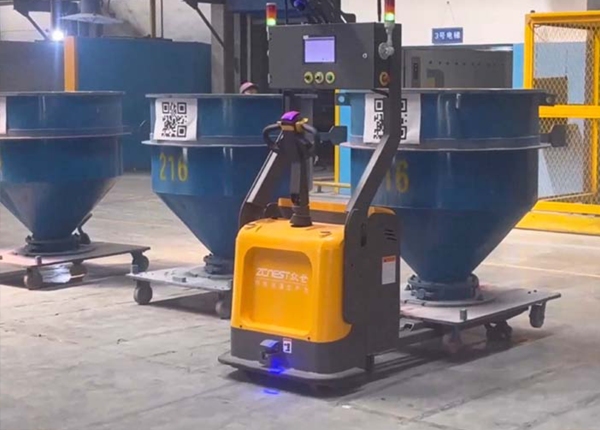
Chinese electric AGVs can reduce direct warehouse emissions compared with internal-combustion forklifts because they do not burn fuel during operation. The overall carbon advantage should be calculated using the complete lifecycle: vehicle electricity consumption, charging losses, battery replacement, transportation, maintenance and end-of-life recycling.
The first difference is where the energy is consumed. An internal-combustion forklift converts fuel into mechanical power directly inside the vehicle, while an electric AGV stores electrical energy in a battery and uses electric motors for movement and lifting.
For indoor warehouse applications, this can provide two important benefits: no direct exhaust emissions inside the facility and more predictable energy consumption.
Internal-Combustion Forklift
Energy comes from diesel, LPG or another fuel. Combustion occurs during operation and produces direct emissions.
Electric AGV
Energy comes from the electrical grid and is stored in the vehicle battery. There are no direct tailpipe emissions during warehouse operation.
Important Distinction
Zero tailpipe emissions does not mean zero carbon emissions. Electricity generation, battery manufacturing and equipment transportation still contribute to the overall carbon footprint.
Use actual fleet operating data whenever possible. A supplier's theoretical energy-consumption figure should be converted into an annual electricity requirement based on your actual operating hours and workload.
Annual Charging Cost
Annual Electricity Consumption × Local Electricity Rate
The calculation should include charging losses rather than only the energy stored inside the battery.
Fleet Size
How many AGVs operate during each shift?
Operating Hours
How many hours does each AGV work per day?
Charging Losses
How much electricity is consumed by the charger beyond the energy stored in the battery?
Electricity Rate
Are there peak, off-peak or demand charges?
Charging strategy can influence both operating costs and electricity demand. A fleet-management system may coordinate charging according to battery state, vehicle availability and warehouse workload.
Schedule charging during lower-cost electricity periods.
Avoid unnecessary simultaneous charging.
Prioritize vehicles with lower battery state of charge.
Maintain enough charged vehicles for the next operating cycle.
Coordinate charging with production and warehouse demand.
Battery disposal should be evaluated separately from the AGV itself. Lithium battery requirements can vary depending on the country, state and local waste-management system.
Before importing an AGV fleet, ask the supplier for battery specifications and end-of-life documentation, then confirm the local recycling pathway with an appropriate battery-recycling provider.
Battery Chemistry
Confirm the battery chemistry and rated capacity.
Cycle Life
Understand expected service life under the intended charging pattern.
Safety Documentation
Request applicable transportation and battery safety documentation.
End-of-Life Handling
Clarify recommended recycling and replacement procedures.
Do Not Treat Used Lithium Batteries as Ordinary Industrial Waste
The appropriate handling route depends on the battery type and local regulations. Establish the disposal or recycling process before the first battery reaches end of life.
Potentially. Whether a warehouse can operate with little or no normal ambient lighting depends on the AGV's navigation and perception technologies.
Laser-based navigation does not depend on visible light in the same way as conventional camera-based systems. However, if the AGV uses cameras for pallet recognition, visual identification or other functions, lighting requirements must be evaluated separately.
Laser Navigation
Can operate without relying entirely on visible ambient light.
Camera-Based Perception
May require suitable lighting depending on the camera and recognition task.
Human Access Areas
Maintenance, inspection and emergency areas may still require appropriate lighting.
Dark Warehouse ≠ Zero Lighting Everywhere
A highly automated warehouse may reduce normal lighting, but emergency lighting and areas used by maintenance personnel still need to meet applicable requirements.
The most useful approach is to establish a baseline for the existing forklift fleet and then compare it with the expected electricity consumption of the AGV fleet.
AGV Operational Carbon
Electricity Consumption × Applicable Grid Emission Factor
For an internal-combustion fleet, calculate the carbon associated with the actual fuel consumed during the same operating period. The difference between the two baselines provides a starting point for estimating operational carbon reduction.
A credible calculation should go beyond the energy consumed while the AGV is driving.
| Lifecycle Stage | Data to Consider |
|---|---|
| Manufacturing | Vehicle, battery and major component manufacturing |
| International Transport | Ocean freight, inland transportation and local delivery |
| Warehouse Operation | Electricity consumed by AGVs and charging systems |
| Battery Replacement | Additional batteries required during the equipment lifecycle |
| Maintenance | Replacement components, consumables and service activities |
| End of Life | Battery recycling and equipment disposal or material recovery |
International transportation adds emissions, but it should be considered alongside the AGV's entire service life. A vehicle that travels thousands of miles by ocean freight may still have a favorable operational profile if it replaces a heavily used internal-combustion forklift over many years.
The correct comparison is therefore not simply "China versus local manufacturing." It is the total lifecycle footprint of the two equipment options.
Manufacturing
Embodied carbon in the vehicle and battery.
Shipping
Emissions associated with international transportation.
Operation
Electricity consumption throughout the AGV's useful life.
End of Life
Recycling, material recovery and disposal.
Ask for measurable operating information rather than general statements such as "energy efficient" or "environmentally friendly."
Energy Consumption
Request measured or specified energy consumption under defined operating conditions.
Battery Lifecycle
Ask about expected cycle life and replacement assumptions.
Charging Efficiency
Understand charging losses and charger efficiency.
Battery Recycling
Request end-of-life recommendations and available recycling support.
AGVs can influence more than forklift energy consumption. Once material movement becomes automated, warehouse operating schedules, lighting requirements and charging strategies can also be optimized.
Material Handling
Electric AGVs replace fuel-powered forklift movements.
Lighting
Automated areas may require less normal ambient lighting.
Charging
Smart charging can coordinate electricity demand across the fleet.
Utilization
Fleet software can identify idle time and improve vehicle utilization.
Treat environmental performance as a measurable operating KPI rather than a marketing statement.
kWh consumed per AGV per shift
kWh consumed per pallet movement
Annual fleet electricity consumption
Fuel consumption avoided
Estimated operational CO₂ emissions
Battery replacement frequency
Warehouse lighting consumption
Fleet utilization rate
The strongest environmental business case for a Chinese AGV fleet comes from comparing real fuel consumption, electricity demand, battery lifecycle, transportation and warehouse operating data. This provides a more defensible estimate of both carbon reduction and long-term energy savings.
FREE ENGINEERING SUPPORT Stop Gambling on Generic Platforms. Get an AGV/AMR Tailored to Your Warehouse.Buying automated guided vehicles involves complex safety standards (CE/ANSI), navigation setups (Laser SLAM), and ERP system integration. Don't risk your factory safety with middle-men. ✓ 100% Direct Factory: Customized payload up to 5 Tons. ✓ Free CAD Simulation: Send us your layout, and our engineers will simulate the optimal AGV routes. ✓ Global Support: Overseas installation guidance & local maintenance partners. |





 Chinese
 English