


Planning Safe Stops, Task Recovery, and System Restart
A warehouse power interruption can affect charging equipment, network infrastructure, elevators, conveyors, and other systems connected to automated material handling. AGV forklifts may have onboard battery power, but that does not mean the entire warehouse automation process can continue normally. A clear outage and recovery plan is essential for safe operations.
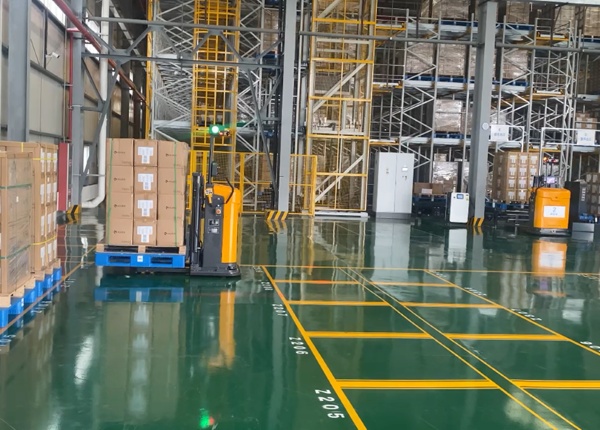
A warehouse automation project may include several electrical and control systems. An outage can affect some or all of the following:
AGV charging stations and battery charging equipment.
Warehouse network switches and wireless infrastructure.
WMS, WCS, RCS, and related server equipment.
Freight elevators and automated doors.
Conveyors and fixed transfer stations.
Warehouse lighting and supporting building systems.
The project should identify which systems have backup power and which require a complete restart after electricity is restored. This prevents the warehouse from assuming that all equipment will return to normal operation simultaneously.
The AGV supplier should explain how the vehicle responds to loss of power, loss of communication, or a failure in an external system. The response depends on the vehicle design, battery condition, safety architecture, and the type of interruption.
The operating procedure should identify how vehicles stop, whether they retain sufficient power for controlled shutdown, and what happens if a vehicle is carrying a load when the interruption occurs.
Any manual intervention or vehicle recovery must follow the equipment manufacturer's instructions and the site's safety procedures. Staff should not assume that a stopped AGV can be moved or restarted like a conventional manual forklift.
A power interruption can occur while an AGV is executing a transport task. The warehouse must know whether the pallet was picked up, whether it reached the destination, and whether the WMS received a completion message.
Task records should preserve enough information to determine the last confirmed physical state. The recovery process should reconcile vehicle status, task status, and inventory location before releasing additional movement instructions.
This is particularly important when communication is interrupted after a physical movement but before the completion message reaches the warehouse system. The task should not be blindly repeated without confirming the actual pallet location.
Backup power requirements should be based on the warehouse's operational priorities and outage risks. Some facilities may need only enough backup capacity for controlled shutdown, while others may require selected control systems and network equipment to remain available for a defined period.
Review the power requirements of servers, network devices, charging infrastructure, control cabinets, and other critical equipment. Confirm the required backup duration with the relevant electrical and equipment suppliers.
An onboard AGV battery should not be treated as a replacement for backup power to the warehouse control system, network, or building infrastructure.
Restoring electrical power does not automatically mean the warehouse is ready for normal automated operation. Some systems may need inspection, initialization, communication checks, or manual confirmation before they can resume service.
A restart sequence should define the order in which critical infrastructure, network equipment, warehouse software, vehicle control systems, and supporting equipment are restored. The exact sequence should be agreed with the equipment suppliers and site engineering team.
Before restarting transport tasks, confirm that vehicles are in known positions, loads are accounted for, restricted areas are clear, and external equipment such as elevators or doors is available.
The commissioning plan should include controlled tests for power loss and recovery. Testing should cover different stages of a transport task, including before pickup, during travel, and after placement but before task confirmation.
Verify that the system records the correct task state, provides clear operator information, and prevents unsafe or duplicate task execution. Also test the recovery of network and warehouse software connections.
Tests must be planned and performed under approved conditions. Do not create an uncontrolled outage in an active warehouse merely to test equipment behavior.
Key Project Checkpoint
Document the response to power loss, vehicle safe-stop behavior, task-state recovery, inventory reconciliation, and restart authorization. Test the complete process with the AGV supplier and warehouse operations team before go-live.
Which warehouse systems are affected by power loss?
Which systems have backup power and for how long?
How do AGV forklifts respond during an interruption?
How are in-progress tasks and pallet locations confirmed?
Who authorizes manual vehicle recovery?
What is the approved system restart sequence?
How is normal operation confirmed before new tasks are released?
Reliable automation includes planning for conditions outside normal operation. Power interruption procedures should cover vehicle behavior, supporting infrastructure, software state, inventory accuracy, and the authorization required to resume operations.
ZCNest Robotics provides AGV and AMR forklift solutions for warehouse material handling. Project planning can include equipment interfaces, task-state management, system integration, and operating procedures for abnormal conditions.
Share your AGV operating environment, electrical infrastructure, and system integration requirements to discuss a reliable automation plan.












 Chinese
 English





