


Moving Eligible Inbound Pallets Directly to Outbound Operations
Cross-docking reduces the need to place certain inbound goods into long-term storage. Instead, eligible pallets move from receiving to outbound staging or another designated dispatch area. AGV forklifts can automate these transfers, but the process requires accurate inbound information, clear destination rules, and coordination between receiving and shipping operations.
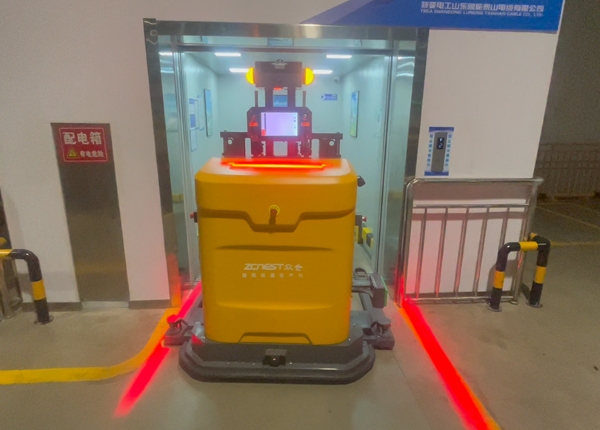
In a conventional warehouse process, inbound goods may be received, stored, and later retrieved for outbound orders. Cross-docking changes this sequence by transferring eligible goods directly from receiving to an outbound area or another designated processing point.
The process can reduce unnecessary storage movements, but it also places greater importance on coordination. The warehouse must know which inbound pallets are eligible for direct transfer, where they should go, and when the destination is ready to receive them.
AGV forklifts handle the physical movement. The WMS or another warehouse application should determine the correct destination based on order, inventory, and dispatch requirements.
Not every inbound pallet should automatically enter a cross-docking process. Eligibility may depend on product identity, order allocation, quantity, quality status, customer requirements, and expected dispatch timing.
The warehouse should define the conditions under which a pallet can move directly to outbound staging. Goods that require inspection, relabeling, repacking, or other processing may need to follow a different route.
The eligibility decision should be made by the appropriate warehouse software before the AGV task is issued. This avoids sending vehicles to destinations that are not suitable for the received goods.
Cross-docking depends on both inbound and outbound operations being ready. A pallet may be received correctly but have no available destination if the outbound staging area is full or the related dispatch process is delayed.
The warehouse should define outbound staging positions, capacity limits, and destination assignment rules. If a specific dispatch lane is unavailable, the system needs an approved alternative or a holding procedure.
AGV task release should consider destination availability so that vehicles do not repeatedly travel toward occupied or unavailable positions.
The physical route should connect inbound receiving points with outbound staging positions while accounting for other warehouse traffic. Cross-docking may create concentrated movements during periods when several inbound vehicles arrive close together.
Review route length, intersections, turning space, doorways, pedestrian access, and the locations where pallets are picked up and delivered. Transfer points should be positioned so that AGV forklifts can approach and place pallets consistently.
Where receiving and shipping share a limited area, the layout should include suitable traffic separation and clearly defined staging positions.
Cross-docking activity is often influenced by inbound arrival patterns and outbound dispatch schedules. A system designed around average daily volume may struggle when multiple deliveries arrive within a short period.
Estimate the number of pallets that need to move from receiving to outbound staging per hour. Include pickup time, travel time, placement time, and expected waiting at both ends of the route.
Also consider how many pallets can be staged safely without obstructing access or exceeding the available floor space. Fleet sizing should reflect both transport demand and staging capacity.
The WMS should determine whether an inbound pallet qualifies for cross-docking and provide the appropriate destination to the AGV control system. The interface should include the handling-unit identifier, pickup location, destination, and task priority.
After the AGV completes the movement, the system should update the pallet's physical location and status. If the destination is unavailable or the task cannot be completed, the warehouse should receive a clear exception status.
This integration helps maintain consistency between the physical location of goods and the information used for outbound planning.
Key Project Checkpoint
Define cross-docking eligibility, outbound destination capacity, and the WMS task-release conditions before calculating the AGV fleet. Test both normal flows and cases where inbound pallets arrive before their outbound destinations are ready.
Which products and orders qualify for cross-docking?
How are inbound pallets matched with outbound requirements?
Where are receiving and outbound staging positions located?
What is the peak pallet transfer volume per hour?
How much staging capacity is available?
What happens when an outbound destination is unavailable?
How are AGV task completion and location updates reported to the WMS?
Cross-docking can reduce unnecessary storage handling when inbound and outbound processes are coordinated effectively. AGV forklifts provide a repeatable way to move eligible pallets between designated operating areas, while warehouse software controls allocation and task timing.
ZCNest Robotics provides AGV and AMR forklift solutions for warehouse automation, including equipment configuration and software integration for project-specific material flows.
Share your inbound and outbound process, pallet volume, and warehouse layout to evaluate AGV forklift automation.












 Chinese
 English





