


Shipping an automated stacking forklift from China involves more than placing the vehicle inside an ocean container. The packaging method must protect the mast, forks, sensors, battery system, electronics and navigation components against vibration, humidity, salt air and impact during international transportation. The unloading method is equally important because an improperly handled AGV can suffer mechanical or calibration problems before it even reaches the warehouse.
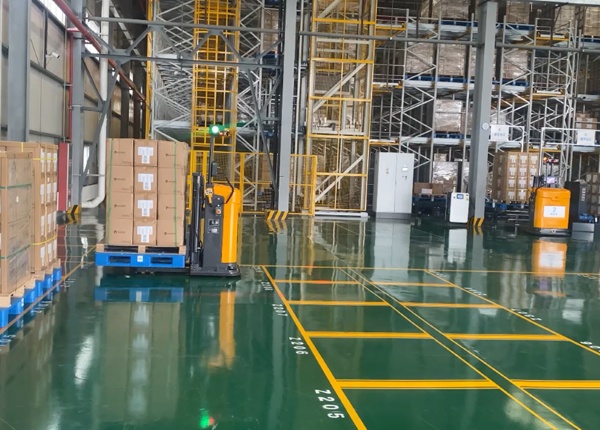
There is no single universal packaging standard for every Chinese stacking AGV. The appropriate export package depends on vehicle dimensions, mast height, battery configuration, lifting mechanism and container loading method. A typical export preparation may include immobilizing moving components, protecting exposed surfaces, using moisture and corrosion protection, securing the vehicle against container movement, and documenting the condition of critical systems before shipment.
The answer depends mainly on the vehicle's dimensions and the available container space. Some compact AGVs can be shipped largely assembled, while larger stacking or reach-type vehicles may require partial disassembly before loading.
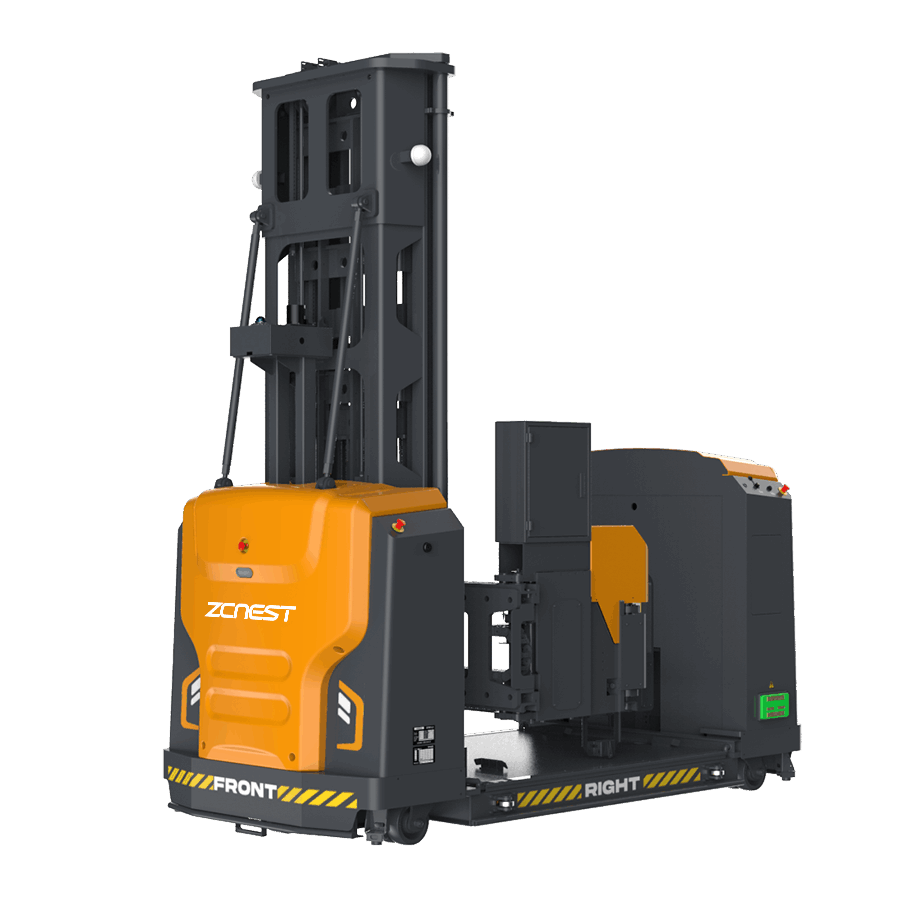
The mast, fork assembly, overhead structures, protective components or other oversized parts may be separated when necessary. The objective is to create a transport configuration that fits safely inside the selected container while minimizing reassembly work at destination.
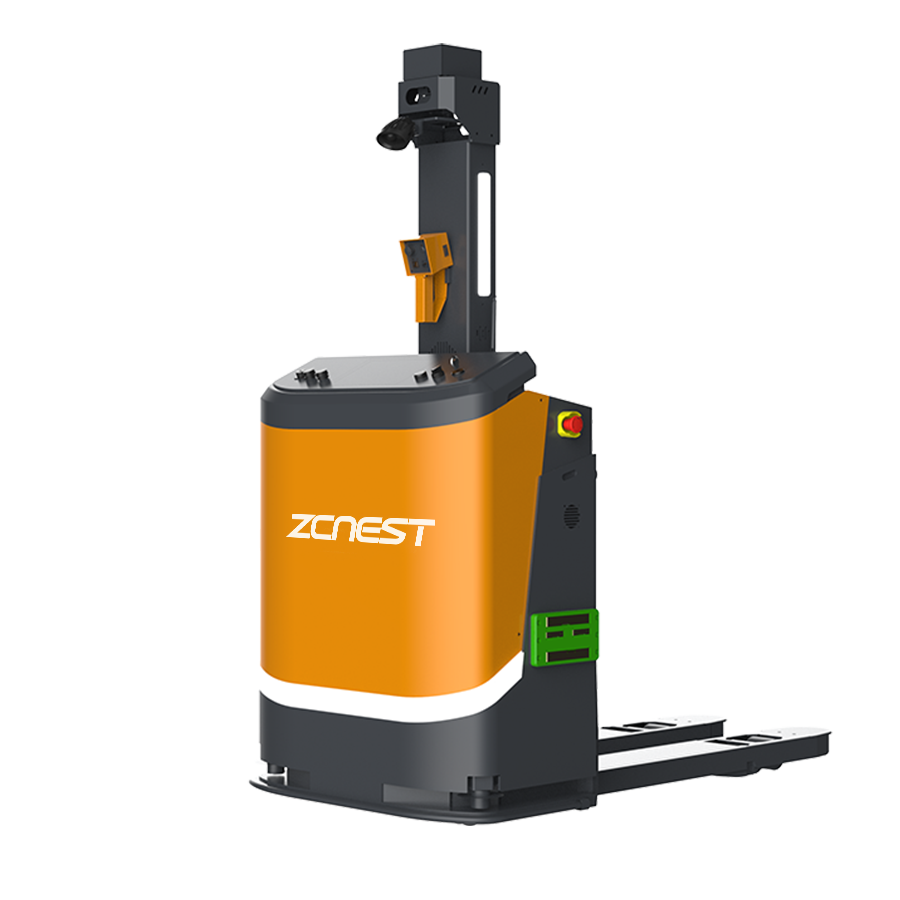
Compact AGV
May be shipped mostly assembled when the overall dimensions allow safe container loading.
Tall Stacking AGV
May require partial disassembly of the mast or other oversized components.
Custom AGV
Packaging and loading configuration should be confirmed during the engineering and shipping review.
An automated forklift contains moving mechanical assemblies and sensitive electronic equipment. The vehicle should therefore be placed into a defined transport position before being secured.
Immobilize the vehicle against unintended rolling.
Secure the forks and mast in the designated transport position.
Protect exposed sensors, cameras and navigation equipment.
Prevent loose cables and connectors from moving during transportation.
Secure the battery and other heavy internal components.
Install blocking and bracing appropriate for the container floor and vehicle weight.
Photograph critical components before the container is sealed.
Ocean transportation exposes equipment to high humidity, condensation and salt-containing air. Electronic components and exposed metal surfaces therefore need appropriate protection during a long international shipment.
Depending on the manufacturer's export packaging specification, protection can include sealed packaging, moisture-absorbing materials, corrosion inhibitors and protective films. Sensitive electrical assemblies may also receive additional enclosure protection.
Moisture Protection
Reduce exposure of electronics and sensitive components to condensation inside the container.
Corrosion Protection
Protect exposed metal surfaces and vulnerable mechanical components during long-distance transportation.
Sensor Protection
Prevent scratches, contamination and physical impact on LiDAR, cameras and other sensing equipment.
Ask for the Export Packaging Specification
Do not rely only on a statement such as “standard export packaging.” Ask the supplier to specify the moisture protection, corrosion protection, blocking method and sensor protection used for your particular AGV.
A heavy counterbalanced AGV should not simply be driven or pulled out of a container without confirming the vehicle's weight distribution, ground clearance, ramp capacity and lifting points.
For a vehicle weighing several tons, the unloading plan should be agreed before shipment. The local rigging team should receive the vehicle dimensions, total shipping weight, center-of-gravity information where available, designated lifting points and any special requirements for removing transport restraints.
Confirm the actual shipping weight and dimensions.
Check the container floor and unloading equipment capacity.
Identify the manufacturer's approved lifting points.
Confirm the ramp angle and ground clearance.
Remove transport brackets and restraints according to the supplier's instructions.
Keep personnel outside the AGV's potential movement path.
Inspect the vehicle for visible transport damage before powering it on.
There is no universal answer. The correct method depends on the container configuration, AGV geometry, shipping restraints, available equipment and the manufacturer's approved unloading procedure.
A ramp-based unloading method may be appropriate when the AGV can safely travel out of the container and the ramp system is rated for the required load. A crane or other lifting equipment may be required when the vehicle configuration or container arrangement does not permit safe driving extraction.
Never Select the Unloading Method From Weight Alone
A four-ton vehicle's weight is only one variable. Center of gravity, wheelbase, ground clearance, ramp capacity, container floor strength and approved lifting points also affect the unloading method.
Vibration during transportation can potentially affect mechanical alignment or the physical position of sensitive components. This does not mean that every AGV will require complete recalibration after shipment.
A proper commissioning procedure should include a post-arrival inspection and functional check of the navigation system. If the supplier specifies calibration or localization verification after transportation, this should be included in the installation and commissioning plan.
Physical Inspection
Check LiDAR, cameras, mast components, forks and other sensitive assemblies.
Power-Up Test
Check alarms, controllers, sensors and battery-related systems.
Navigation Verification
Confirm localization and navigation performance before production operation.
Load Test
Verify lifting, travel and pallet-handling functions under controlled conditions.
Usually, you should not assume that a software or calibration problem is automatically covered by cargo insurance. Marine cargo insurance primarily addresses insured physical loss or damage under the specific policy terms. A software configuration problem, commissioning issue or normal recalibration requirement may be treated differently.
This is why the purchase contract, shipping insurance and commissioning agreement should be reviewed together. If a navigation sensor or mechanical assembly is physically damaged during transit, the claim may be handled differently from a situation where the vehicle simply requires normal post-shipment calibration.
What physical transport damage is covered?
Are electronic components covered?
How are hidden transport damages reported?
Who pays for post-arrival recalibration?
Who pays for replacement sensors damaged during shipping?
What evidence must be provided for a transportation damage claim?
What is the deadline for reporting damage after container delivery?
For a B2B automation project, shipping documentation should go beyond a commercial invoice and packing list. The local installation team needs enough technical information to safely receive, unload and recommission the equipment.
| Document | Why It Matters |
|---|---|
| Packing List | Identifies the equipment and components included in the shipment. |
| Shipping Dimensions & Weight | Allows the local unloading team to select appropriate equipment. |
| Lifting Points | Helps prevent unsafe lifting or rigging. |
| Assembly Instructions | Required if the AGV is shipped in modular sections. |
| Commissioning Procedure | Defines post-arrival inspection, startup and testing requirements. |
| Calibration Requirements | Clarifies whether navigation or sensor verification is required after transport. |
1
Confirm Shipping Configuration
2
Review Packaging
3
Document Pre-Shipment Condition
4
Confirm Insurance
5
Plan Local Unloading
6
Inspect & Commission
For a Chinese stacking AGV, shipping should be treated as part of the engineering project rather than a simple logistics step. Before placing the order, confirm the container loading configuration, export packaging, moisture protection, transport restraints, unloading method, insurance scope and post-arrival calibration procedure. This can prevent a situation where the AGV arrives safely at the port but cannot be safely unloaded or commissioned at the warehouse.
FREE ENGINEERING SUPPORT Stop Gambling on Generic Platforms. Get an AGV/AMR Tailored to Your Warehouse.Buying automated guided vehicles involves complex safety standards (CE/ANSI), navigation setups (Laser SLAM), and ERP system integration. Don't risk your factory safety with middle-men. ✓ 100% Direct Factory: Customized payload up to 5 Tons. ✓ Free CAD Simulation: Send us your layout, and our engineers will simulate the optimal AGV routes. ✓ Global Support: Overseas installation guidance & local maintenance partners. |





 Chinese
 English