


When purchasing heavy-duty AGVs from China, buyers often ask a simple question: "How many weeks will the equipment take to arrive?" The difficulty is that ocean transit is only one part of the delivery timeline.
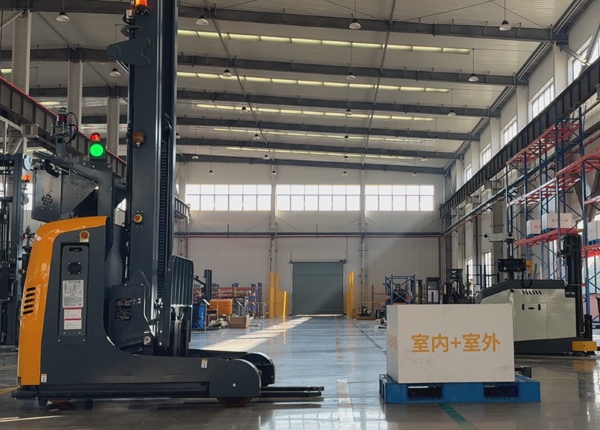
A heavy-duty counterbalanced AGV may require custom manufacturing, factory testing, battery preparation, special packaging, container loading, export clearance, ocean transportation, U.S. customs clearance, port handling, inland trucking, and final delivery. A quoted "20-day sea transit" therefore does not mean the AGV will be operational at the warehouse 20 days after production.
For procurement planning, it is better to separate the shipment into factory lead time, port-to-port ocean transit, destination handling, and final delivery.
For a shipment from a major Chinese port to the U.S. West Coast, a normal FCL ocean schedule can be roughly in the 2–3 week port-to-port range, depending on the origin port, carrier and service. Current published schedules for Shanghai to Los Angeles, for example, show approximately 13–17 days on some FCL services.
East Coast services are generally longer. Current 2026 estimates for Shanghai to New York/New Jersey are commonly around 4–5 weeks port-to-port, although the actual service string can produce a wider range.
For a buyer planning a heavy AGV project, however, these should be treated as transport planning estimates rather than guaranteed delivery dates.
| Stage | Typical Planning Consideration |
|---|---|
| AGV manufacturing | Depends on customization, components, software configuration and production queue. |
| FAT and shipment preparation | Testing, documentation, packing and loading preparation. |
| China port process | Truck arrival, terminal cutoff, export documentation and vessel schedule. |
| Ocean transit | Approximately 2–3 weeks to many West Coast services and around 4–5 weeks to many East Coast services. |
| U.S. port and customs | Depends on documentation, customs processing, terminal conditions and inspections. |
| Final delivery | Drayage, rail or trucking capacity and distance to the warehouse. |
The distinction is important because some logistics providers quote only the vessel transit time, while the buyer's actual business requirement is usually factory-to-warehouse delivery.
The West Coast is normally the faster ocean gateway for cargo moving from China. Shanghai-to-Los Angeles services can currently be scheduled in roughly 13–17 days on some FCL services.
East Coast routes generally require substantially more sailing time. Current market schedules show Shanghai-to-New York services around 28–37 days on some options, while other 2026 planning sources place common East Coast services in the roughly 30–40 day range depending on origin, destination and routing.
The difference is not simply geographical distance. Route design, Panama Canal routing, transshipment, carrier network, port rotation and whether the shipment uses a West Coast landbridge can all change the final schedule.
Suppose a warehouse is located in Chicago. Shipping to Los Angeles may produce a much shorter ocean leg, but the AGVs still need to move from the West Coast port to the warehouse by rail or truck.
An East Coast or other gateway may have a longer ocean transit but a different inland transportation profile. Therefore, the best port should be selected based on total factory-to-warehouse lead time and cost, not simply the shortest ocean voyage.
For heavy-duty AGVs, this calculation becomes even more important because equipment dimensions, weight, container configuration, unloading requirements and inland equipment can affect the final delivery plan.
A professional supplier or freight forwarder cannot eliminate port congestion, but it can reduce the risk of a shipment missing its planned vessel or becoming trapped in an overloaded terminal.
The first protection is to manage the shipment before the cargo reaches the port. This includes confirming the vessel booking, container availability, cargo-ready date, terminal cutoff, export documents and loading plan.
For a custom AGV order, the manufacturer should also avoid treating the shipping date as simply "the day the AGVs leave the factory." The contractual shipment milestone should define what event actually triggers shipment completion.
If cargo misses its planned sailing or the carrier changes the vessel schedule, the forwarder may need to rebook the container onto another sailing. The resulting delay can be measured in days or longer depending on available capacity and port conditions.
For a large AGV project, the buyer should therefore request:
Confirmed carrier and booking information.
Planned vessel name and voyage number when available.
Container number after loading.
Port of loading and discharge port.
Estimated time of departure.
Estimated time of arrival.
Transshipment information if applicable.
Bill of lading information.
Contingency plan if the planned sailing is cancelled or rolled.
It is also useful to distinguish carrier ETA from a guaranteed delivery commitment. Vessel schedules can change after departure, so the ETA should be treated as a moving planning value rather than an absolute promise.
Yes, in many cases. Once the shipment is assigned to a vessel and the relevant voyage information is available, the buyer can often track the vessel through the carrier's tracking system or an independent vessel-tracking platform.
However, there is an important distinction between tracking the vessel and tracking your container.
A vessel-tracking system can show the ship's reported position, voyage, previous port, next port and estimated arrival. It does not necessarily prove that your specific AGV container is physically on the vessel unless the container and booking information are linked to that voyage.
For container-level visibility, the buyer should normally use the carrier or forwarder's tracking system with information such as the container number, booking number or bill of lading number.
For a high-value AGV shipment, asking only for an ETA is not enough. Request the logistics documents and identifiers needed to independently verify the shipment status.
| Information | Purpose |
|---|---|
| Booking number | Confirms the planned carrier booking. |
| Container number | Allows container-level tracking. |
| Bill of lading number | Identifies the ocean shipment and transport document. |
| Vessel name | Allows vessel-level tracking. |
| Voyage number | Identifies the specific sailing. |
| ETD | Estimated departure from the origin port. |
| ETA | Current estimated arrival at the destination port. |
This information gives the buyer substantially more visibility than relying on a supplier message such as "the AGVs are already on the way."
For project planning, use a milestone model instead of a single shipping number.
Engineering completion: custom mechanical and software specifications are frozen.
Production: AGVs are manufactured and configured.
FAT: the agreed factory acceptance tests are completed.
Packaging: vehicles and accessories are prepared for export.
Container loading: cargo is loaded and shipping documents are prepared.
Vessel departure: the container actually leaves the Chinese port.
Ocean transit: cargo moves toward the selected U.S. port.
Destination handling: customs, terminal release and container pickup are completed.
Inland transportation: the AGVs move from the U.S. gateway to the warehouse.
Site commissioning: unloading, installation, mapping, configuration, testing and SAT are completed.
This distinction is particularly important for autonomous forklifts because delivery is not the same as operational readiness. The AGVs may physically arrive at the warehouse while commissioning, network configuration, charging installation, mapping, WMS integration or safety validation is still outstanding.
Avoid writing a contract that simply states "delivery within 30 days by sea." That wording can create disputes because it does not define whether the 30 days starts from deposit, engineering approval, FAT, factory completion, vessel departure, port arrival, or final delivery.
A stronger contract defines measurable milestones such as:
Engineering specification approval date.
Target production completion date.
FAT completion deadline.
Shipment-ready date.
Target vessel departure date.
Destination-port ETA.
Final delivery deadline, if commercially required.
Commissioning and SAT completion deadline.
The contract should also distinguish supplier-controlled delays from events outside the supplier's reasonable control. Port congestion, carrier schedule changes, customs inspections, weather and other transport disruptions may require different treatment from a manufacturing delay caused by the supplier.
For high-value AGV purchases, a practical approach is to maintain a shipping buffer between the contractual target and the warehouse's operational deadline. Do not schedule the first production shift immediately after the carrier's nominal ETA.
Current market data illustrates why this buffer matters. Flexport's August 2026 Ocean Timeliness Indicator showed transit times from China to the U.S. West Coast increasing from 36.5 to 37.6 days and China to the U.S. East Coast increasing from 59.5 to 66.1 days when measured from cargo-ready at the exporter to departure from the destination ocean port. This measurement is broader than simple port-to-port sailing time and demonstrates why different logistics providers can quote very different "transit times" for the same shipment.
For that reason, the safest planning method for a Chinese heavy-duty AGV project is to ask the supplier and forwarder for both the scheduled port-to-port transit time and the realistic factory-to-warehouse delivery window. The first tells you how long the vessel is expected to travel; the second is what your warehouse actually needs to manage.







 Chinese
 English