


The business case for an unmanned forklift should not be based on the purchase price alone. Overseas warehouse operators need to understand how automation changes labor requirements, operating hours, throughput, equipment utilization and long-term operating costs.
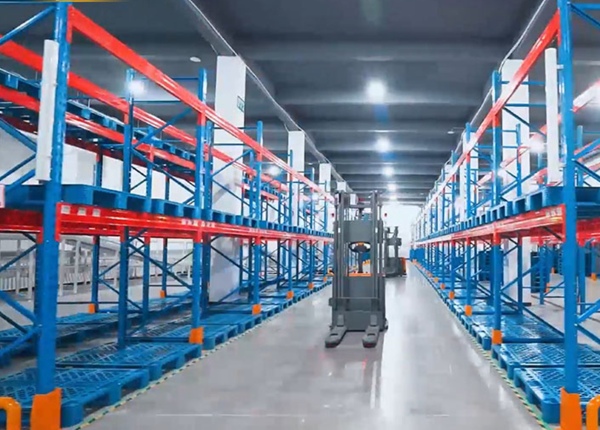
Before calculating AGV ROI, record the current forklift operation.
Number of forklift operators
Working hours per shift
Number of shifts
Pallet movements per shift
Average travel distance
Peak workload
Forklift rental or ownership cost
Maintenance expenses
Battery and fuel costs
Overtime requirements
Productivity limitations
This establishes the baseline against which the automated system should be measured.
One common mistake is assuming that every forklift operator removed from the vehicle becomes an immediate labor saving.
In practice, employees may be reassigned to receiving, picking, inventory, exception handling, maintenance or other warehouse tasks.
The ROI calculation should therefore distinguish between actual labor cost reduction and labor capacity released for other work.
The investment side of the calculation should include more than the AGV vehicle.
AGV fleet
Battery and chargers
Fleet-management software
WMS/ERP integration
Warehouse modifications
Network infrastructure
Commissioning
Training
Spare parts
Shipping and import costs
Ongoing maintenance
The most useful post-deployment data comes from actual warehouse operations.
Track pallet movements, mission completion time, vehicle availability, charging time, fault events, manual interventions and waiting time.
AGV utilization should not automatically be interpreted as labor savings. The business case should connect operational data to the original labor and throughput assumptions.
Do not immediately assume that the vehicle is the problem.
Investigate:
Actual warehouse workload
Vehicle availability
Traffic congestion
Charging delays
WMS task release
Pallet quality
Staging-area bottlenecks
Manual intervention frequency
Route configuration
Changes in business demand
A good ROI review should identify why the original assumptions changed rather than simply comparing the purchase price with labor costs.
For a large fleet, ROI should be reviewed periodically.
| Metric | Why It Matters |
|---|---|
| Pallet movements | Measures actual workload |
| Cycle time | Shows operational efficiency |
| Vehicle availability | Shows fleet reliability |
| Manual interventions | Identifies hidden labor |
| Energy consumption | Tracks operating cost |
The result is a business case based on actual warehouse performance rather than an ROI estimate created before the project started.





 Chinese
 English