


The number of autonomous forklifts required for a warehouse should not be calculated by replacing one manual forklift with one AGV. Fleet size depends on workload, travel distance, lifting requirements, traffic, charging, operating hours, and peak demand.
A proper fleet-sizing study starts with actual warehouse movements and then models how long each AGV takes to complete those missions.
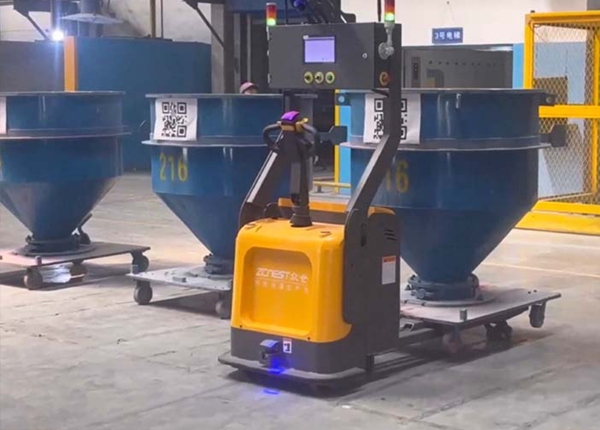
Record the number of pallet movements required during a normal shift and during the busiest periods.
Separate inbound, put-away, replenishment, retrieval, staging, and outbound movements where possible.
This gives the supplier a much better basis for fleet sizing than simply stating that the warehouse currently has 10 forklifts.
An AGV mission includes more than travel.
Approach to the pallet
Fork entry
Load confirmation
Travel
Turning or intersection waiting
Lift operation
Pallet placement
Empty return travel
Potential waiting time
The complete cycle should be used when estimating effective vehicle capacity.
Average workload can hide the periods when the warehouse actually needs the most capacity.
For example, outbound demand may increase sharply during a shipping window while inbound receiving peaks during another period.
Fleet sizing should therefore consider the workload profile by hour rather than only the daily total.
Two warehouses with the same number of pallet movements may require very different fleet sizes.
A short transfer between adjacent staging areas may take only a small amount of vehicle time, while a long warehouse-to-dock movement can consume much more of the available operating capacity.
The supplier should therefore use actual route distances from the warehouse layout.
High-bay storage introduces additional lift and positioning time.
A pallet stored near the floor and a pallet placed at a high rack level may have very different mission durations even if the horizontal travel distance is identical.
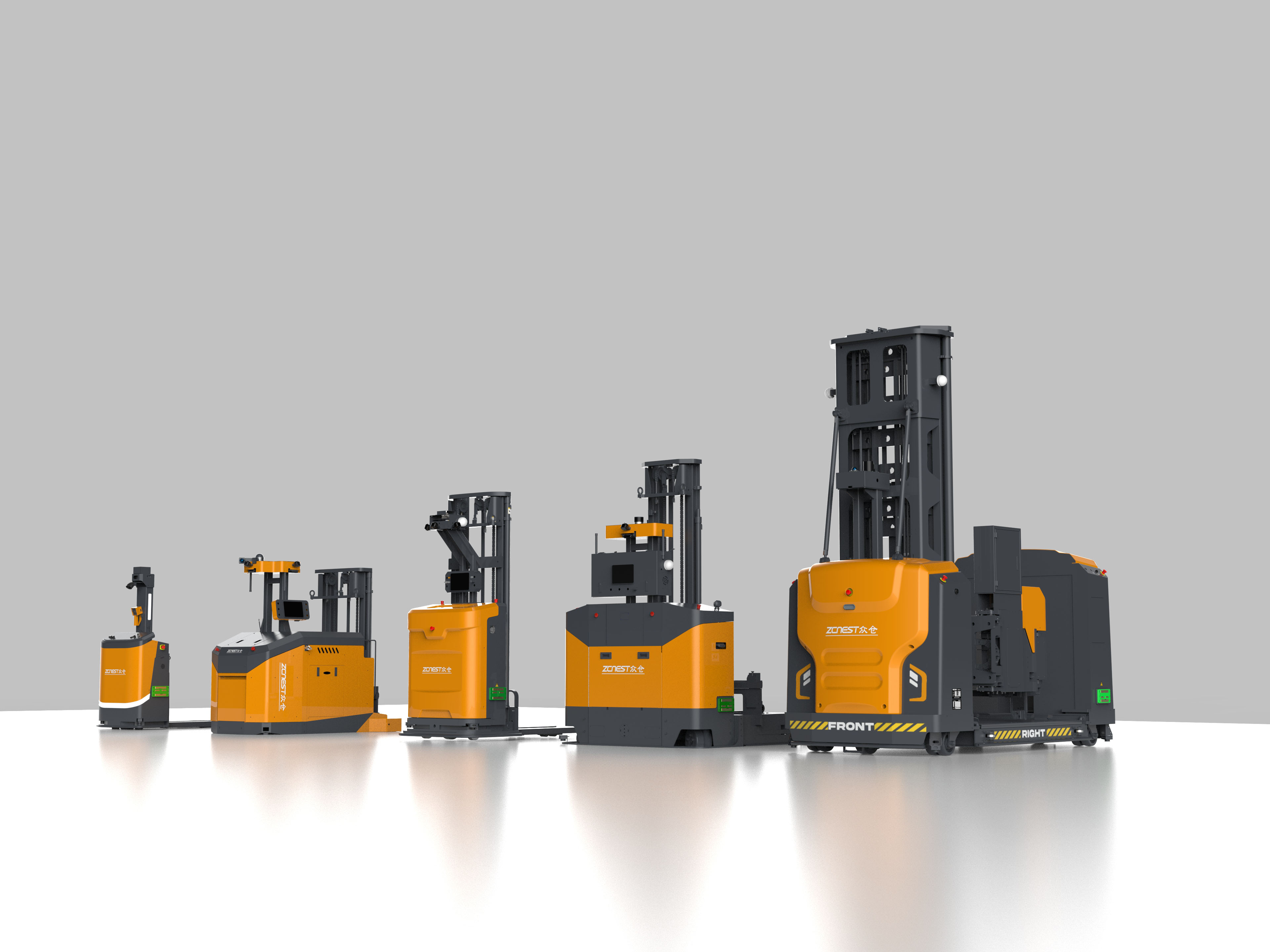
This is particularly important when comparing counterbalance, reach, stacker, and VNA-type autonomous forklifts.
An AGV that is charging is temporarily unavailable for missions unless the system supports another operating strategy.
Fleet sizing should therefore account for charging time, battery capacity, charging locations, charger availability, and charging scheduling.
Adding vehicles to a warehouse can increase traffic and waiting time.
If several vehicles share a narrow aisle or intersection, the theoretical travel capacity of each vehicle may not be achievable during peak periods.
A fleet simulation can help identify the point where additional vehicles stop producing proportional increases in throughput.
Fleet calculations should include realistic vehicle availability.
Battery charging, maintenance, faults, manual recovery, software interruptions, and site conditions can reduce the number of vehicles available for productive missions.
The exact allowance should be based on the supplier's architecture and the warehouse operating model rather than an arbitrary percentage.
If the warehouse has strong peak periods, the fleet should be evaluated against those periods.
At the same time, buying enough vehicles to handle an extremely rare peak may create unnecessary idle capacity during most operating hours.
This is why scenario-based analysis is useful.
Ask the supplier to compare multiple fleet sizes under the same workload.
| Scenario | What to Observe |
|---|---|
| Small fleet | Waiting and insufficient capacity |
| Medium fleet | Throughput and utilization |
| Large fleet | Traffic and congestion |
The goal is to understand how throughput changes as fleet size changes, not simply to select the largest number of vehicles.
If the warehouse expects significant growth, ask whether the fleet software, wireless network, charging infrastructure, and traffic architecture can support additional vehicles later.
A smaller initial fleet may be practical if the system is designed for controlled expansion.
The best fleet-size calculation is based on actual operational data: pallet movements, distances, lift heights, peak demand, operating hours, charging, and waiting.
Once those inputs are available, the supplier can provide a more defensible fleet recommendation and identify the assumptions behind it.





 Chinese
 English