


FLEET CONTROL AND DISPATCH
When receiving, replenishment, putaway, and dispatch compete for transport capacity, task priority determines which work moves first. Learn how to define practical rules without creating avoidable delays or starving lower-priority tasks.
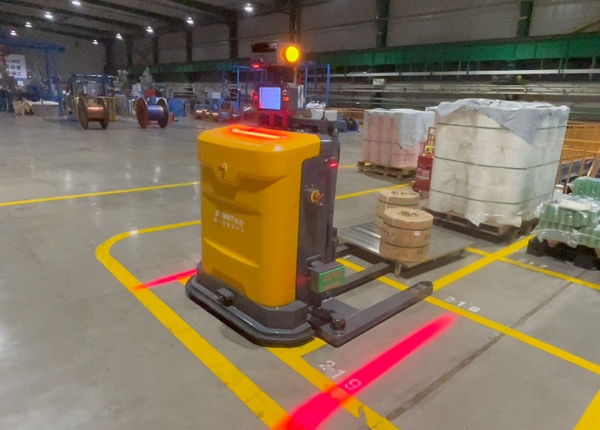
A warehouse fleet may have enough vehicles to complete the daily workload but still struggle during peak periods. Receiving deliveries, replenishing picking locations, moving pallets into storage, and preparing outbound shipments can all generate transport requests at the same time.
Without clear dispatch rules, tasks may be assigned in an order that does not reflect operational urgency. A task that looks simple from a software perspective may delay a critical shipment, while repeated high-priority requests can leave routine work waiting indefinitely.
Task prioritization should reflect warehouse commitments, physical constraints, and the consequences of delay. The rules should be agreed by operations and tested against actual workflows before being applied across the fleet.
Start by grouping transport requests into meaningful categories. Avoid creating so many priority levels that operators cannot understand them or the dispatch system becomes difficult to maintain.
Time-critical dispatch: Pallets required to meet a confirmed loading or shipment deadline.
Production or picking replenishment: Transfers needed to prevent a downstream operation from running short.
Inbound putaway: Moving received pallets to approved storage locations.
Routine relocation: Planned movements that can be completed when capacity is available.
Recovery or exception tasks: Movements required to restore normal operations after a disruption.
These are examples rather than universal priority categories. A distribution center, manufacturing warehouse, and third-party logistics facility may assign different urgency to the same type of movement.
A label such as “urgent” is not enough. Specify what makes a task urgent, which system or user can assign that status, and when the status expires or changes.
For example, a dispatch task may become time-critical when its shipment deadline is approaching and the required pallet is confirmed available. A replenishment task may receive higher priority when the destination stock falls below an agreed threshold. A blocked or unavailable destination should not automatically trigger repeated attempts simply because the task has a high priority.
Where possible, use information already available in warehouse systems. Avoid relying on informal messages that cannot be consistently interpreted or audited.
The nearest task is not necessarily the most important task. Conversely, assigning every vehicle to the highest-priority request can produce inefficient travel and congestion around one area.
A practical dispatch policy considers several factors together:
Business priority and time remaining before a deadline.
Vehicle suitability for the load and required handling operation.
Travel distance and current vehicle position.
Availability of the pickup load and destination location.
Route access, traffic conditions, and restrictions in the operating area.
Whether assigning the task would delay an even more critical commitment.
The exact weighting depends on the application. Document the decision rules so that task assignments can be explained and adjusted based on observed results.
Strict priority rules can create a starvation problem. If new urgent tasks arrive continuously, routine putaway or replenishment work may remain unassigned for an excessive period.
Consider using an aging rule, deadline window, or maximum waiting threshold for selected task categories. Under an aging rule, a task can gradually gain priority as its waiting time increases, subject to safety, equipment suitability, and operational constraints.
Also define what happens when a task cannot be completed. A missing pallet, blocked destination, or inaccessible route should trigger a documented exception state rather than an endless cycle of reassignment. The system should record the reason and make the task visible to the responsible team.
Warehouse zones may have different operating rhythms. Inbound receiving can generate concentrated bursts of work, while outbound staging may have fixed shipment deadlines. Replenishment demand can rise sharply before a picking wave begins.
Review where task queues form and whether one zone repeatedly consumes most of the fleet's capacity. If the layout allows it, consider zone-specific rules, task release limits, or controlled reservations for critical movements.
However, do not create arbitrary zone restrictions without reviewing their effect on the whole operation. A local improvement can make another zone less efficient if vehicles are prevented from completing useful nearby tasks.
Before deployment, create test scenarios that reproduce competing demands. Include a peak receiving period, an urgent outbound task, a blocked destination, a vehicle becoming unavailable, and several routine tasks waiting at once.
Review whether the selected rules produce the expected order of work, whether lower-priority tasks still progress, and whether the system recovers when a task cannot proceed. Record the task queue, assignment decisions, completion timestamps, and exception messages.
After launch, review the results with warehouse operations. If urgent tasks regularly interrupt work that is nearly complete, or if routine tasks build up behind a single category, adjust the policy using recorded evidence rather than informal impressions.
PURPOSE — Each task category has a clear business reason.
TRIGGER — Priority conditions are measurable and documented.
FEASIBILITY — Load, vehicle, route, and destination conditions are checked.
FAIRNESS — Routine work has a defined way to progress.
RECOVERY — Blocked tasks and system exceptions have clear handling rules.
Track more than the total number of completed tasks. Useful indicators include average and maximum waiting time by task category, deadline performance, queue size during peak periods, the number of blocked tasks, and avoidable vehicle travel.
Compare performance over similar operating periods and note changes in demand or warehouse conditions. If the dispatch policy is changed, record the revision and review its effect before introducing further adjustments.
Effective AGV forklift dispatch is not simply a race to complete the nearest or highest-priority task. It requires clear business rules, feasible assignments, exception handling, and a way to prevent routine work from being permanently delayed.
ZCNest can review warehouse task flows, fleet control requirements, and operating priorities as part of an AGV forklift project. Share your main movement categories and peak operating constraints to discuss a suitable dispatch approach.





 Chinese
 English