


PEAK-SEASON OPERATIONS PLANNING
Seasonal peaks put pressure on every part of warehouse operations, from receiving and storage to retrieval and dispatch. AGV forklift capacity must be assessed against the timing and mix of actual work, not just the average daily pallet volume.
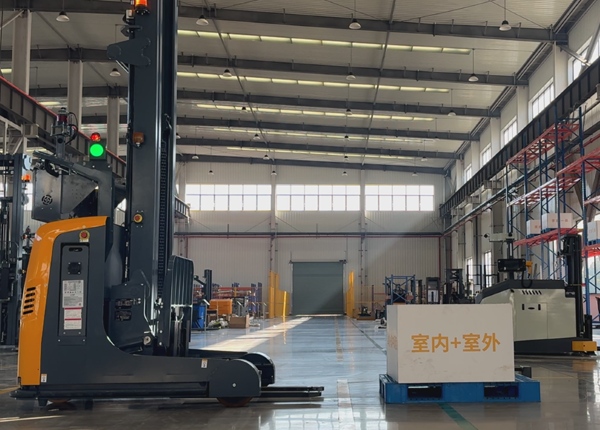
Peak season can change a warehouse's workload in several ways. More pallets may arrive within a shorter period, outbound deadlines may become tighter, and the mix of loads may differ from normal operations. A fleet that performs well during an average week may struggle when multiple processes demand transport capacity at the same time.
Adding vehicles is not always the first or best response. Before changing the fleet, review the workload forecast, the availability of storage and staging positions, the operating schedule and the processes that determine when transport tasks can begin.
Start with historical order and receiving data from comparable peak periods. Estimate expected pallet movements by hour or shift, separating putaway, retrieval, replenishment, relocation and outbound transfers where these apply.
Daily totals can hide the real constraint. A warehouse that normally receives work evenly may experience a concentrated arrival period before a shipping cutoff or immediately after a delivery window.
Include the expected pallet mix, destination distribution and any seasonal changes in handling requirements. If the peak involves more oversized loads or more movements through a limited number of warehouse zones, transport times and route demand may change even when the total pallet count appears manageable.
Prepare a normal scenario and a higher-demand scenario. Record the assumptions behind each forecast so that the operations team can compare actual performance with the plan as the season progresses.
Before increasing vehicle capacity, check whether other parts of the process can accept more work. Receiving may be limited by inspection capacity, storage aisles may become congested, or outbound staging may not have enough available positions.
Review the following constraints:
The rate at which pallets become ready for automated transport.
The availability of valid storage or retrieval destinations.
The capacity of transfer points and staging areas.
Shared routes, crossings and narrow warehouse passages.
Charging, maintenance and staffing arrangements.
The ability of warehouse systems to release and confirm tasks reliably.
If the downstream process cannot accept additional pallets, more AGV forklifts may increase waiting and congestion without improving completed throughput. Identify the limiting process before deciding which resource needs additional capacity.
Use actual task durations, vehicle availability and demand patterns to assess whether the existing fleet can handle the forecast. Include loaded movement, empty travel, handling time, waiting, charging and planned maintenance.
Do not base the plan only on an ideal travel-time estimate. Real warehouse performance also depends on pickup readiness, destination availability, traffic conflicts and the amount of time required to complete each task correctly.
Test whether the current fleet can meet the expected workload while maintaining enough flexibility for delays and urgent tasks. If the analysis indicates a capacity gap, compare options such as adding vehicles, adjusting shifts, releasing work earlier or changing the sequence of non-urgent tasks.
Any proposed fleet expansion should be checked against the physical layout and fleet-control configuration. Additional vehicles require sufficient space, compatible system settings and a traffic plan that can handle the increased movement demand.
Peak demand often creates competition between urgent outbound orders, replenishment and routine storage movements. Agree on the operational conditions that determine which tasks should receive priority.
Define which deadlines are genuine business commitments, who may assign exceptional priority and how long a priority override remains active. Ensure that unavailable pallets or blocked destinations do not trigger endless retries merely because the associated task is urgent.
Also decide how routine work will progress during sustained peak demand. If urgent tasks continuously displace all other work, storage and replenishment queues may grow until they create a second operational problem.
Review task waiting times by category during the peak period. Adjust the policy when evidence shows that one process is repeatedly preventing another from meeting its commitments.
Peak season may require temporary storage arrangements, altered operating hours or changes to the areas served by automated forklifts. These changes should be reviewed before they affect production operations.
Document which temporary locations are permitted, which load types they can accept and how inventory status will be maintained. If a location or route is not part of the approved configuration, establish the required review and validation before using it.
Assign responsibility for approving temporary changes. Operations, warehouse IT, maintenance and the AGV supplier may need to review different aspects of a change, depending on the system design.
Record the effective date and planned end date of each temporary arrangement. When the peak period ends, verify that temporary rules and configurations are either formally retained or safely withdrawn.
Peak season is a poor time to discover that the warehouse has no agreed recovery procedure. Before the busy period, verify how the team will respond to a vehicle becoming unavailable, a system connection being interrupted or a key route being blocked.
Identify the authorized personnel, escalation contacts and approved recovery steps. Confirm how incomplete tasks will be reviewed and how inventory status will be reconciled before work resumes.
If manual handling is part of the contingency plan, define where it is permitted, which safety procedures apply and how manual movements will be recorded. A manual workaround should not create untracked inventory changes or unsafe traffic conflicts.
Review critical spare parts, maintenance coverage and support availability against the planned operating schedule. Confirm the actual service arrangements rather than assuming that standard support hours will cover every peak shift.
Before the seasonal increase begins, test a workload representative of the forecast. The test should include simultaneous task releases, constrained routes, a temporarily unavailable destination and the expected mix of pallet types.
Confirm that the fleet completes the planned workload within the required operating window.
Check whether queue lengths and task waiting times remain manageable.
Verify that critical tasks receive the intended priority.
Test the approved response to vehicle or system unavailability.
Confirm that inventory and task records remain consistent after recovery.
Document unresolved constraints and assign owners before the peak starts.
Demand is forecast by time window and task type.
Fleet capacity is reviewed alongside warehouse constraints.
Priority rules and routine-task progression are defined.
Temporary locations and configuration changes are controlled.
Downtime, recovery and support procedures are verified.
Peak-load testing is completed with documented results.
Post-peak review and rollback responsibilities are assigned.
Key checkpoint: Peak readiness means the complete warehouse process can handle the expected demand pattern—not merely that enough AGV forklifts are available. Validate receiving, storage, task release, traffic and recovery together.
Compare actual task demand with the forecast and review the periods when queues, waiting or manual intervention increased. Identify which constraints were temporary and which are likely to recur.
Use the results to improve the next seasonal plan. Record the changes that were effective, the capacity gaps that remained and any temporary operating rules that need to be removed.












 Chinese
 English





