


WAREHOUSE CHANGE CONTROL
Warehouse layouts rarely remain unchanged throughout the life of an automation system. New racks, relocated equipment and temporary work areas can affect AGV forklift access, turning space and traffic flow. A controlled change process helps ensure that updated layouts remain compatible with the installed system.
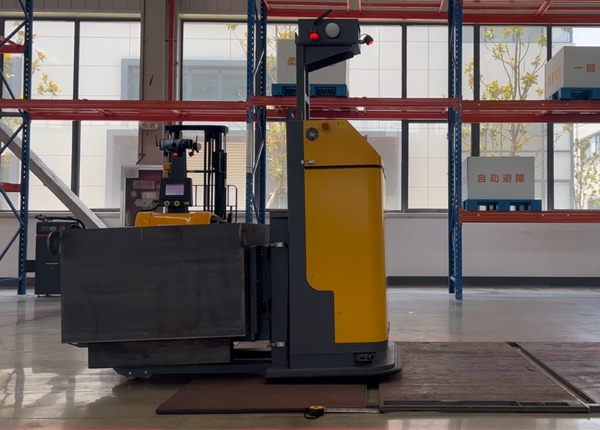
A warehouse modification can appear minor to the facilities team but have a significant effect on an AGV forklift route. Moving a rack end, installing a protective barrier or placing a new workbench may reduce clearance, change a turning maneuver or obstruct a navigation reference.
Changes can also affect the warehouse software. A storage position may be removed, a destination may be reassigned or a new operating zone may require updated task rules.
For this reason, layout changes should be reviewed as operational changes rather than treated as independent building activities. The goal is to identify affected routes, locations, interfaces and procedures before the modified area returns to automated use.
Begin by describing exactly what will change and when the change will take effect. Include the affected warehouse area, the reason for the modification and whether it is temporary or permanent.
Common changes include new or relocated racks, revised pedestrian areas, equipment installation, floor repairs, new staging positions and the closure of a route during maintenance.
Classify each change by its potential impact on vehicle movement, storage access, inventory records, system configuration and site safety. A change that affects several of these areas may require a coordinated review by warehouse operations, facilities, IT and the AGV supplier.
Do not assume a temporary change is low risk. A temporary obstruction in a frequently used passage may affect more tasks than a permanent change in a rarely used area.
Review the proposed layout against the actual vehicle and load configurations that will use the area. Include the complete load envelope, turning requirements, approach geometry and the space required to enter and leave storage positions.
Check the effects of columns, rack guards, barriers, equipment cabinets and other fixed or movable objects. A route that remains physically open may still be unsuitable if the vehicle cannot perform its intended maneuver with the required clearance.
For high-bay storage, review changes to rack positions and access conditions with the relevant engineering and safety personnel. Confirm that any modified storage position remains suitable for the intended load and equipment.
Where the change affects floor condition or surface transitions, determine whether the modified area needs inspection or testing before loaded vehicles use it. Do not approve a route solely because an empty vehicle can pass through it.
A physical change may require corresponding updates to warehouse location records, route definitions, operating zones or destination permissions.
Identify whether any storage locations are being created, removed, renamed or reassigned. Confirm how inventory in the affected positions will be handled and how the warehouse system will prevent new tasks from targeting unavailable destinations.
Where route or map configuration is involved, agree on the update method with the responsible supplier or qualified technical team. The required procedure depends on the navigation and fleet-control architecture installed at the site.
Maintain a record of the approved configuration revision and the area it applies to. If several vehicle types or software versions are in use, verify which configurations require updating rather than assuming one change automatically applies to the entire fleet.
Maintenance, construction or equipment installation may temporarily make a route or storage area unavailable. Define how the restriction is communicated to the AGV system before work begins.
Review tasks already assigned to the affected area. Decide whether they should be completed before closure, held, canceled or redirected to an approved alternative. Ensure that the system does not continue dispatching vehicles toward a route that is no longer available.
Mark the restricted area according to the site's approved access and safety procedures. Assign responsibility for confirming that the work zone is clear and that any required physical protections have been removed before automated operations resume.
Temporary changes should have an owner, an effective period and a clear removal or restoration process. Otherwise, an old restriction may remain active after work ends, or an area may reopen before its automated configuration has been restored.
After a relevant layout or configuration change, test the affected routes using the approved procedure. Select representative vehicles and loads, especially those with the largest permitted dimensions or the most demanding maneuver requirements.
Test the complete movement from the previous operating area through the modified section to the intended destination. Confirm that route access, task execution and completion reporting work as expected.
If an alternative route has been introduced, verify its physical suitability and its effect on traffic in adjacent areas. A detour may avoid one obstruction but increase demand at another constrained passage.
Record the tests performed, any restrictions that remain and the person responsible for approving the area for normal use. If the change affects a safety-related function, follow the required formal review and validation process before release.
Ensure that warehouse operators know which routes, locations and procedures have changed. This is particularly important when a temporary workaround has become a permanent operating arrangement.
Update relevant site layouts, location records, maintenance instructions and traffic procedures. Identify the changes that require staff training or a revised handover between shifts.
Make sure that the approved layout and system configuration can be traced to the same revision. An outdated drawing can lead staff to reopen a route, place equipment in a restricted area or create inventory records for a location that is no longer available.
Assign one owner to coordinate the review and collect the required approvals. The depth of review should reflect the change's impact, but every change should have a documented scope and an explicit decision about whether the affected operation can resume.
The change, affected area and effective period are documented.
Vehicle and load clearances have been reviewed.
Storage records, route settings and system dependencies are identified.
Temporary restrictions are communicated before work begins.
Affected tasks are handled under an approved procedure.
Required route and task tests are completed.
Updated documents and staff instructions are available.
An authorized person approves the area for normal operation.
Key checkpoint: A modified warehouse area should not return to automated operation until the physical layout, location records, route configuration and required validation are consistent with the approved change.
Before installing new racks or equipment, include the AGV system owner in the layout review. Provide proposed drawings early enough to identify potential conflicts before construction or equipment installation begins.
Ask the supplier which changes require technical review, configuration updates or on-site validation. Agree on the information needed to assess a change and the procedure for approving the revised operating area.












 Chinese
 English





