


A useful alert tells the warehouse what happened, how serious it is, who must respond, and what needs to happen next. Without those rules, even a sophisticated fleet dashboard can leave operators unsure how to recover.
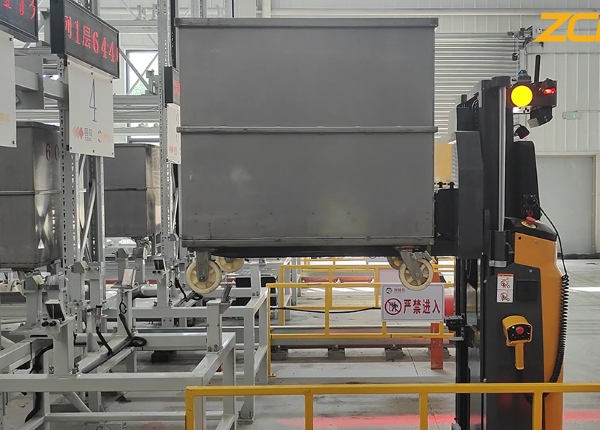
When an AGV forklift stops, the first question should not simply be whether an alarm has appeared. The operations team needs to know whether the vehicle is waiting normally, whether a task is blocked, whether other vehicles are affected, and whether the issue requires immediate intervention.
Alert management should therefore be designed as an operational process rather than a list of software notifications. The purpose is to direct attention to the issues that threaten safety, warehouse throughput, inventory accuracy, or delivery commitments.
Begin with a small set of alert categories. Too many categories make training difficult, while a single severity level fails to distinguish routine waiting from a system-wide disruption.
Safety-critical: A condition requiring the vehicle or affected work area to remain stopped until the relevant safety procedure is followed.
Task-blocking: A movement cannot continue because a destination is unavailable, a load cannot be handled, or a required handover has failed.
Fleet-impacting: A fault or obstruction is affecting multiple vehicles, shared routes, or a critical operating zone.
Inventory-control: The physical movement and recorded task or inventory status do not agree.
Informational: A notification that needs monitoring but does not require immediate intervention.
Severity should reflect consequences, not merely the technical code. A minor-looking issue at the only entrance to a narrow aisle may have a larger operational impact than a more obvious fault in an isolated area.
An alert should provide enough information for the assigned person to decide the next action without repeatedly searching different screens.
Where available, include:
Vehicle identifier and current operating status.
Task reference and intended destination.
Time the condition started and how long it has remained unresolved.
Physical location or affected warehouse zone.
Severity and operational impact.
Recommended first check or approved recovery procedure.
Current owner and escalation destination.
Whether other vehicles or tasks are affected.
For example, “vehicle stopped” is not a sufficient operational alert. “Vehicle 07 has waited at the high-bay aisle entrance for six minutes because the destination is unavailable; two retrieval tasks are delayed” gives the supervisor a clearer starting point.
Do not expose unsupported technical assumptions as facts. If the system cannot confirm the cause, identify the condition as unclassified and provide a safe diagnostic route.
Unassigned alerts tend to remain open because each person assumes another department is handling the issue. Establish ownership before the system enters routine operation.
| Alert category | Primary owner | Typical next step |
|---|---|---|
| Safety-critical | Designated safety or operations lead | Secure the area and follow the approved safety procedure. |
| Task-blocking | Fleet operator or shift supervisor | Verify the blockage and use the approved recovery path. |
| Fleet-impacting | Automation or technical lead | Assess the affected area and coordinate restoration. |
| Inventory-control | Inventory controller or warehouse supervisor | Verify the physical load and reconcile the recorded status. |
These roles are examples, not a mandatory organization chart. A smaller warehouse may combine responsibilities, provided the assigned person has the authority and training to act.
Not every alert needs immediate escalation. A vehicle waiting briefly for a shared crossing may be behaving normally, while a blocked aisle that stops several high-priority movements may need rapid intervention.
Use two escalation dimensions:
Elapsed time: How long the condition has remained unresolved.
Operational impact: The number of tasks, vehicles, locations, or shipping commitments affected.
Define thresholds according to the warehouse's operating hours and service commitments. For example, a task-blocking alert can first go to the fleet operator, then to the shift supervisor if it remains unresolved, and finally to the technical support owner if the approved recovery procedure fails.
Safety-critical alerts must follow the applicable safety procedure immediately; they should not wait for a routine time-based escalation. Staff must not bypass protective devices or restart a vehicle simply to clear an alarm.
If the same condition generates repeated messages without new information, operators may begin ignoring alerts. Group related notifications when appropriate, preserve the original start time, and distinguish a new event from an update to an existing event.
Review the following controls:
Use a defined alert threshold instead of notifying on every short-lived condition.
Keep safety-critical notifications distinct from informational messages.
Suppress duplicate notifications only when doing so cannot hide a material change in risk or impact.
Record acknowledgements and resolution times.
Identify alerts that repeatedly reopen after apparent recovery.
Provide a clear way to report an incorrect alert classification.
Alert suppression must never conceal a continuing safety hazard or remove the traceability needed to investigate a recurring fault.
Key checkpoint
Every high-impact alert needs a severity level, a response owner, an approved next action, and a clear escalation path. A notification without ownership is not a complete control.
Daily alert clearing restores operations, but recurring patterns require a separate review. If the same aisle, handover point, or vehicle generates repeated alerts, investigate the operating conditions rather than treating every occurrence as an isolated incident.
Track:
Alert count by category and severity.
Median and longest resolution time.
Alerts reopened after recovery.
Repeated alerts by vehicle, location, and task type.
Tasks and vehicles affected by each significant incident.
Time lost to waiting, manual intervention, and recovery.
Use the results to decide whether the solution is a process adjustment, operator training, a physical layout change, software configuration, or technical maintenance. Document the change and verify whether the same alert occurs less frequently afterward.
Alerts are classified by safety and operational impact.
Each alert includes enough context to identify the affected task and location.
Every alert category has a designated owner.
Escalation thresholds and response routes are documented.
Safety procedures take precedence over routine recovery targets.
Duplicate notifications are controlled without hiding material changes.
Resolution and recurrence data are reviewed regularly.
Effective alert management combines fleet visibility, warehouse procedures, trained operators, and technical support. When planning an AGV forklift project, discuss not only what the software can detect but also how your team will respond, escalate, and verify recovery.
Contact ZCNest Robotics to discuss AGV forklift operations, fleet monitoring, and warehouse-specific automation requirements.












 Chinese
 English





