


When normal storage capacity becomes temporarily unavailable, warehouses need a controlled way to handle incoming pallets and protect inventory accuracy. AGV forklifts can support overflow movements, provided that temporary locations are approved, visible, and compatible with the storage process.
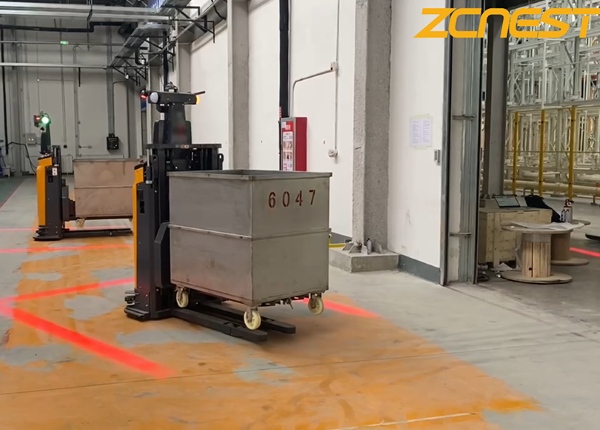
Warehouse storage capacity can become constrained for reasons that are not part of the normal operating plan. A large inbound delivery may arrive earlier than expected, a section of racking may become unavailable, or inventory may temporarily accumulate before a planned outbound shipment.
When this happens, operators may place pallets in available floor space to keep receiving activities moving. Without a controlled process, these temporary positions can become difficult to track and may obstruct vehicle routes, pedestrian access, or access to normal storage locations.
AGV forklifts can help move pallets to designated overflow areas, but the warehouse must define where temporary storage is permitted, which loads qualify, and how those pallets return to normal operations.
Different capacity problems require different responses. Before creating overflow tasks, identify why the normal storage process cannot accept the pallet.
Short-term inbound surge: More pallets arrive than the warehouse can put away immediately.
Unavailable rack section: A storage area is temporarily restricted for inspection, repair, or operational reasons.
Outbound delay: Pallets remain in the warehouse longer because a shipment or collection has been postponed.
Inventory concentration: A temporary increase in one product category reduces the available capacity for other items.
Operational interruption: A warehouse area cannot accept normal putaway tasks during a planned or unplanned interruption.
The cause determines the expected duration and the best overflow strategy. A short inbound surge may need temporary floor positions, while a longer rack restriction may require an alternative approved storage area.
Overflow storage should use predefined locations rather than any empty floor area that happens to be available.
Each approved position should have a location ID, physical capacity, permitted pallet dimensions, maximum load weight, and any relevant access restrictions. The layout should also preserve required clearances for AGV travel, pedestrian movement, emergency access, and other warehouse activities.
If the overflow area is on the floor, mark individual pallet positions clearly. If the warehouse uses a separate storage zone, define the entry and exit routes and confirm that the selected AGV forklift can reach the positions safely.
Temporary locations should have a clear operating status. A position that is occupied, reserved, restricted, or unavailable must not be assigned to another pallet.
Not every pallet is suitable for temporary floor storage. Some products may require controlled environmental conditions, special segregation, restricted access, or a particular rack configuration.
Define eligibility rules based on product type, load weight, pallet dimensions, storage restrictions, and the expected time in overflow. Check whether the temporary position provides the required load support and whether the pallet can be retrieved without moving other loads.
For high-bay warehouse operations, temporary floor storage may also change the subsequent retrieval and putaway process. The WMS should retain the pallet's identity and ensure that its temporary position is reflected accurately.
The WMS should know how many approved overflow positions are available and which pallets occupy them. A transport task should only be released when a valid destination has been reserved.
For each temporary position, track:
Location ID and physical position.
Occupied, available, or restricted status.
Stored pallet ID and product reference.
Storage eligibility and any special restrictions.
Time of entry and expected review or release condition.
Current transport task or reservation status.
This information prevents the warehouse from treating temporary storage as unrecorded floor space. It also allows operators to identify which pallets need to be moved back into normal storage when capacity becomes available.
Overflow tasks should be distinguishable from ordinary putaway and retrieval tasks. The WMS can identify eligible pallets and select an approved temporary destination, while the RCS manages vehicle assignment and physical transport.
Dispatch rules should consider vehicle capability, route availability, destination capacity, and the priority of the original warehouse operation. For example, an inbound pallet that cannot enter normal storage may be moved to overflow, but it should not block a more urgent movement that is required to clear a critical transfer point.
Also define what happens if an overflow location becomes unavailable after the task is created. The system should cancel or revise the task through a controlled process rather than sending the vehicle to an occupied position.
Overflow is a temporary operating arrangement, so the warehouse needs a process for moving pallets back to normal storage or another approved destination.
When a rack position becomes available, the WMS can identify eligible pallets in overflow and create return-to-storage tasks. The selection may consider product allocation, storage rules, inventory priority, and the physical location of each pallet.
Do not assume that the original storage destination remains available. Recheck location capacity and eligibility before releasing the new task. If the pallet's condition or inventory status has changed while in overflow, complete the necessary verification first.
Overflow areas can become permanent congestion points when pallets are moved into them but no one is responsible for reviewing their status.
Set a review process that identifies pallets remaining in overflow beyond the expected period. Warehouse managers should be able to see the reason for each placement, the time it entered the area, and the action required to release it.
Monitor overflow occupancy, average holding time, repeated transfers, and the number of pallets waiting for normal storage. These figures help distinguish a short-term capacity issue from a recurring storage-planning problem.
Before activating overflow operations, verify:
The reason for the capacity constraint is identified.
Overflow locations are predefined and approved.
Each position has a clear capacity and eligibility rule.
Pedestrian routes and vehicle clearances are preserved.
The WMS records every pallet's temporary location.
AGV tasks reserve destinations before dispatch.
Unavailable or occupied positions cannot receive new tasks.
A return-to-normal-storage process is defined.
Long-staying pallets are reviewed and assigned an owner.
Key checkpoint: Temporary overflow must remain visible and controlled in the warehouse system. Every pallet needs an approved location, a traceable status, and a defined next action. An empty floor position is not automatically a valid storage destination.
Overflow tasks may appear irregular, but they can create a substantial additional workload during periods of constrained storage capacity. Estimate the number of pallets requiring temporary movement, the distance to overflow locations, the expected holding period, and the number of subsequent return movements.
Evaluate whether the existing AGV forklift fleet can handle this additional workload without delaying normal putaway, retrieval, and outbound operations. The analysis should include travel time, pickup and placement time, route congestion, and the operating hours available for transport.
For warehouses with narrow aisles or high-bay storage, verify that overflow routes do not interfere with normal storage access. A properly designed overflow process should provide additional flexibility without creating a second uncontrolled warehouse layout.












 Chinese
 English





