


Damaged pallets, quality holds, unidentified goods, and recalled inventory need controlled movement rules. An automated warehouse must keep these loads physically separated and prevent them from returning to normal storage or outbound operations without authorization.
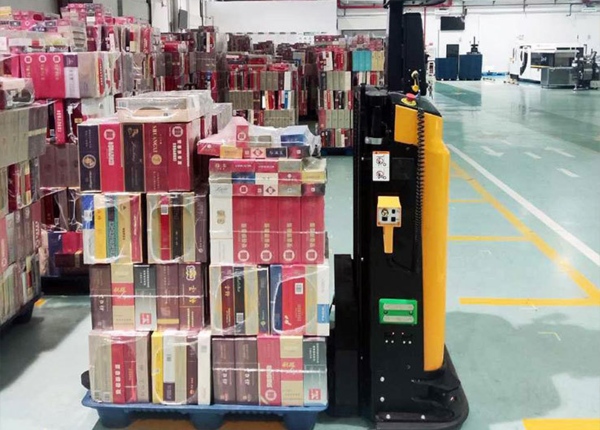
A pallet can be physically present in a warehouse but unavailable for normal use. It may require quality inspection, have damaged packaging, lack a verified identity, or be subject to a hold imposed by the inventory-control team.
If an AGV forklift system treats every physically accessible pallet as eligible stock, it can move restricted goods into an ordinary rack, send them to picking, or deliver them to an outbound area. Preventing this requires coordinated physical zoning, movement authorization, and clear release procedures.
Establish the conditions that make a pallet ineligible for routine storage or dispatch. The list should reflect the warehouse's quality, safety, traceability, and customer requirements.
Damage: Pallets, packaging, or loads that require inspection before further handling.
Identity uncertainty: Missing, unreadable, duplicated, or inconsistent pallet identification.
Quality hold: Inventory awaiting an inspection result or disposition decision.
Recall or compliance hold: Goods that must not be issued until an authorized release.
Inventory discrepancy: A physical quantity, product, batch, or recorded status that needs investigation.
Do not use one general-purpose quarantine category if different conditions require different authorization. A damaged pallet may need a safety inspection before movement, while a quality hold may be safe to transport to a designated inspection area.
Choose a location that can be reached safely without forcing restricted pallets through high-traffic picking or shipping areas. The area should be identifiable to operators and clearly distinguished from normal available inventory.
Evaluate the following:
Available capacity for typical and peak quarantine volumes.
Access routes that avoid unnecessary interaction with busy traffic zones.
Floor markings, location labels, and any required physical barriers.
Space for inspection, re-labelling, or other authorized handling.
Safe access for manual inspection and approved lifting equipment.
Clear separation between goods awaiting a decision and goods already approved for release.
Do not place quarantine stock in a convenient empty rack location without formally designating that location for the purpose. Temporary storage in ordinary locations can make restricted pallets difficult to identify and may allow them to be retrieved by normal warehouse processes.
The warehouse should define which AGV forklift movements are permitted for each quarantine condition. Restricting normal picking does not necessarily mean the pallet cannot move at all; some loads must be transported to inspection or a safer location.
A practical control sequence is:
Identify the pallet and record the reason for the restriction.
Determine whether the load is safe and eligible for automated handling.
Authorize transport only to an approved quarantine or inspection destination.
Confirm the physical delivery and record the resulting status.
Keep the restriction active until an authorized person records a disposition decision.
If the load is unstable, unsafe to lift, or outside the vehicle's approved handling conditions, do not create an automated transport task simply because a quarantine location is available. Use the applicable safety and manual-handling procedure instead.
Physical separation is only one part of the control. The warehouse's inventory and task rules must also prevent restricted pallets from being allocated to ordinary storage, replenishment, picking, or shipping.
Confirm that the operating process can distinguish:
Available inventory that can be allocated to normal work.
Restricted inventory that can move only under specific instructions.
Inventory awaiting inspection or a disposition decision.
Inventory approved for release but not yet returned to an eligible location.
Inventory approved for a non-sale disposition, such as repair or disposal, where applicable.
Do not assume that moving a pallet out of quarantine automatically makes it available. The release decision and the physical relocation are separate events and may require different approvals.
Key checkpoint
A pallet should return to normal automated operations only after its restriction has been formally resolved, its inventory status is updated, and its destination is confirmed as eligible.
Transport operators should not be expected to decide whether a quality hold, recall, or inventory discrepancy has been resolved. Assign release authority to the role responsible for the underlying decision.
| Situation | Decision owner | Required confirmation |
|---|---|---|
| Quality inspection pending | Authorized quality role | Inspection result and release or hold decision. |
| Unidentified pallet | Inventory control | Verified identity and reconciled inventory record. |
| Damaged load | Designated safety or warehouse authority | Confirmation that the load is safe for the next permitted action. |
| Recall or compliance hold | Authorized compliance or inventory role | Documented disposition authorization. |
Keep a traceable record of who approved the release, when the decision was made, and which movement is allowed next. The exact roles depend on the warehouse's procedures and applicable regulations.
Testing should cover both normal and restricted inventory. The team needs to verify that the AGV forklift can complete authorized transport while the warehouse prevents prohibited movements.
A pallet with a quality hold is sent to the designated area.
An unidentified pallet is not assigned to an ordinary storage location.
A damaged load is prevented from being handled automatically when it fails handling criteria.
A restricted pallet is excluded from normal picking and outbound allocation.
A release decision updates the correct inventory record.
A released pallet can enter normal operations only when all required conditions are met.
A failed or cancelled transport does not incorrectly clear the restriction.
A physical location discrepancy is investigated before the record is corrected.
Quarantine reasons and permitted actions are documented.
Physical quarantine locations are clearly identified.
Automated transport is allowed only for eligible loads.
Restricted inventory cannot enter normal allocation and shipping workflows.
Release authority is assigned to the correct role.
Inventory status and physical location are reconciled after movement.
Release, transfer, and exception records remain traceable.
Quarantine capacity and unresolved stock are reviewed regularly.
Quarantine workflows should be included when defining warehouse automation requirements, not added after the first restricted pallet appears. Clear physical zones, movement permissions, and release authority help protect inventory integrity while allowing eligible transport tasks to continue.
Contact ZCNest Robotics to discuss your warehouse layout, pallet-handling requirements, and AGV forklift operating rules.












 Chinese
 English





