


A dock appointment does not automatically mean pallets are ready for automated transport. Effective planning aligns vehicle arrival, dock availability, unloading progress, pallet verification, and AGV forklift capacity.
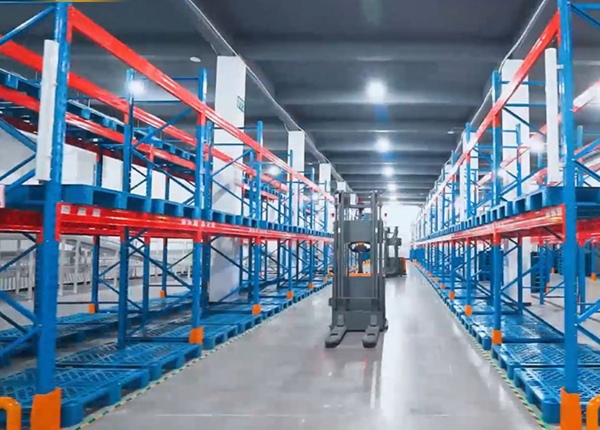
Warehouse dock congestion can begin before a pallet reaches the automated storage area. Trucks may arrive together, unloading may take longer than planned, or pallets may accumulate faster than the AGV forklift fleet can remove them.
Adding more vehicles does not necessarily solve this problem. If unloading, verification, and pallet release are poorly coordinated, additional AGVs may simply queue near the docks or compete for limited handover space.
A workable dock plan connects the arrival schedule with the warehouse's actual ability to receive, verify, and transport pallets.
A scheduled truck arrival is a planning event, not confirmation that inventory is ready for AGV movement. The truck may be late, unloading may be incomplete, or the receiving team may still be checking labels and load condition.
Define distinct operational states:
Appointment confirmed: The expected arrival has a scheduled time and dock assignment.
Truck arrived: The vehicle is present and ready for the site's unloading procedure.
Unloading in progress: Pallets are being removed from the truck.
Pallet available for verification: A pallet has reached the appropriate handover area.
Verified and transport-ready: The pallet meets the required identification, condition, and handling criteria.
Transport completed: The pallet has reached its confirmed destination and the movement has been recorded.
These states help prevent an AGV forklift task from being released before the pallet physically exists at the pickup point or has passed required checks.
Estimate how many trucks the warehouse can process during each time window. The calculation should account for dock availability, unloading duration, verification workload, pallet profile, and the time needed to clear the receiving area.
Review historical data for:
Average and high-percentile truck unloading duration.
Pallets received per truck and variation between loads.
Time spent waiting for receiving checks or documentation.
Peak arrival periods and late-arrival patterns.
Available unloading teams and dock equipment.
Time required to clear completed loads from the receiving area.
A schedule based only on average unloading time may fail during periods with unusually large loads or mixed pallet conditions. Build practical buffers into the appointment plan rather than scheduling every dock at theoretical maximum utilization.
The receiving buffer is the space available for pallets that have been unloaded but are waiting for verification, transport, or another authorized step. Its capacity should reflect the difference between incoming pallet flow and the rate at which the warehouse can clear that flow.
Use actual operational measurements to estimate:
The number of pallets that can safely occupy the receiving area.
The expected peak number of pallets waiting for transport.
The AGV forklift throughput available during the arrival window.
The space needed for pallets that require inspection or manual handling.
The overflow procedure when the buffer approaches capacity.
Do not use all available floor space as a buffer. Access routes, pedestrian paths, emergency exits, fire protection equipment, and equipment operating clearances must remain available as required by the site's safety rules.
The number of AGV forklifts assigned to a warehouse should be assessed against the complete movement cycle, not just the time needed to travel from a dock to storage.
Include pickup readiness, load acquisition, travel, destination availability, delivery confirmation, and the next task assignment. Consider how narrow aisles, high-level retrievals, shared intersections, and competing warehouse work affect actual throughput.
Where arrivals are concentrated into short windows, evaluate several options:
Spread truck appointments across available dock capacity.
Release pallet transport tasks in controlled batches.
Reserve a defined amount of fleet capacity for time-sensitive receiving work.
Keep pallets requiring manual inspection out of the standard transport queue until ready.
Adjust staffing or dock arrangements when physical unloading is the real bottleneck.
Avoid treating every inbound pallet as equally urgent. The release rule should reflect the warehouse's inventory priorities and operational commitments without allowing dock work to block all other essential movements.
When arrivals exceed the planned receiving capacity, staff need a predefined response. Waiting until pallets block an aisle or trucks cannot unload safely makes recovery more difficult.
Set trigger points for the receiving area and define what happens at each level. For example, an early warning may prompt the dock supervisor to review upcoming appointments and available transport capacity. A higher threshold may require delaying the next unloading operation, redirecting eligible pallets to an approved alternate area, or coordinating a revised appointment.
Any alternate destination must be approved for the pallet type and inventory status. A convenient empty location is not automatically suitable for temporary receiving stock.
Key checkpoint
Dock scheduling, unloading, pallet verification, and AGV task release must use consistent readiness signals. A transport task should not be released solely because a truck has arrived or an appointment has started.
Truck turnaround time alone cannot explain whether AGV forklift operations are working effectively. Break the process into measurable stages so the team can identify where delays accumulate.
Truck waiting time: Time from arrival to the start of unloading.
Unloading duration: Time required to remove the load from the truck.
Verification delay: Time from unloading to transport-ready confirmation.
AGV assignment delay: Time from readiness confirmation to vehicle pickup.
Dock clearance time: Time required to remove pallets and restore usable dock capacity.
Receiving buffer occupancy: Number of pallets waiting in the area over time.
Exception percentage: Share of pallets requiring additional checks or manual handling.
Compare results by dock, shift, supplier, load type, and arrival period. If vehicles spend most of their time waiting for pallet verification, increasing the fleet may have little effect. If the buffer grows because transport capacity is insufficient during a narrow arrival peak, appointment smoothing may reduce the pressure.
Truck appointments reflect actual dock and unloading capacity.
Truck arrival and pallet readiness are tracked as separate states.
Receiving buffer capacity is defined and monitored.
AGV transport tasks require a confirmed pickup-ready condition.
Inspection and restricted pallets have separate handling rules.
Overflow thresholds and alternate procedures are documented.
Transport capacity is evaluated using the full movement cycle.
Dock-to-storage delays are measured by process stage.
Effective dock scheduling brings together inbound planning, warehouse operations, physical buffer design, and automated transport. The right approach depends on arrival patterns, pallet volumes, storage distances, and the actual constraints of the receiving area.
Contact ZCNest Robotics to discuss AGV forklift applications for pallet receiving, internal warehouse transport, and high-bay storage operations.












 Chinese
 English





